









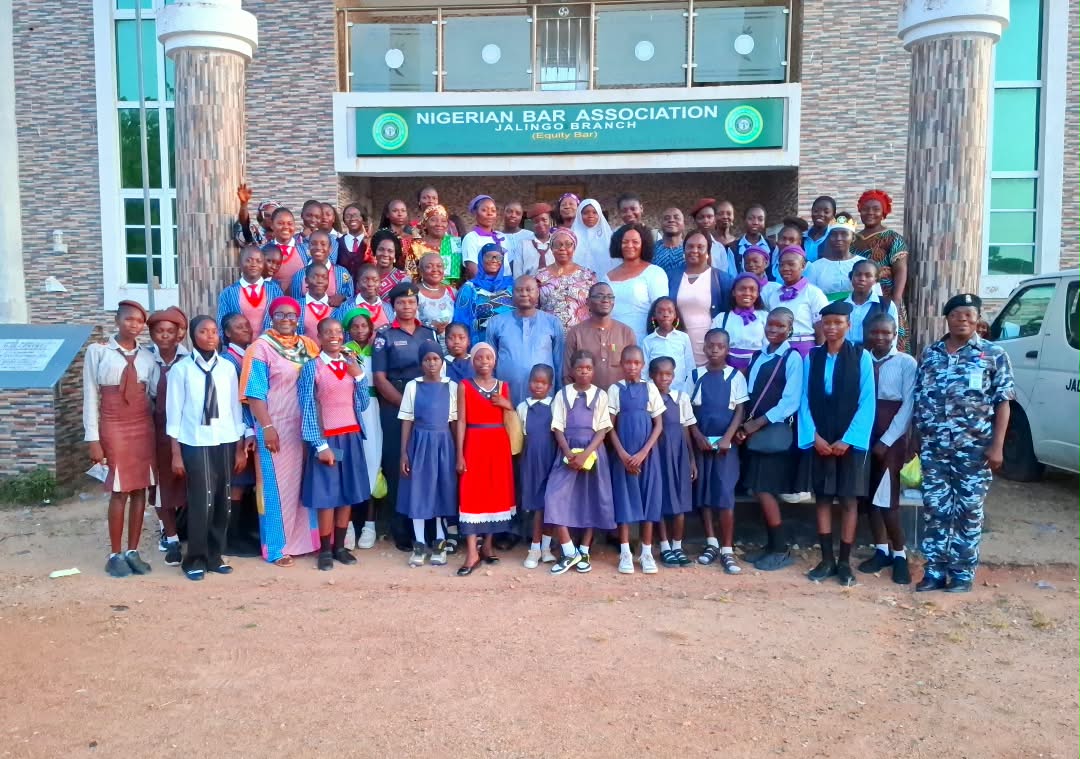
Comfort Human Rights Foundation, a girl child rights and development initiative, in collaboration with other organisations, has held its annual colloquium to commemorate the International Day of the Girl Child, with a call for an end to child marriage and greater investment in the rights, education, and development of girls.
The colloquium, themed “End Child Marriage and Invest in Girls’ Rights,” was held at the Honourable Justice Josephine Y. Tukur Auditorium of the Nigerian Bar Association in Jalingo, Taraba State.
Speaking at the event, the convener, Comfort Yubuin, Esq., emphasised the need to protect the rights of the girl child, amplify their voices, and prevent them from being coerced into marriage before attaining the maturity required to shoulder its responsibilities.

Yubuin explained that child marriage deprives girls of their childhood, threatens their education, suppresses their voices, and undermines their potential to contribute meaningfully to society.
“Today is a day set aside globally to celebrate the girl child. To pay attention to the plights of the girl child and to take action. To amplify their voices. Child marriage kills childhood and the experiences that go with it. It threatens education, it silences the voice of the girl child and destroys the potential and responsibilities that are dear to the girl child,” she said.
Also speaking, the Director of Citizens’ Rights at the Taraba State Ministry of Justice, Celina Danladi, Esq., stressed that every girl child is entitled to fundamental rights, including access to education and the freedom to make decisions about her future without coercion.
She urged parents, families, and society to respect the choices of girls and protect them from forced marriage.
“Rights are what you are born with. You came to this world with that right. Nobody should trample with it. Nobody should force you to get married against your wish. You should be allowed to make your choice and stand by it. You have the right to get education,” she stated.
Similarly, Dr. Rukayatu Abubakar Usman highlighted the challenges associated with child marriage, noting that girls who marry before attaining the necessary maturity may find it difficult to shoulder the responsibilities that come with marriage.
She maintained that every girl deserves the opportunity to grow, acquire education, develop her talents, and participate in decisions concerning her future.
“Every girl deserves the opportunity to grow, to go to school, to develop her talent and make decisions about her future. You must be involved in the decision of your future,” she stated.
The colloquium also featured a presentation on teenage pregnancy and abortion by the founder of Purity Club, Mr. Dayo Adeleke, who identified poverty, ignorance, misinformation, and peer pressure, among other factors, as contributors to the problem.
His presentation highlighted the importance of awareness and appropriate guidance in helping young people make informed decisions.
As part of the event, awards were presented to outstanding personalities in recognition of their contributions to society, including the Honourable Commissioner for Secondary Education, Dr. Augustina Godwin Yahaya.
In her appreciation speech, Yahaya thanked the organisers for the recognition and commended their efforts towards promoting education and the holistic development of the girl child.
“I am an Educator myself. Learning isn’t only reading and writing. Education is holistic. It involves other aspects of human development and that is what they have helped us today in their lives of these out daughters,” she said.
The colloquium reaffirmed the importance of collective efforts by government institutions, civil society organisations, families, and other stakeholders in protecting girls’ rights, ending child marriage, and ensuring that girls have access to education and opportunities to fulfil their potential.
The organisers stressed that investing in girls’ rights and development remains essential to building a society where every girl can grow, learn, make informed decisions, and contribute meaningfully to national development.