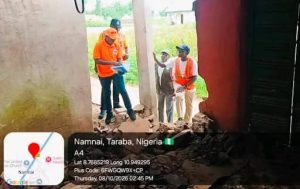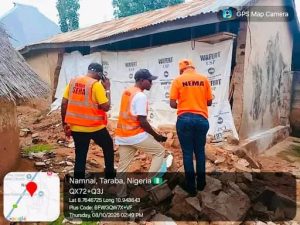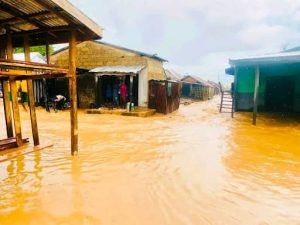




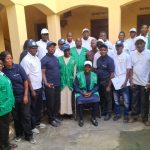



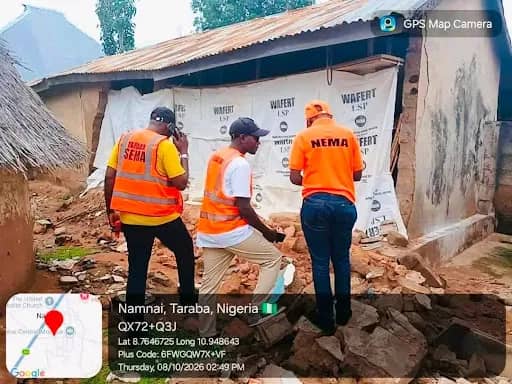
The Taraba State Emergency Management Agency (TSEMA), in collaboration with the National Emergency Management Agency (NEMA), has conducted an on-the-spot assessment of flood-affected communities in Gassol Local Government Area of Taraba State to determine the extent of damage and identify the humanitarian needs of affected residents.
The assessment followed a devastating flooding incident that reportedly displaced residents, destroyed farmlands, killed livestock and left some people injured.
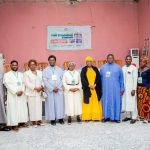
The joint assessment team, led by Mr. Galadima Sam Boyi of the Relief and Rehabilitation Unit, NEMA Yola Operations Office, visited the affected communities to evaluate the impact of the disaster and establish the level of assistance required by the victims.
The flooding reportedly affected thousands of residents across several households, forcing many from their homes and disrupting their livelihoods. The destruction of hectares of farmland has also raised concerns about food security and the economic wellbeing of affected families.
In a statement issued on October 20, 2026, by the Public Relations Unit of TSEMA, the agency expressed concern over the hardship caused by the disaster and reiterated its commitment to supporting affected communities.
Speaking on behalf of the Executive Secretary of TSEMA, Dr. Echuseh Audu, the agency’s Staff Officer, Mr. Sani Mohammed Kabiru, sympathised with the victims and acknowledged the difficulties they were facing following the flooding.
Kabiru said the Taraba State Government, under Governor Agbu Kefas, remained committed to supporting residents affected by disasters.
He added that TSEMA was working with NEMA and other relevant stakeholders to facilitate the timely provision of humanitarian assistance to the affected communities.
The agency also reaffirmed its commitment to collaborating with relevant authorities to provide relief materials and other necessary support to victims, stressing that their welfare, rehabilitation and recovery remained a priority.
The assessment is expected to provide the necessary information to guide emergency response efforts, determine the scale of the destruction and identify the most urgent needs of affected households.
However, the statement did not specify the exact number of displaced persons, the total area of farmland destroyed or the quantity of relief materials expected to be distributed.
The collaboration between TSEMA and NEMA underscores the importance of coordinated emergency response efforts in addressing the humanitarian consequences of flooding and supporting affected communities as they work towards recovery.