


BWACHA CAMP DISPUTES 3,000 JOBS CLAIM, QUESTIONS SECURITY AND FREE EDUCATION; CITES TSU STRIKE AND ALLEGED PROCUREMENT RACKETEERING
By Taraba News Feature Desk
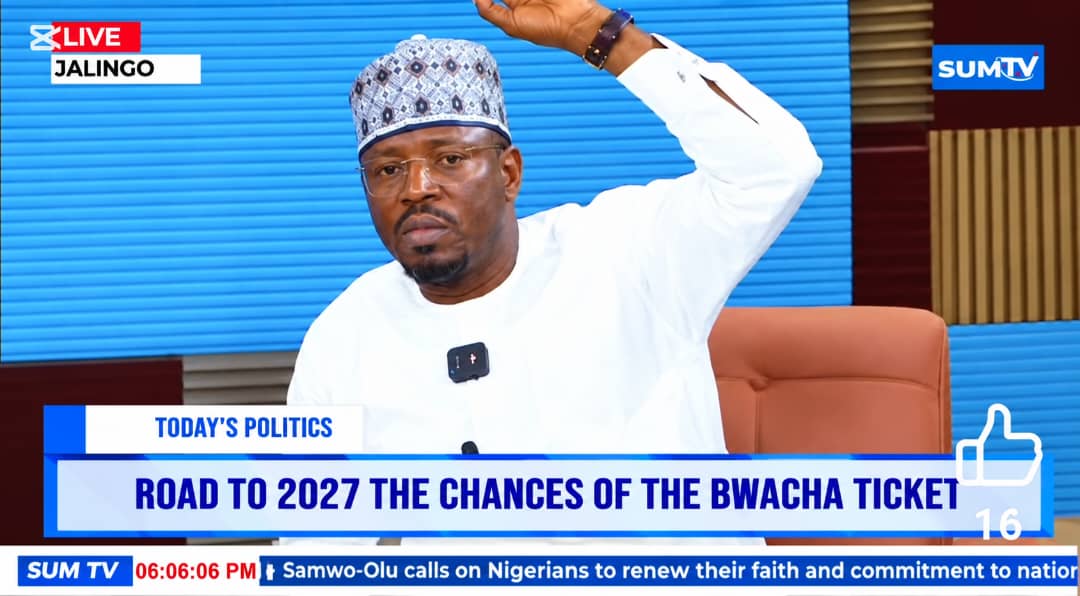
A political dispute has erupted between supporters of Taraba State Governor Agbu Kefas and the camp of the Peoples Democratic Party (PDP) governorship candidate, Distinguished Senator Emmanuel Bwacha, following a SUM TV interview with Engr. Aminu Zakari, the party’s deputy governorship candidate.
The controversy began after AK Media published a commentary titled “SUM TV Interview Exposes Gaps in Taraba PDP Deputy Governorship Candidate’s Policy Knowledge,” questioning Zakari’s understanding of the state’s employment situation, security challenges and free education policy.
However, the Bwacha Campaign Council, through its Directorate of Publicity and Directorate of New Media, issued a rebuttal dated October 20, 2026, accusing AK Media of misrepresenting the interview and defending what it described as legitimate questions about the Kefas administration’s performance.
The response has widened the political debate, bringing the government’s employment claims, insecurity, education policy, the ongoing strike at Taraba State University (TSU) and allegations of procurement racketeering into focus ahead of the 2027 governorship election.
3,000 Jobs: Employment or Reinstatement?
One of the central issues is the state government’s reported absorption of 3,000 workers into permanent and pensionable positions.
AK Media described the development as an important employment achievement and criticised Zakari for allegedly failing to recognise its significance.
The Bwacha Campaign Council disputed that interpretation, alleging that many of the workers were existing civil servants who had been removed from the payroll and subsequently reinstated following pressure from labour unions and the media.
The council argued that reinstating previously employed workers should not be presented as the creation of new jobs.
It also questioned the reported appointment of more than 1,500 special assistants and senior special assistants, arguing that political appointments do not necessarily provide the long-term security and benefits associated with permanent employment.
The controversy has raised questions about the distinction between newly created jobs, reinstated workers and political appointments.
A conclusive assessment would require verified recruitment records, payroll data and details of the employment arrangements involved.
Security: Opposition Demands Answers
Security has emerged as another major point of disagreement between the two camps.
AK Media argued that isolated security incidents do not, by themselves, establish the failure of the state’s entire security architecture. It maintained that opposition candidates should explain the practical measures they would introduce to address insecurity.
The Bwacha Campaign Council countered that persistent attacks, displacement and restrictions on movement require a more direct assessment of the government’s record.
In its rebuttal, the council questioned whether displaced residents had returned to their ancestral communities, whether residents could travel safely at night and whether farmers could access their farms without relying on local vigilantes.
It also cited reports of renewed violence in parts of southern Taraba and raised concerns about the security of students in Jalingo.
The council further alleged that a government aide had been seen distributing machetes to youths, a claim that requires independent verification and a response from the parties concerned.
For residents of affected communities, the central issues remain the protection of lives and property, safe access to farms and markets, the return of displaced persons and the restoration of normal social and economic activities.
The political debate has therefore placed pressure on both the government and the opposition to provide verifiable evidence of their security records and proposed solutions.
Free Education Under Scrutiny
The state government’s free education policy has also become a major subject of the dispute.
AK Media criticised Zakari’s reported question, “What free education?”, arguing that the PDP deputy governorship candidate failed to offer a convincing alternative to the administration’s policy.
The commentary cited the free education programme and the reported 50 per cent reduction in tertiary institution tuition fees as interventions the opposition should address in its policy proposals.
The Bwacha Campaign Council, however, argued that free education declarations must be supported by adequate classrooms, furniture, instructional materials, qualified teachers and functional learning environments.
It alleged that some schools continued to face infrastructure deficits, overcrowding and shortages of teaching resources.
The council also cited the indefinite strike by the Academic Staff Union of Universities, Taraba State University branch, which began on October 12, 2026, as evidence of continuing challenges within the state’s tertiary education sector.
The strike followed demands relating to the implementation of the 2025 Federal Government-ASUU agreement and the payment of salary arrears dating back to January 2026.
While the strike has disrupted academic activities, including examinations, the extent to which it reflects the overall performance of the state’s education policy remains a matter requiring broader assessment.
The controversy has nevertheless raised questions about how the government intends to sustain access to education while addressing infrastructure, staffing, funding and industrial relations challenges.
Procurement and Public Spending Become Political Flashpoints
Beyond employment, security and education, the Bwacha Campaign Council expanded its criticism to the state’s economic management and public procurement practices.
The council alleged that the Kefas administration had failed to translate Taraba’s agricultural and mineral resources into sufficient industrial growth, employment opportunities and internally generated revenue.
It questioned a reported N17 billion expenditure on a contract involving China, arguing that the funds could instead have supported local manufacturing, agro-processing and other job-creating industries.
The council also accused the government of failing to adequately support small and medium-sized enterprises and called for investments in irrigation, agricultural processing, electricity and industrial infrastructure.
On procurement, the campaign council raised concerns about the transparency and economic justification of public projects, alleging that some spending decisions did not sufficiently prioritise employment creation and long-term economic returns.
The allegations amount to serious questions about public expenditure and procurement accountability. However, the specific contract, the amount paid, the procurement process and the identities of any parties allegedly involved would need to be established through documentary evidence before claims of racketeering could be treated as proven.
The state government’s response would also be necessary to provide clarity on the projects’ scope, costs, implementation status and expected benefits.
The controversy has placed public procurement under renewed political scrutiny, with calls for greater transparency, accountability and evidence of value for money.
A Battle Over Governance and Political Credibility
The exchange between AK Media and the Bwacha Campaign Council reflects a broader struggle over how Taraba’s political leaders should be judged ahead of the 2027 election.
AK Media maintained that Zakari’s interview did not sufficiently demonstrate the PDP’s preparedness to govern, arguing that criticism of the incumbent administration must be accompanied by clear and workable alternatives.
The Bwacha camp insisted that the interview raised substantive questions about employment, insecurity, education and economic management that the government’s supporters should address rather than dismiss.
The dispute has also highlighted the need for both sides to substantiate their claims with verifiable figures, official records and clearly articulated policy proposals.
For the Kefas administration, the challenge is to demonstrate measurable results from its employment, education, security and economic policies.
For the Bwacha-led opposition, the task is to translate its criticisms into practical proposals supported by funding plans, implementation timelines and measurable targets.
Taraba 2027: Voters Await Answers
As political activities gather momentum ahead of the 2027 governorship election, the controversy surrounding Zakari’s SUM TV interview has moved beyond a disagreement over television commentary.
It has become a wider debate about job creation, public safety, educational quality, industrialisation and the management of public resources.
The central questions remain straightforward: How many genuinely new jobs have been created? What measurable progress has been made in securing vulnerable communities? Are schools and universities receiving the resources needed to function effectively? And are public contracts delivering value for money?
These are issues that demand evidence-based answers from the government and credible alternatives from the opposition.
Ultimately, Taraba voters will have to assess the competing records, claims and proposals of the political camps before making their choices in 2027.
The growing exchange between the two sides underscores the importance of a political contest centred not merely on accusations and counteraccusations, but on verifiable facts, transparent governance and practical solutions to the challenges facing the state.