








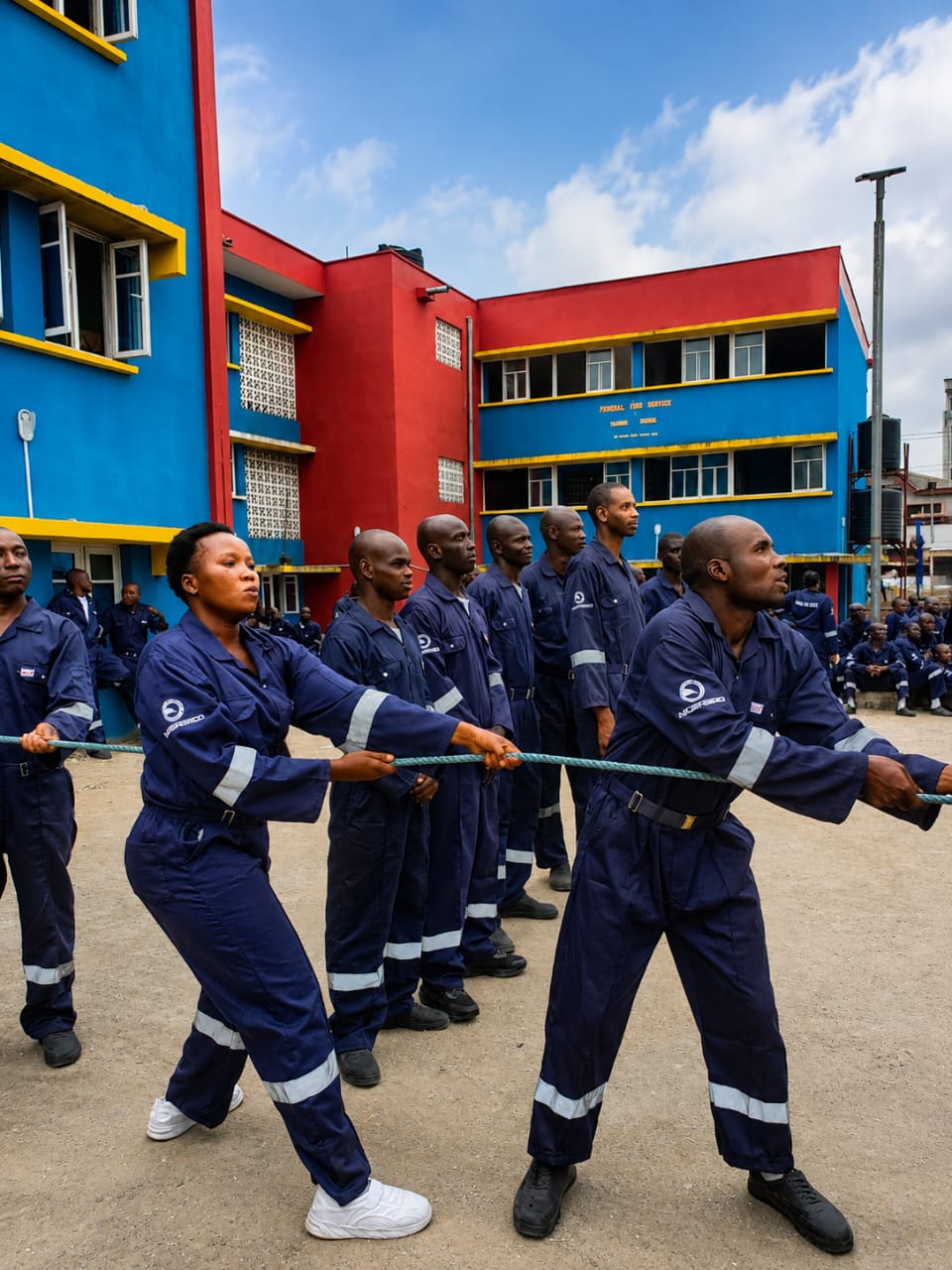
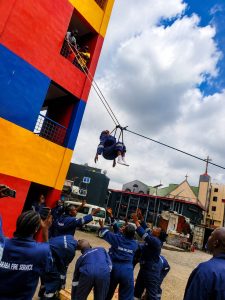
JALINGO — Newly recruited personnel of the Taraba State Fire Service are undergoing intensive training in modern firefighting, rescue operations and emergency response, as calls grow for the state government to replace the decades-old legal framework governing the Service.
The training, which features practical drills in rescue techniques, rope operations, emergency evacuation, teamwork and other tactical responses, is aimed at equipping the recruits with skills required to respond to contemporary fire outbreaks, accidents and other emergencies.
The exercises signal a new phase for the Taraba State Fire Service, with emphasis increasingly shifting beyond conventional firefighting to broader rescue and emergency-response capabilities.
The recruits commended Governor Agbu Kefas for what they described as renewed attention to the Fire Service, particularly through recruitment, training and infrastructure development.
They said strengthening manpower alongside improvements in facilities would enhance the capacity of the Service to protect lives, homes, businesses and public infrastructure across Taraba State.
However, stakeholders say improvements in manpower and infrastructure should be accompanied by reforms to the legal framework under which the Fire Service operates.
The Service is said to still operate substantially under a 1985 Fire Service Edict inherited from the former Gongola State, from which Taraba State was created in 1991.
With more than four decades having passed since the framework was introduced, stakeholders argue that changes in urbanisation, building construction, commercial activities, population growth and modern emergency-management practices have made a review necessary.
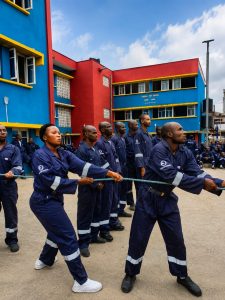
They are therefore calling on the Taraba State Government to consider replacing the old framework with a modern Fire Service law capable of addressing contemporary fire prevention, safety regulation, rescue operations and emergency response.
A revised law, advocates say, could clearly define the responsibilities and powers of the Service, establish modern operational and safety standards, strengthen enforcement of fire-safety requirements and provide a stronger institutional foundation for emergency response across the state.
The ongoing training of the new recruits is also being viewed as an indication of the direction in which the Service could develop — from an institution largely associated with responding to fire outbreaks to a broader rescue and emergency-management organisation.
With Jalingo and other communities across Taraba witnessing continued physical and commercial development, effective fire prevention and emergency response are expected to become increasingly important.
Stakeholders maintain that investment in equipment, trained personnel and infrastructure would have greater impact if supported by legislation reflecting current realities.
For the new recruits, the practical rescue exercises provide an opportunity to demonstrate the human capacity available to build a more responsive Fire Service.
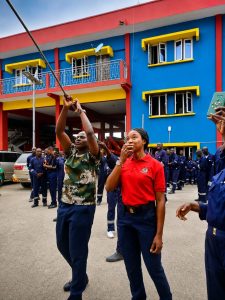
The emerging challenge is ensuring that the institution in which they will serve is backed by a legal framework as modern as the skills they are being trained to deploy.
From a 1985 Gongola-era framework to the demands of 21st-century emergency management, the growing call is for Taraba’s Fire Service law to evolve alongside the Service itself.