







Henry Agbu
In public discourse, especially around government projects, criticism is not only inevitable but necessary. Citizens have every right to question public expenditure, demand transparency and hold those in authority accountable. However, such scrutiny must be anchored in facts, not assumptions, selective interpretation or the deliberate misrepresentation of information.
Recently, allegations have circulated in Taraba State suggesting that the state government has refused to disclose the identity of the company handling the much-discussed Wukari infrastructure project, popularly referred to as the ₦80 billion flyover project.
Interestingly, this allegation raises an important question: Is the company’s identity genuinely unknown, or have some people simply overlooked information that was publicly presented during the project’s flag-off ceremony?
For those who paid close attention to the event, the details were not hidden. Both government representatives and the contractors provided insights into the scope, financial value and anticipated delivery timeline of the project.
One of the most significant aspects of the Wukari project is that it goes far beyond the construction of a flyover.
The project reportedly encompasses 17 township roads, including dual carriageways, a flyover and an interchange, covering more than 40 kilometres of urban infrastructure.
With an estimated project value of approximately ₦85.9 billion, the initiative represents an ambitious infrastructure intervention aimed at transforming the urban landscape of Wukari, improving connectivity and addressing critical transportation challenges.
The company handling the contract is Kanubeen Construction Nigeria Limited. Its identity was not concealed from the public. The company’s name and logo were visibly displayed on the caps worn by the governor and members of the engineering team, as well as on heavy-duty construction equipment present at the project site.
Furthermore, the contractor indicated that the project was expected to be completed before 2029.
These were important details made available during the flag-off ceremony. Yet, in the midst of the subsequent public debate, much of the conversation appears to have been reduced to two recurring phrases: ₦80 billion and flyover.
The 17 township roads? The dual carriageways? The interchange? The more than 40 kilometres of proposed infrastructure?
Somehow, these equally important components seem to have disappeared from the conversations of those criticising the project.
To be clear, questioning the cost of a public infrastructure project is legitimate. Demanding details about the contract, procurement process, funding arrangements, engineering specifications and implementation timeline is an essential part of democratic accountability.
No government should be above scrutiny, and no public expenditure should be beyond examination.
However, there is a fundamental difference between constructive criticism and criticism built on incomplete information.
If the actual scope of a project is 17 township roads, dual carriageways, a flyover and an interchange, reducing the entire undertaking to the construction of a single flyover does not provide the public with an accurate picture of what is being executed.
Likewise, suggesting that the identity of the contractor is being concealed, when the company’s name was publicly displayed at the project site and announced during the flag-off, raises questions about the basis of such allegations.
The
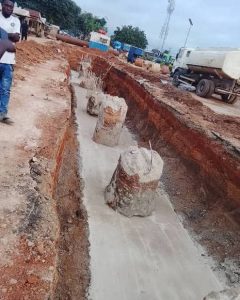
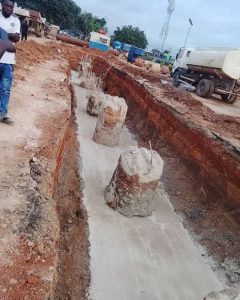
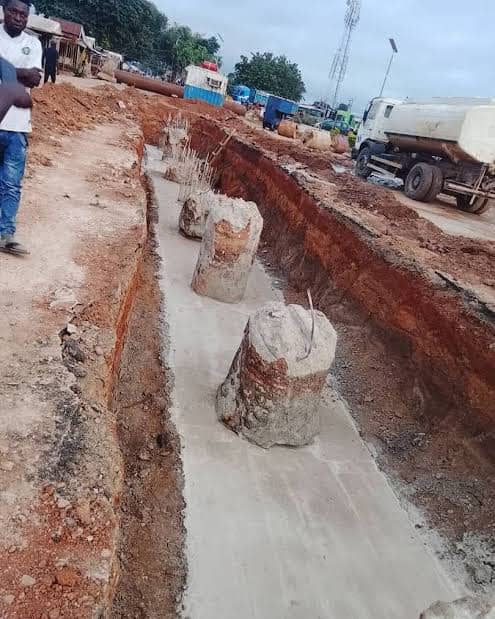
Wukari infrastructure project goes beyond the political conversations surrounding it. I have been following the construction activities, observing the pace of work, comparing developments with similar infrastructure projects elsewhere and researching the engineering processes involved at the different stages of construction.
From my observations so far, Kanubeen Construction Nigeria Limited appears to be making commendable efforts, with encouraging progress and a pace of activity worth monitoring.
Of course, the ultimate assessment of the company’s performance must be based on measurable milestones, engineering standards, quality of materials, adherence to specifications and the successful delivery of the project within the agreed timeframe.
Commending visible progress should not mean abandoning scrutiny, just as demanding accountability should not mean disregarding facts.
The Wukari infrastructure project is significant enough to deserve serious public attention. Its financial commitment, geographical coverage and potential impact on urban development make it a subject worthy of continuous monitoring and informed public engagement.
The people of Taraba State deserve to know how their resources are being utilised. They deserve quality infrastructure, transparency in contract execution and value for every naira spent.
We can question the ₦85.9 billion project cost without pretending that the project consists of only a flyover. We can demand transparency without claiming that the contractor’s identity is unknown when it was publicly announced. And we can scrutinise the government without deliberately overlooking the other components of the project.
Ultimately, accountability and accuracy should go hand in hand.
The government must be held accountable, the contractor must be held to the terms of the contract, and the public must remain vigilant. But in doing so, we must never allow political sentiments to take precedence over verifiable facts.
Wukari deserves development. Taraba deserves accountability. And the people deserve the truth.