



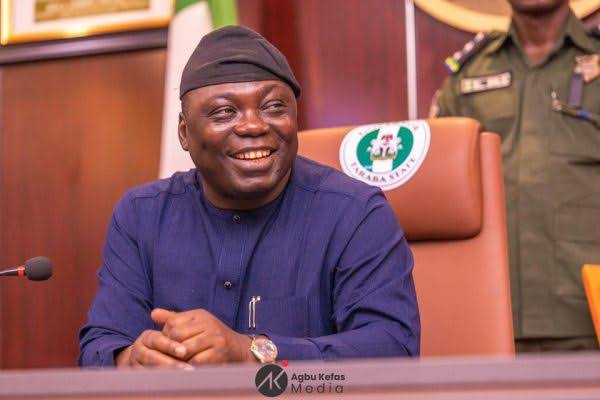
Governor Kefas to receive and adopt wage committee report Monday as tertiary students hope for resumption of academic activities.
JALINGO – The committee constituted by Taraba State Governor, Dr. Agbu Kefas, to harmonise salaries and wages across tertiary institutions in the state has concluded its assignment, with representatives of the five institutions affiliated with the Joint Action Committee of Tertiary Institutions (JACTI) signing the implementation report ahead of its formal presentation to the governor on Monday, November 16, 2026.
The development has raised renewed hope for the possible resolution of the ongoing industrial dispute that has disrupted academic activities across tertiary institutions in the state, although the Academic Staff Union of Universities (ASUU) has maintained its position that it will not accept any implementation option below 100 per cent of its demands.

The committee was established following Governor Kefas’ statewide broadcast on October 1, 2026, during which he announced its constitution under the chairmanship of the Secretary to the State Government (SSG), Barr. Gebon Kataps.
The committee was mandated to harmonise salary structures and wages across tertiary institutions in Taraba State amid growing industrial tensions, particularly the strike declared by ASUU over demands for the implementation of the 2025 Federal Government-ASUU Agreement.
However, the constitution of the committee immediately generated controversy, with ASUU becoming the first union to reject the initiative.
The university lecturers’ union argued that negotiations with the state government had already been concluded and that the outstanding issue was the implementation of the agreements reached. ASUU maintained that it would not participate in any process capable of reopening or renegotiating an agreement it considered already settled.
The union particularly expressed concern that the committee’s intervention could amount to renegotiating existing salary and allowance agreements, insisting that its demands were based on the 2025 Federal Government-ASUU Agreement.
Despite the union’s position, the committee proceeded with its assignment. During the process, the Commissioner for Tertiary Education accused the ASUU Chairman of attending one of the committee’s meetings without officially representing the union.
However, the ASUU Chairman reportedly clarified that his attendance was limited to the inaugural meeting, where he informed the committee that the union would not participate in its proceedings because of its position on the matter.
### COMMITTEE PROPOSES FOUR IMPLEMENTATION OPTIONS
Findings by Taraba News indicate that the committee’s concluded report contains four proposed implementation options for consideration by the state government: 90 per cent, 95 per cent, 98 per cent and 100 per cent.
According to an insider familiar with the report, the proposed percentages have been presented as possible implementation frameworks from which the government is expected to adopt an option.
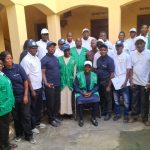
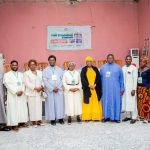
During the signing exercise, representatives of the unions affiliated with JACTI, comprising five tertiary institutions in Taraba State, endorsed the implementation report.
The institutions include Taraba State Polytechnic, Taraba State College of Agriculture, Taraba State College of Education, the School of Nursing and Midwifery, and the College of Health Technology, Takum.
The representatives signed the report through their respective unions, indicating their participation in the committee’s proposed implementation framework.
However, ASUU, as a separate union representing academic staff of Taraba State University, was absent from the signing exercise and did not endorse the report.
Although representatives associated with Taraba State University were present during the exercise, Taraba News understands that they attended on behalf of the university’s management or governing council and not as representatives of ASUU.
The distinction is significant, as ASUU has consistently maintained that it would not participate in the committee’s proceedings, arguing that its existing agreement with the government requires implementation rather than further negotiation.
### ASUU INSISTS ON 100 PER CENT IMPLEMENTATION
When contacted by Taraba News, the ASUU Chairman, Dr. Joshua Garba Mbave, welcomed the development but maintained that the union would not accept any implementation option below 100 per cent of its demands.
His position reinforces the union’s earlier insistence that the outstanding issue is not further negotiation but the full implementation of the agreement already reached.
The ASUU Chairman had previously indicated that the union was prepared to call off its ongoing strike within 24 hours if the state government fully met its demands.
### GOV. KEFAS TO RECEIVE AND ADOPT REPORT ON MONDAY
The formal presentation and adoption ceremony is expected to hold on Monday, November 16, 2026, under the chairmanship of Governor Agbu Kefas.
At the event, the governor is expected to receive the concluded report from the committee, review and formally adopt it before signing the document to provide the basis for its implementation.
The outcome of the ceremony is expected to determine the next phase of the government’s engagement with the various tertiary institution unions and could provide a clearer direction towards resolving the lingering industrial dispute.
For thousands of students across Taraba State, the development represents renewed hope that academic activities may soon resume following weeks of uncertainty and disruption.
However, with ASUU yet to endorse the committee’s report and maintaining its demand for 100 per cent implementation, the possibility of an immediate resolution will depend largely on the outcome of Monday’s engagement and the subsequent decision of the union.
Students, parents and other stakeholders will therefore be watching closely as Governor Kefas prepares to receive and adopt the committee’s report.
Taraba News will continue to follow developments surrounding the proposed signing ceremony and provide updates on its implications for lecturers, students and the future of tertiary education in Taraba State.