






By Henry Agbu
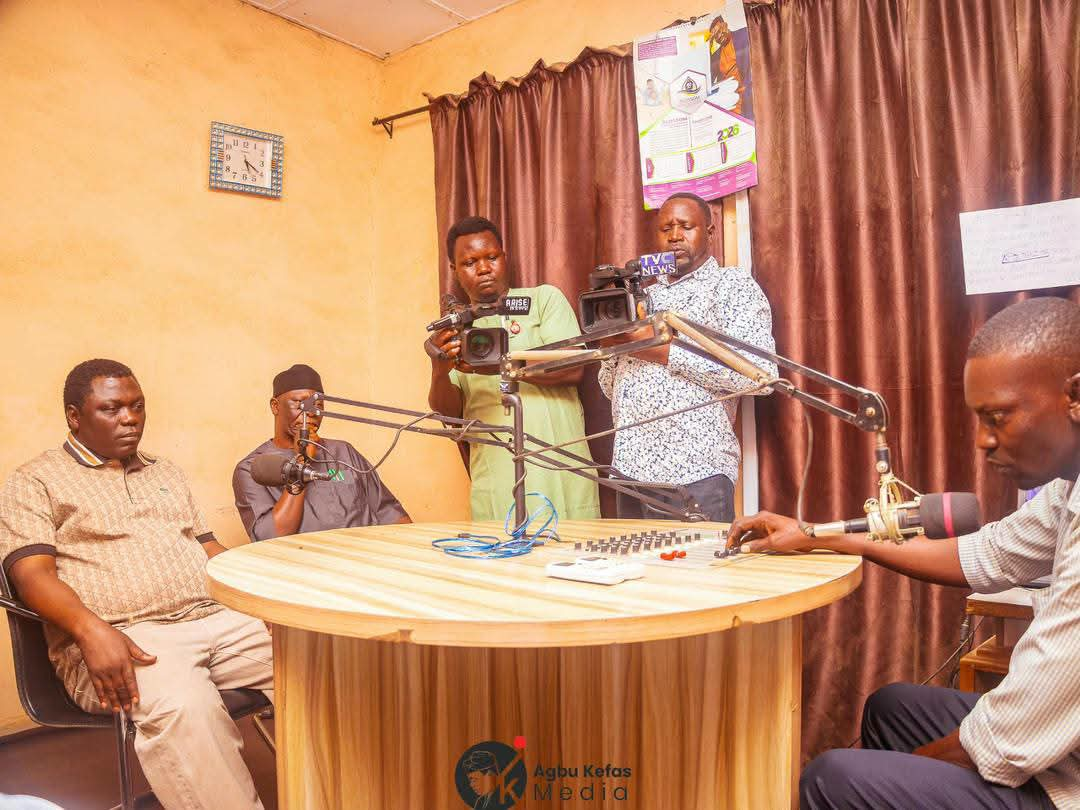
For many years, the Taraba State Broadcasting Service (TSBS), Jalingo, has struggled with obsolete broadcasting equipment, limited transmission capacity, and ageing facilities. These challenges have affected the station’s ability to effectively discharge its responsibility to inform, educate, and entertain the people of Taraba State.
For a public broadcasting institution expected to serve a state with diverse communities, languages, cultures and geographical landscapes, the situation presented a significant challenge. Communities that depended on the station for news, public enlightenment, government announcements and other important information were increasingly affected by its limited reach.
However, a new chapter may be unfolding for the state-owned broadcasting organisation following Governor Dr Agbu Kefas’ approval for its upgrade and the arrival of new broadcasting equipment for its stations in Jalingo, Wukari and Gembu.

The development represents an important intervention in the effort to reposition TSBS and restore its capacity to serve as an effective channel of communication between government and citizens.
The approval followed Governor Kefas’ visit to the broadcasting station, where he reportedly witnessed firsthand the condition of its facilities and the operational difficulties confronting the organisation.
The visit provided an opportunity to appreciate the challenges facing the station and the need for urgent government intervention.
For an institution whose responsibility goes beyond broadcasting news to preserving cultural heritage, promoting public awareness and providing a platform for important issues affecting society, modern equipment is not a luxury but a necessity.
The arrival of the new equipment, therefore, offers renewed hope to management, staff and listeners who have continued to look forward to improved broadcasting services.
Beyond Jalingo: Extending the signal to Wukari and Gembu.
One remarkable aspect of the intervention is that it is not limited to the TSBS headquarters in Jalingo. The equipment is also expected to support the station’s booster facilities in Wukari and Gembu.
This wider coverage is important considering Taraba State’s geographical spread and the communication challenges experienced by communities located far from the state capital.
The inclusion of Wukari and Gembu demonstrates the importance of extending public broadcasting services beyond major urban centres to communities that also deserve access to timely and credible information.
Of particular importance is the planned restoration of the Gembu booster station, which has reportedly remained off air for more than seven years.
For communities in the Mambilla Plateau and surrounding areas, the restoration could mean renewed access to TSBS programmes, public announcements, educational content and information on government activities.
It could also provide an opportunity for local voices, cultural expressions, and community concerns to receive greater attention through the state broadcasting platform.
Broadcasting as an instrument of development.
In contemporary society, broadcasting remains an important instrument for development. Despite the growing influence of social media and digital communication platforms, radio and television continue to play essential roles in reaching audiences, particularly in communities where internet access and digital literacy may be limited.
A functional broadcasting service can promote public health awareness, agricultural education, security information, civic education and emergency communication.
For a state like Taraba, with its rich cultural diversity and widely dispersed communities, an effective broadcasting network can help bridge information gaps and encourage greater social inclusion.
The upgrade of TSBS, if properly implemented and sustained, could therefore contribute to more inclusive communication across the state.
It would also provide opportunities for the promotion of local languages, traditional institutions, tourism, agriculture, entrepreneurship and the creative industry.
While the arrival of new broadcasting equipment is an important development, the long-term success of the upgrade will depend on more than the installation of modern facilities.
Broadcasting is a professional industry that requires skilled personnel, regular technical maintenance, adequate funding and continuous training.
The station’s appeal for sustained investment in staff welfare, professional capacity development, and improved working conditions, therefore, deserves attention.
Modern equipment requires competent engineers and technicians to operate and maintain it. Journalists, presenters, producers and other creative professionals also need opportunities to improve their skills in line with changing broadcasting standards.
Without these complementary investments, even the most sophisticated equipment may not deliver its full potential.
There is equally a need for a sustainable maintenance structure to prevent the facilities from deteriorating after the initial excitement surrounding their arrival.
Governor Kefas’ reported promise to take TSBS to global standards raises expectations about the future direction of the organisation.
Achieving such an ambition would require a comprehensive approach that addresses infrastructure, digital broadcasting, content production, staff development, institutional management and financial sustainability.
The station must be positioned to compete in an increasingly dynamic media environment while maintaining its public service responsibility.
Digital transformation, improved studio facilities, quality programming, reliable transmission and professional journalism would all be important components of this process.
Equally important is the need to protect the credibility of the station by promoting accuracy, fairness, professionalism and responsible journalism.
A public broadcaster earns public confidence not merely through the strength of its transmission signals but also through the quality, relevance and credibility of the information it provides.
The intervention has created an opportunity to address challenges that have affected TSBS for years. However, sustaining the progress will require consistent attention from government, the station’s management and its workforce.
The equipment must be properly installed, maintained, and deployed to achieve the intended improvement in coverage. The Wukari and Gembu booster stations must receive the necessary technical attention to ensure that communities in their respective areas benefit from the upgrade.
There should also be a clear commitment to continuous investment rather than treating the present intervention as a one-time exercise.
The restoration of public broadcasting infrastructure is a long-term responsibility that requires planning, accountability and institutional commitment.
The arrival of new broadcasting equipment for TSBS marks a potentially significant turning point in the history of public broadcasting in Taraba State.
For the people of Jalingo, Wukari, Gembu and surrounding communities, the development carries the promise of improved access to information and stronger communication links with the rest of the state.
For the management and staff of TSBS, it presents an opportunity to rebuild institutional capacity, improve service delivery, and restore public confidence in the organisation.
Governor Kefas’ approval has set the process in motion, but the real measure of success will be seen in the station’s operational performance, expanded coverage, quality of programmes, and ability to serve the information needs of the people.
Ultimately, the true value of this intervention will not be determined by the number of equipment delivered or the facilities upgraded, but by the positive difference the renewed broadcasting service makes in the lives of Taraba residents.
As TSBS prepares for a new phase of operations, the expectation is that the intervention will translate into lasting institutional transformation, ensuring that the voices, stories, aspirations and concerns of the people of Taraba State are heard across the airwaves.