
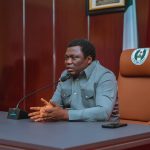
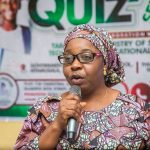
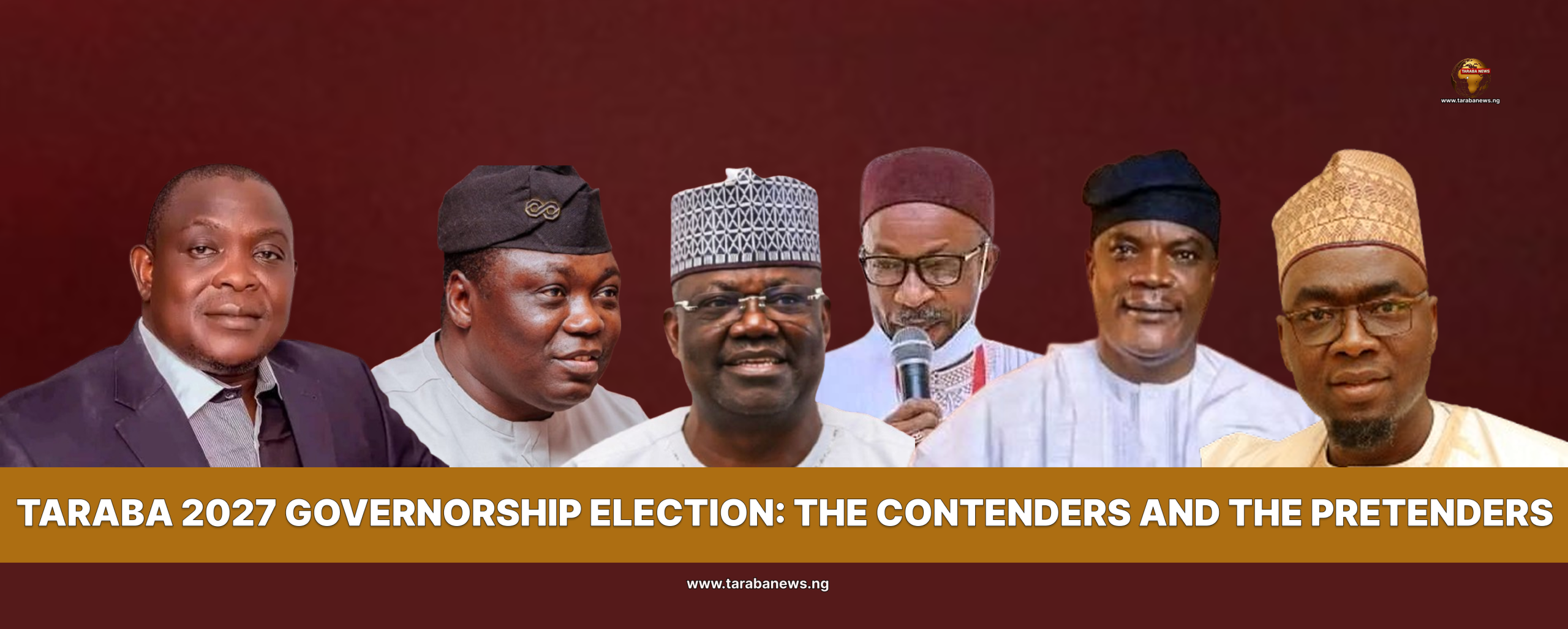
Kefas, Bwacha, Tutare, Shiddi, Sani Yahaya and Jerome Nyame enter a race where political structure, voter sentiment, zoning, performance and personal credibility may matter more than party slogans
The 2027 governorship election in Taraba State is gradually assuming the character of a political battle that could reshape the state’s political landscape.
The contest is no longer a distant political conversation. With major parties producing their standard-bearers and political structures beginning to mobilise, the race for Government House, Jalingo, is taking a more definite shape.
Six names now stand prominently in the emerging contest:
Dr. Agbu Kefas of the All Progressives Congress (APC); Senator Emmanuel Bwacha of the Peoples Democratic Party (PDP); Senator Abubakar Tutare of the African Democratic Congress (ADC); Hon. Danjuma Shiddi of the All Progressives Grand Alliance (APGA); Prof. Sani Yahaya of the National Democratic Congress (NDC); and Prof. Jerome Nyame of the Accord Party.
The six candidates come into the contest with different political histories, geographical considerations, party platforms and electoral calculations.
But behind the growing number of candidates is the central question confronting Taraba politics:
Who among them is genuinely positioned to win, and who is merely participating in the race?
That question will become clearer as the election approaches.
AGBU KEFAS: THE INCUMBENT WITH THE BIGGEST MACHINE
Governor Agbu Kefas occupies the most strategically advantageous position in the race.
He is the incumbent governor, and he will seek a second term on the platform of the APC after his movement from the PDP to the ruling party.
The APC has already settled on Kefas as its governorship candidate. The party subsequently began uploading its governorship candidates to the INEC nomination portal, with Kefas listed among serving governors seeking re-election.
The advantage of incumbency cannot be underestimated.
Kefas has access to the visibility, structures and political network associated with the office of governor. His administration can present its achievements, policies and ongoing projects as part of its campaign for continuity.
His argument will essentially be that Taraba needs stability and continuity rather than a return to the political past.
But incumbency also comes with a heavy burden.
Every promise made by the governor since 2023 can now be measured against his actual record.
Roads, healthcare, education, water, agriculture, employment, security, civil service reforms, infrastructure and economic development will all become campaign issues.
Recent political analysis suggests that voter sentiment, governance performance and grassroots loyalty may be more important in 2027 than the elite endorsements that played a major role in the 2023 election.
For Kefas, therefore, the real campaign is not simply about winning the APC ticket.
It is about convincing Tarabans that his first-term performance deserves another four years.
EMMANUEL BWACHA: THE COMEBACK BID
If Kefas represents incumbency, Senator Emmanuel Bwacha represents experience and political resilience.
Bwacha has been one of the major figures in Taraba politics for years.
A former senator representing Taraba South, he has built a political network that extends beyond his immediate constituency.
In 2023, he challenged Kefas for the governorship on the APC platform and lost.
Four years later, the political equation has dramatically changed.
Kefas is now APC.
Bwacha is PDP.
The two men are therefore preparing for another political confrontation, but from opposite sides of the political divide.
The PDP has formally affirmed Bwacha as its sole governorship candidate for 2027. The affirmation took place in Jalingo under the supervision of party officials and INEC representatives.
Bwacha is presenting himself as an experienced politician capable of rebuilding the state.
His campaign message has centred on transparency, accountability, infrastructure, agriculture, education, youth empowerment and economic development.
He has also presented a 42-point mission statement, signalling an attempt to give his campaign a policy-based identity rather than relying exclusively on opposition to the incumbent.
But Bwacha’s biggest task is turning political experience into electoral victory.
The question is whether his extensive political network can mobilise enough voters across Taraba’s three senatorial zones to defeat an incumbent backed by the APC.
For Bwacha, 2027 is undoubtedly a comeback project.
ABUBAKAR TUTARE: THE ADC’S THIRD-FORCE CHALLENGE
Senator Abubakar Tutare brings another dimension to the contest.
His decision to contest under the ADC gives the election an important third-force component.
Tutare emerged as the ADC governorship candidate following the party’s governorship primary in May 2026. Reports from the exercise described the contest as involving direct primaries and consensus arrangements, with Tutare emerging as the party’s governorship standard-bearer.
The importance of Tutare’s candidacy lies partly in the national momentum surrounding alternative political platforms.
For years, Taraba politics has largely revolved around the PDP and APC.
The ADC now has an opportunity to challenge that two-party dominance.
But winning a governorship election requires much more than being an alternative.
Tutare must build structures in wards and polling units across the state, attract credible political figures, mobilise young voters and convince traditional PDP and APC supporters that ADC is capable of winning.
If the ADC succeeds in becoming the home for protest votes and politically dissatisfied voters, Tutare could become a significant factor.
If it fails to develop the required statewide machinery, the ADC may struggle to convert its growing political visibility into electoral strength.
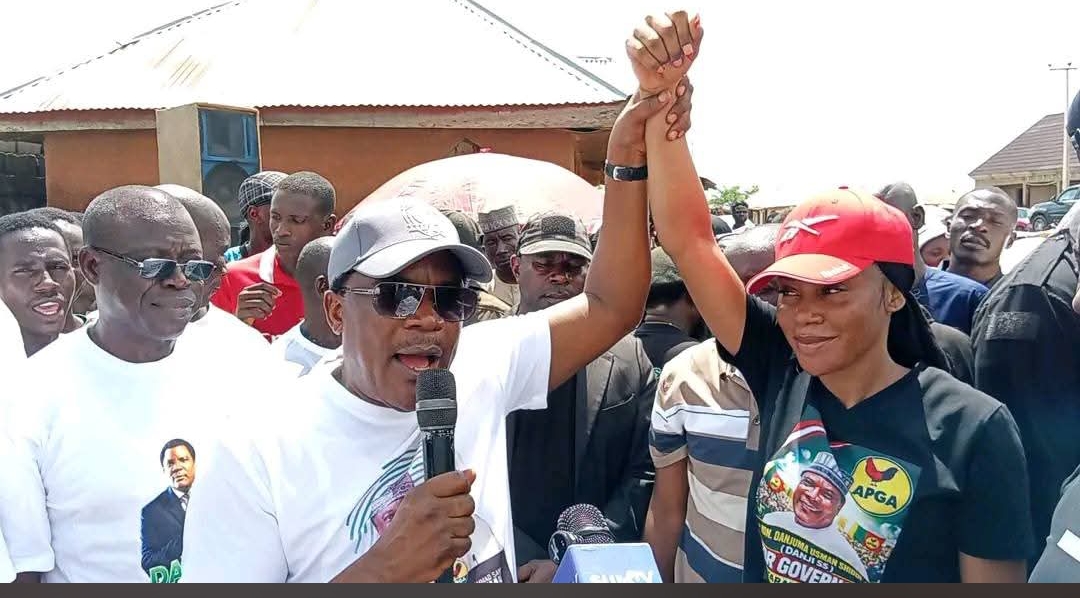
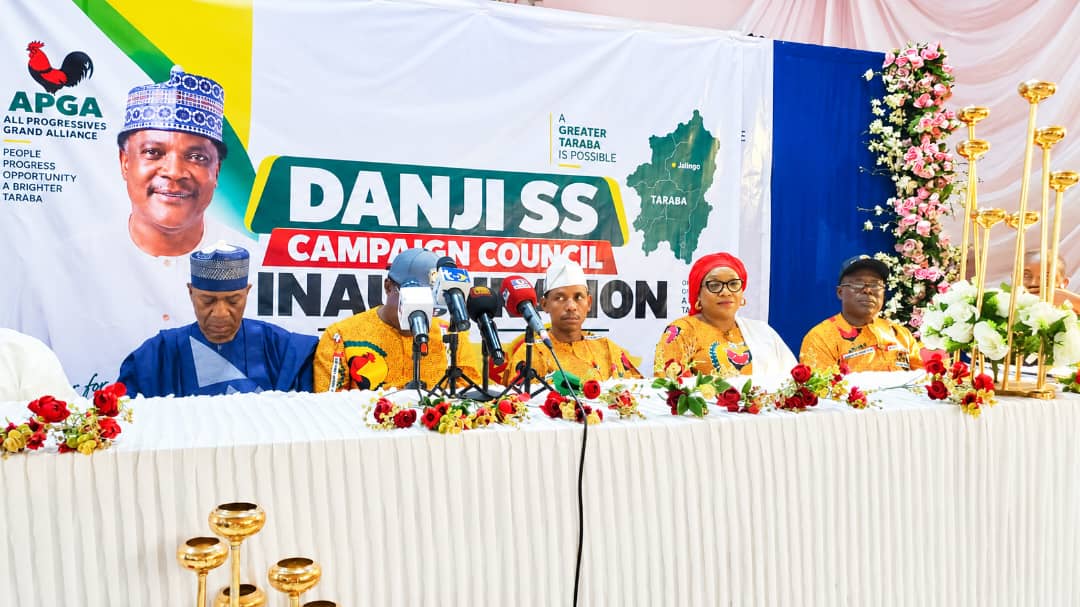
DANJUMA SHIDDI: THE APGA FACTOR
Hon. Danjuma Shiddi is another candidate who cannot simply be dismissed.
The former federal lawmaker emerged as the APGA governorship candidate after the party’s primary and affirmation exercise in Jalingo.
Shiddi’s political experience gives him an understanding of electoral politics and legislative representation.
His campaign is already highlighting issues including unemployment, education, infrastructure and economic hardship.
The challenge for Shiddi, however, is statewide expansion.
Taraba governorship elections are won through broad coalitions.
A candidate must be able to move beyond personal popularity or a stronghold and develop meaningful support across the North, Central and South.
APGA’s ability to build that coalition will therefore be one of the major tests of Shiddi’s candidacy.
Nevertheless, third-party candidates can sometimes influence an election far beyond their eventual vote total.
They can divide traditional voting blocs, attract dissatisfied voters and force the major parties to address issues they might otherwise ignore.
PROF. SANI YAHAYA: THE NDC’S TEST
Prof. Sani Yahaya enters the contest under the National Democratic Congress.
His candidacy adds another voice to the growing demand for alternatives to the established political order.
For Yahaya, the challenge will be converting academic and professional credentials into political capital.
Taraba voters will want to know what distinguishes his programme from those of Kefas, Bwacha, Tutare and Shiddi.
- What is his economic plan?
- How will he create jobs?
- What is his strategy for agriculture?
- How will he address the state’s infrastructure deficit?
- What will he do differently in education and healthcare?
- And, perhaps most importantly, can the NDC develop the grassroots structures necessary to compete in a statewide election?
The answers to these questions will determine whether Yahaya becomes a serious contender or remains a candidate whose presence contributes to the political debate without fundamentally altering the race.
PROF. JEROME NYAME: THE ACCORD PARTY OPTION
Prof. Jerome Nyame of the Accord Party completes the six-man field identified for this analysis.
His candidacy presents another opportunity for voters seeking an alternative outside the APC, PDP, ADC and APGA camps.
But like other smaller-party candidates, Nyame faces the classic problem of Nigerian third-party politics.
- A strong manifesto is important.
- Personal credibility is important.
- Public recognition is important.
But without a powerful political structure, these advantages may not translate into votes.
Nyame therefore faces the difficult task of building a statewide network capable of competing with parties that have deeper organisational structures.
His campaign will need to demonstrate why Tarabans should choose Accord rather than simply use the party as a protest platform.
THE CONTENDERS AND THE PRETENDERS
The word “pretenders” must be approached carefully.
In politics, a candidate should not be labelled a pretender merely because his party is small or because his chances appear limited.
Some candidates enter elections with little initial structure but grow rapidly during campaigns.
The real distinction should therefore be based on measurable political capacity.
A genuine contender must demonstrate:
- Statewide political structure
- Strong ward and polling-unit organisation
- Financial capacity
- Cross-senatorial-zone acceptance
- Credible campaign machinery
- A compelling manifesto
- Youth and women’s mobilisation
- Strong grassroots relationships
- Ability to attract influential political actors
- Capacity to turn popularity into actual votes
By these standards, the 2027 contest will gradually reveal who is serious.
THE KEFAS-BWACHA BATTLE
Despite the six-candidate field, much of the political conversation will inevitably focus on Kefas and Bwacha.
The reason is simple;
- They already have statewide political identities.
- They have contested against each other before.
- They understand each other’s political strengths.
- And their political parties possess substantial structures.
- The 2027 contest therefore carries the character of a rematch.
- But this is not necessarily a repeat of 2023.
- The parties have changed.
- Political alliances have shifted.
- New parties have become more prominent.
- The electorate has also had four years to assess the incumbent.
The result may therefore be determined less by what happened in 2023 and more by what Tarabans think about the next four years.
THE TUTARE QUESTION
Tutare’s candidacy may become particularly important if the ADC succeeds in attracting voters who are dissatisfied with both major parties.
- The ADC could potentially benefit from a protest vote.
- However, protest votes alone rarely win governorship elections.
- Tutare would need to transform dissatisfaction into organisation.
He must convince voters that the ADC is not simply another political platform but a realistic vehicle for taking power in Taraba.
That distinction could determine his fate.
SHIDDI AND THE APGA CALCULATION
Shiddi’s candidacy raises another important question:
Can APGA break into Taraba’s traditional two-party equation?
If the party establishes a meaningful presence across the state, Shiddi could influence the final result.
But if APGA’s support remains concentrated in limited areas, its impact may be more modest.
Either way, the party’s performance will be worth watching.
THE SANI YAHAYA AND NYAME TEST
For Prof. Sani Yahaya and Prof. Jerome Nyame, the 2027 election will be an opportunity to prove that Taraba politics is not permanently locked between the two dominant parties and their established alternatives.
Their greatest weapon could be policy.
While the major parties will inevitably be engaged in battles over personalities and political structures, the two professors have the opportunity to make the election a debate about ideas.
But ideas must ultimately find voters.
And voters must find the candidates.
That is where political organisation becomes decisive.
ZONING: THE ELEPHANT IN THE ROOM
No serious analysis of Taraba politics can ignore zoning.
The three senatorial zones; North, Central and South, remain crucial to every governorship calculation.
Political actors will continue to ask:
- Where should the next governor come from?
- Which zone has had enough?
- Which zone is being marginalised?
- Which candidate can build a coalition across the zones?
But zoning alone cannot win an election.
A candidate may have geographical advantage but lack statewide acceptance.
Another may come from a less favoured zone but build a powerful coalition based on performance, personality and political alliances.
The 2027 election may therefore become a battle between zoning and competence, identity and performance, or even political tradition and voter choice.
YOUTH AND WOMEN: THE DECIDING BLOCK
One of the biggest mistakes any candidate could make in 2027 is to underestimate young voters.
Taraba’s young population is increasingly demanding employment, entrepreneurship, education, digital opportunities and meaningful participation in governance.
Women are equally important to the electoral equation.
A campaign that merely uses youths and women as crowd fillers may fail to understand the new political reality.
The serious candidate must present a clear programme for:
- Employment.
- Skills acquisition.
- Entrepreneurship.
- Agriculture.
- Education.
- Healthcare.
- Women empowerment.
- Digital economy.
- Political inclusion.
The candidate who makes these issues central rather than decorative may have an advantage.
PERFORMANCE VERSUS PROMISES
For Governor Kefas, the 2027 election is likely to be a referendum on performance.
For Bwacha, Tutare, Shiddi, Yahaya and Nyame, it will be an argument for change.
That creates a simple political equation.
- Kefas must explain why Tarabans should retain him.
- The opposition candidates must explain why Tarabans should replace him.
- The electorate will ultimately decide which argument is more convincing.
THE MONEY QUESTION
No discussion of Nigerian elections is complete without acknowledging the role of campaign financing.
Governorship campaigns are expensive.
Mobilisation, logistics, media, agents, rallies and grassroots organisation all require resources.
But money alone does not guarantee victory.
A candidate can spend heavily and still lose if voters do not trust the candidate.
Similarly, a candidate with limited resources can outperform expectations if the campaign develops a strong grassroots movement.
The question is therefore not simply who has money, but who can convert resources into genuine voter mobilisation.
WHO IS THE REAL CONTENDER?
At this stage, it would be premature to declare a winner.
Governor Kefas clearly has the institutional advantage of incumbency.
Bwacha has the advantage of experience, an established political network and the PDP structure.
Tutare has the opportunity to build the ADC into a serious alternative.
Shiddi has the APGA platform and his own political experience.
Sani Yahaya and Jerome Nyame have the opportunity to differentiate themselves through policy, professional credentials and alternative political narratives.
But elections are not won by credentials alone.
They are won by coalitions.
THE FINAL TEST
As the campaign progresses, Tarabans should watch beyond rallies and endorsements.
They should ask:
- Who is building structures?
- Who is listening to the people?
- Who has a realistic economic plan?
- Who can unite the three senatorial zones?
- Who has a credible record?
- Who has the capacity to govern?
- Who is genuinely seeking power to serve, and who is merely seeking political relevance?
These questions will eventually separate the contenders from the pretenders.
The 2027 Taraba governorship election may begin with six names, but the number of genuine contenders will ultimately be determined by the electorate.
The race is still developing.
The alliances are still shifting.
The political calculations are still changing.
And the voters are watching.
When the campaign dust finally settles, Tarabans will have the final word.
Not the party leaders.
Not the political godfathers.
Not the endorsements.
Not social media.
The voters.
And their verdict will determine who occupies Government House, Jalingo, after 2027.
Sani Yahaya came second in the last race, he is a top coontender that shouldnt be overlooked