








JALINGO LIVESTOCK ENFORCEMENT TURNS CONTROVERSIAL AS RESIDENT, TSESA GIVE CONFLICTING ACCOUNTS OF INJURY
Resident alleges assault with sharp object; agency says no stabbing occurred, blames head collision during scuffle
By Taraba News | Jalingo
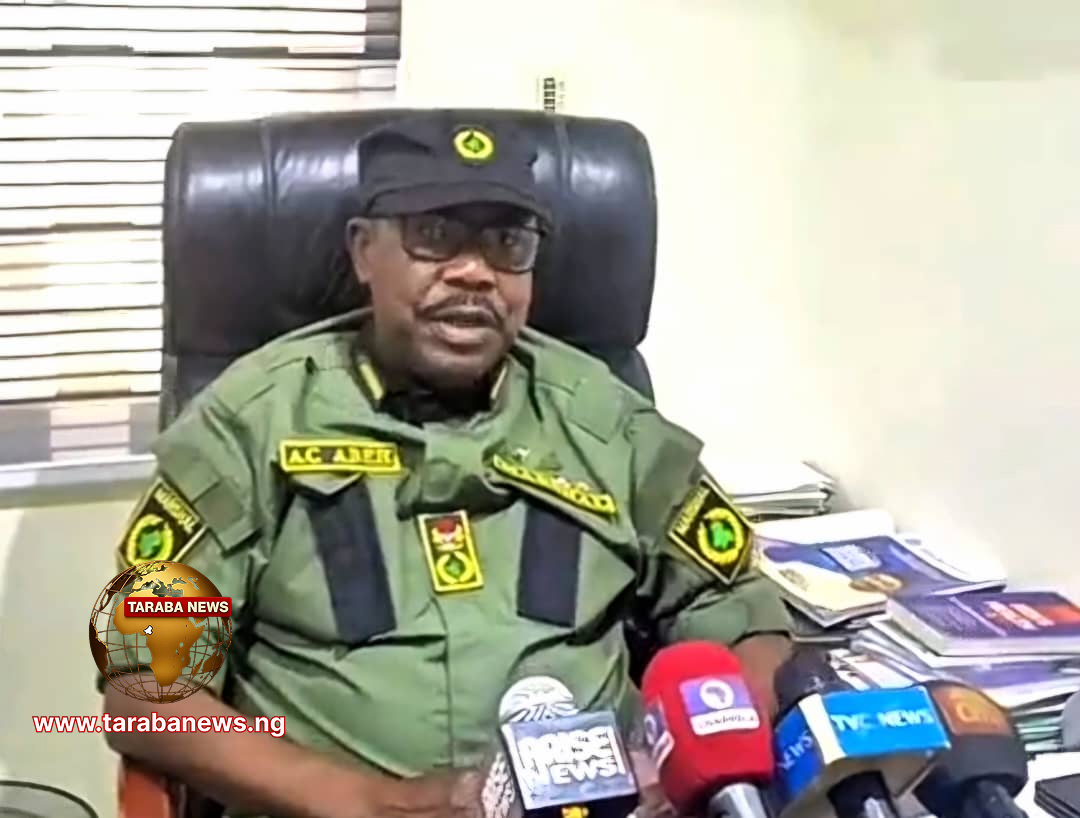
Controversy has erupted over the enforcement of the ban on roaming livestock in Jalingo after a resident accused the Chairman of the Taraba State Environmental and Sanitation Agency (TSESA), Hon. Iliya Kefas, of assaulting and injuring him — an allegation the agency has strongly denied.
Raphael Laakoshon, a resident of Jalingo, alleged that he sustained a deep cut after Kefas struck him with an object during a confrontation arising from the seizure of goats in Abuja Phase I.
But TSESA has presented a sharply different account, insisting that its chairman neither stabbed nor attacked the resident with any sharp object.
According to the agency, the injury occurred when heads collided during a scuffle involving some of the affected residents and security personnel.
The conflicting accounts have turned what began as an enforcement action against stray livestock into a controversy over what actually happened during the confrontation.
RESIDENT: “I DON’T KNOW WHAT HE USED”
Laakoshon, whose account was reported by SaharaReporters, said sanitation officials had seized his livestock on Saturday and asked him to return on Monday.
According to him, he and other affected residents subsequently went to retrieve their animals.
He alleged that an argument developed and that the TSESA chairman struck another person before turning on him after he appealed for restraint.
Laakoshon maintained that he did not attack the chairman.
He said he could not identify exactly what caused the injury, stating that it could have been a knife, key, phone or another object.
He said the wound bled heavily and that police later referred him to a police clinic, where it was cleaned and sutured.
Laakoshon is demanding compensation for the injury.
TSESA: NO KNIFE, NO STABBING
TSESA, however, has rejected the allegation.
The agency’s media aide and an eyewitness to the incident, Aliyu Jibrin, said reports suggesting that Kefas stabbed the resident were false and misleading.
According to Jibrin, three goats had been seized in Abuja Phase I after they were allegedly found roaming freely, destroying flowers planted along a major road as well as crops and other plants.
He said trouble started when the owners arrived at the agency demanding that the animals be released.
Jibrin alleged that during the disagreement, one of the men threatened to “slaughter” the TSESA chairman if the goats were not released.
He further claimed that the alleged threat was recorded on his telephone and that he still had the recording.
According to the agency’s account, when Kefas arrived and was informed about the alleged threat, he directed police officers to take the person accused of making the threat to the station while the others remained behind for further discussion.
The agency alleged that some of the men resisted, insisting that they should all be taken together.
A scuffle subsequently broke out.
Jibrin said it was during the pushing and resistance that a head collision occurred.
“There was nothing like a knife. Nobody stabbed anybody. It was a collision between their heads during the pushing and resistance,” he said.
He also claimed to possess video footage showing what happened.
VIDEO, AUDIO COULD BE CRITICAL
The claim by TSESA that video footage exists could become important in establishing what actually transpired.
Similarly, the agency’s claim that it possesses an audio recording of an alleged threat against its chairman introduces another dimension to the controversy.
The police, who were reportedly present during parts of the incident and are handling the matter, could therefore be in a position to establish whether Laakoshon’s injury resulted from an assault, an accidental collision or circumstances different from the competing accounts.
WHY THE GOATS WERE SEIZED
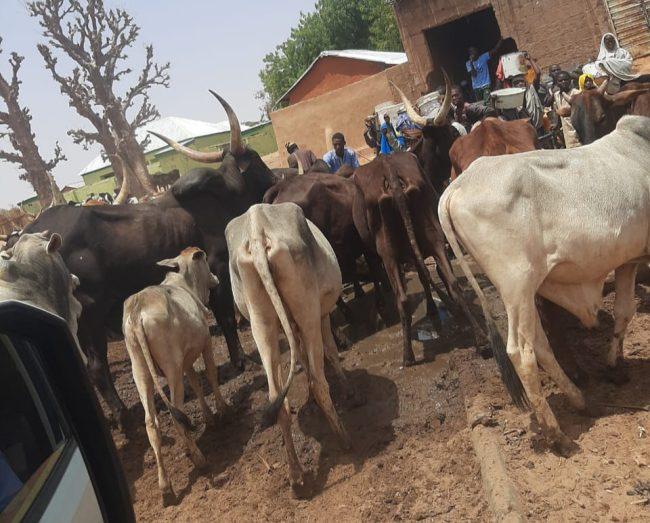
TSESA said the seizure formed part of the state government’s enforcement against the indiscriminate movement of animals within residential areas and public places in Jalingo.
The agency said it has procedures that owners must follow before impounded animals can be released.
These reportedly include recording where the animals were seized, photographing the claimants, collecting their contact information and obtaining written undertakings.
TSESA maintained that its officials were carrying out a government directive aimed at stopping animals from roaming freely and damaging public and private property.
TWO ACCOUNTS, ONE INCIDENT
What is clear from the accounts so far is that a confrontation occurred following the seizure of livestock and that Laakoshon sustained an injury requiring medical attention.
What remains disputed is how that injury was sustained.
Laakoshon attributes it to an alleged blow from the TSESA chairman with an unidentified object.
TSESA denies this and says the injury resulted from a collision during a scuffle.
The agency has challenged reports describing the incident as a stabbing and criticised media organisations and social media users for allegedly publishing the accusation without adequately verifying its version of events.
With both sides now presenting conflicting narratives, the police investigation — alongside any available video, audio, eyewitness testimony and medical evidence — may ultimately provide a clearer picture of what happened.
The controversy also highlights the need for restraint by both enforcement officials and residents as the state government intensifies its campaign against roaming livestock in Jalingo.
Taraba News will continue to follow developments and seek the official position of the Taraba State Police Command on the circumstances surrounding the incident.