






Home » Aisha Barde leadership
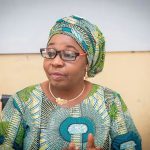
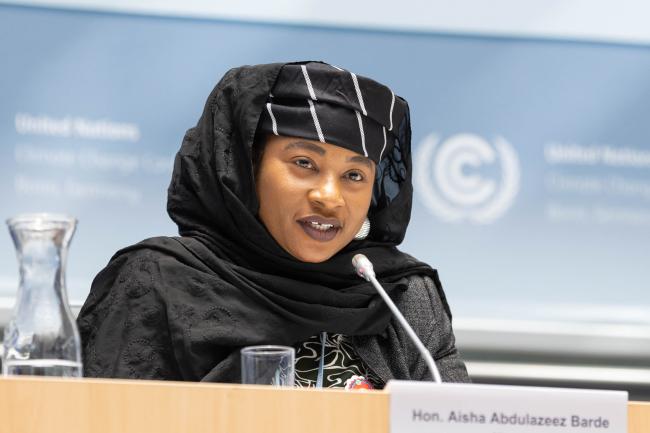
From ‘Invisible’ to Indispensable: How Aisha Barde Is Repositioning Taraba Environment Ministry By Taraba News August 31, 2026 | Jalingo The Taraba State Ministry of Environment and Climate Change is gradually emerging from relative obscurity to become one of the increasingly visible and performance-driven institutions of the state government. At the centre of the changing narrative is the Commissioner for Environment and Climate Change, Hon. Aisha A. Barde, whose leadership has brought renewed attention to a ministry once perceived by some observers as occupying the background of government activities. Recent developments, particularly the ministry’s performance in revenue generation, provide measurable evidence of the shift. At the maiden Quarterly Revenue Performance Review organised by the Taraba State Internal Revenue Service (TIRS) for Ministries, Departments and Agencies, figures presented showed that the Environment Ministry substantially exceeded its revenue target for the first half of 2026. The ministry recorded a first-quarter revenue target of ₦54,187,897 and a second-quarter target of ₦54,181,897.50, bringing its combined half-year target to approximately ₦107.36 million. Against this target, the ministry generated ₦121.802 million in the first quarter and another ₦95.195 million in the second quarter. This brought its cumulative revenue generation for the first six months of 2026 to ₦216.997 million—more than double its projected half-year target. The performance places the ministry among the notable performers highlighted during the TIRS review and points to stronger revenue mobilisation and administrative activity within the ministry. But the emerging story of the Environment Ministry goes beyond revenue. Environmental governance has become increasingly important to Taraba, particularly as the state confronts challenges associated with deforestation, climate change, flooding, waste management, environmental degradation and the need for sustainable exploitation of its enormous natural resources. The ministry therefore occupies a strategic position that extends beyond conventional sanitation and environmental regulation. Its responsibilities have direct implications for public health, agriculture, urban development, climate resilience, investment and the long-term sustainability of communities across the state. Under Barde, there are indications that the ministry is seeking to translate these responsibilities into a more visible institutional presence and measurable outcomes. The revenue figures offer one benchmark. Generating almost ₦217 million against a half-year target of about ₦107 million suggests that the ministry has strengthened its capacity to mobilise revenue from activities within its statutory mandate. For a ministry traditionally viewed largely through the prism of sanitation and environmental regulation, the development also highlights the potentially significant economic dimension of environmental governance. However, revenue generation alone cannot determine the overall performance of a ministry. For residents, the bigger test will remain whether increased revenue and institutional visibility translate into cleaner communities, improved waste management, stronger environmental protection, effective climate-change interventions and sustainable management of Taraba's natural resources. These will ultimately determine whether the transformation being recorded within the ministry produces lasting benefits for ordinary citizens. Still, the latest performance provides a measurable indication that something is changing. From an institution that rarely occupied the centre of public discussion, the Ministry of Environment and Climate Change is increasingly positioning itself as an important component of Taraba State's development architecture. And as climate change and environmental sustainability become increasingly central to government planning globally, the ministry's relevance is likely to grow further. For Commissioner Aisha A. Barde, the challenge now is to consolidate the gains, sustain the improved performance and ensure that the ministry's growing visibility is matched by tangible environmental improvements across Taraba State. For now, the emerging narrative is difficult to ignore: a ministry once considered almost invisible is increasingly making itself indispensable.

From ‘Invisible’ to Indispensable: How Aisha Barde Is Repositioning Taraba Environment Ministry

From ‘Invisible’ to Indispensable: How Aisha Barde Is Repositioning Taraba Environment Ministry By Taraba News August 31, 2026 | Jalingo The Taraba State Ministry of Environment and Climate Change is gradually emerging from relative obscurity to become one of the increasingly visible and performance-driven institutions of the state government. At the centre of the changing…

Read Full News