



Management clarifies ₦44,000 NSQ programme fee, says charge covers vocational training and certification under Federal Government’s TVET initiative.
The Management of Taraba State College of Health Technology, Takum, has dismissed allegations of an increase in annual tuition fees, insisting that the institution’s approved tuition remains ₦38,000 in line with the Taraba State Government’s 50 per cent fee reduction policy.
The clarification follows a social media post by Abdulmumin Imam, who alleged that an additional ₦44,000 had been imposed on students, bringing their total annual fees to ₦82,000.
In a statement responding to the allegation, the management explained that the disputed ₦44,000 is not an increase in tuition but an operational fee for the National Skills Qualification (NSQ) programme under the Federal Government’s Technical and Vocational Education and Training (TVET) initiative.
According to the institution, the programme is designed to equip students with practical vocational skills across seven accredited areas, including fashion design, leather works, cosmetology, catering and hospitality, computer hardware repairs and maintenance, photography and cinematography, as well as mobile phone repairs and maintenance.
The management stated that the approved fee of ₦22,000 per semester, amounting to ₦44,000 per academic session, covers instructors’ services, practical training materials, logbooks, entrepreneurship handbooks, continuous assessment and certification.
It added that the programme operates under a Public-Private Partnership (PPP) framework with the knowledge and approval of the Taraba State Government and the National Board for Technical Education (NBTE).
The college further disclosed that it is the first institution in North-East Nigeria to obtain full NBTE accreditation for the NSQ programme across the seven vocational areas.
It said more than 500 students are currently undergoing training, while nine assessors have been certified to support the programme.
As part of efforts to promote practical competence and entrepreneurship, the institution has also organised skills exhibitions featuring cash prizes to encourage students to demonstrate their abilities and develop marketable skills.
The management noted that students who successfully complete the programme will graduate with dual qualifications academic and occupational expected to improve their employability, encourage self-reliance and create opportunities for entrepreneurship.
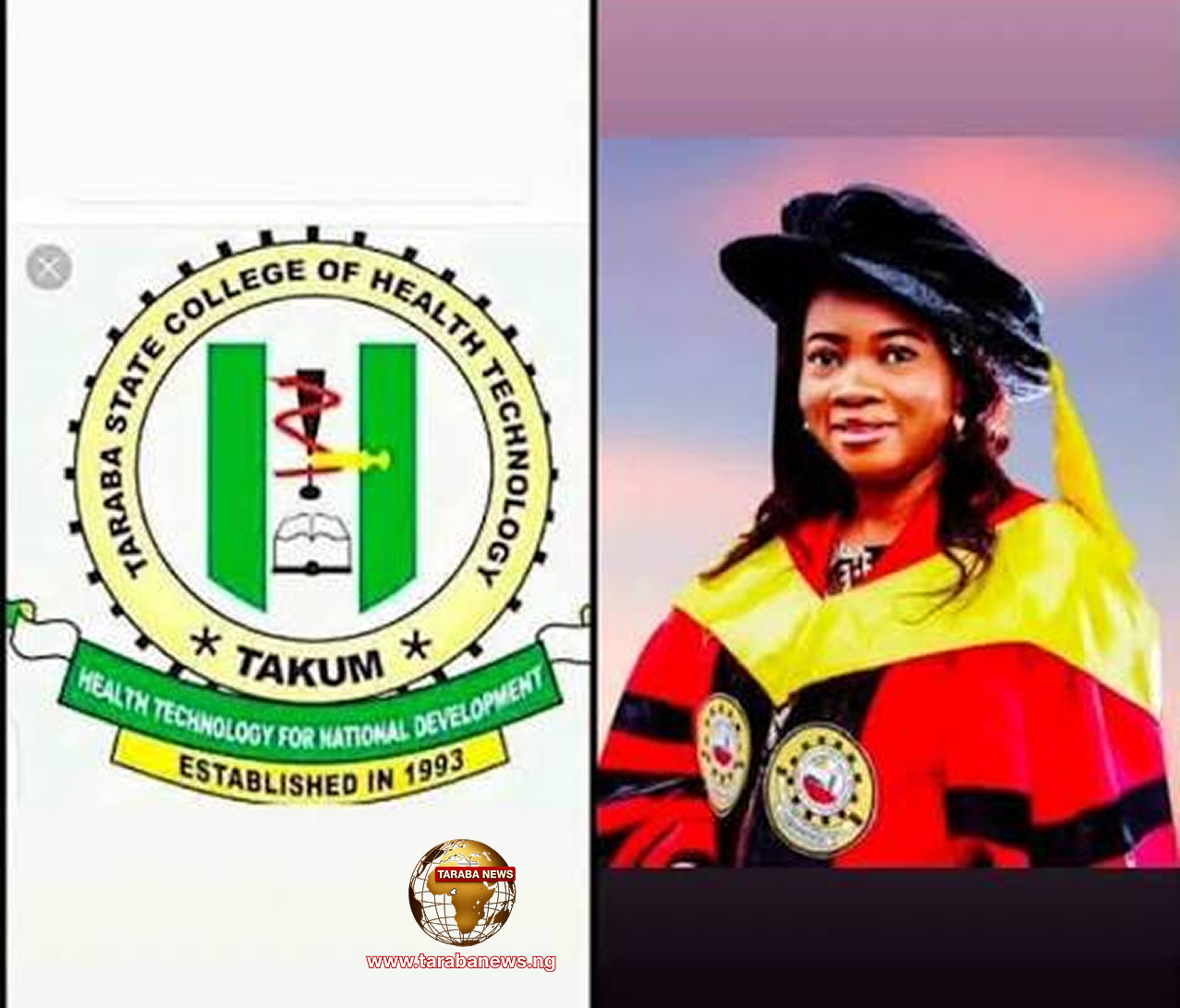
On allegations involving the Provost, Dr. Wama Binga Emmanuel, the management condemned what it described as gender profiling and attempts to associate her with General T.Y. Danjuma, characterising the claims as efforts to discredit the institution’s leadership.
It maintained that the NSQ-related charges were introduced transparently in line with national TVET policy and were not imposed unilaterally by the Provost.
The statement also attributed recent developments at the college, including full NBTE accreditation, the procurement of practical training equipment, staff capacity development and the expansion of entrepreneurship education, to the leadership of Dr. Wama Binga Emmanuel.
The management urged Abdulmumin Imam to verify information before making public allegations, stressing that activism should be guided by facts, decorum and responsibility.
It warned against the use of social media to circulate claims that could damage the reputations of individuals and institutions working to advance educational development in Taraba State.
The college reaffirmed its commitment to quality health education, vocational skills acquisition and entrepreneurship, describing the NSQ programme as an important step towards equipping students with practical competencies needed to succeed in the labour market and become self-reliant.