






By Iranyang Daniel
The former Commissioner for Budget and Economic Planning in Taraba State, Honourable Solomon Elisha, has expressed confidence in the chances of the All Progressives Congress (APC) in the 2027 senatorial election in Taraba Central, insisting that the party has the political structure, experience and grassroots connections required to secure victory.
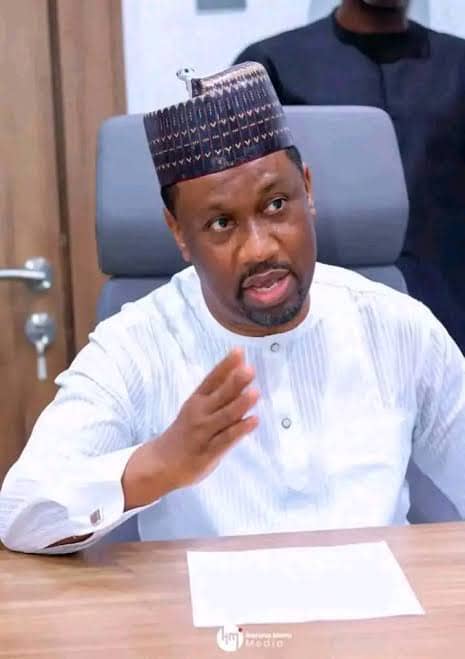
Elisha, who stated this during an appearance on SUM TV’s Today’s Politics, argued that Senator Haruna Manu deserves another opportunity to represent Taraba Central, citing his previous experience in public office, legislative activities, political network and alleged contributions to development across the senatorial district.
The programme, which examined the topic, “The Chances of APC in the 2027 Senatorial Election of Taraba Central: Issues and the Way Forward,” also explored the implications of recent political defections, the relationship between the APC and its old members, allegations of marginalisation, the strength of opposition candidates and the possibility of political realignment ahead of the general election.
Elisha maintained that the movement of prominent political officeholders, including Governor Agbu Kefas and Senator Manu, into the APC should be viewed beyond party loyalty and political calculations, arguing that aligning with the ruling party at the federal level could create opportunities for greater development in Taraba State.
He explained that political parties are essentially platforms through which individuals seek public office and participate in governance; therefore, the more important consideration should be what the people stand to gain from political decisions.
He likened political parties to vehicles, explaining that an individual could use one vehicle today and another tomorrow, provided the journey leads to the desired destination.
For him, the central question should not be whether a politician has moved from one political party to another, but whether such a decision would translate into improved infrastructure, employment opportunities, electricity, healthcare and other benefits for the people.
DEFECTION AND THE PROMISE OF FEDERAL INFLUENCE
Defending the political realignment involving Senator Manu, Elisha argued that the senator’s movement from the opposition into the ruling APC could strengthen Taraba Central’s access to federal opportunities.
He explained that Senator Manu had previously served in the House of Representatives and as Deputy Governor of Taraba State for eight years before becoming a senator, giving him considerable political and administrative experience.
Elisha suggested that such experience, combined with membership of the ruling party, could improve the district’s ability to attract federal attention and influence decisions on important national projects.
He particularly identified the Mambilla Hydroelectric Power Project as one of the strategic national investments that makes Taraba Central important to Nigeria’s development agenda.
He also referred to the alleged growing federal presence in parts of the senatorial district, especially around Sardauna, Kurmi and neighbouring communities, arguing that the political realignment could further strengthen the zone’s position in national affairs.
However, the argument raises an important political question: whether access to the ruling party automatically guarantees development or whether the real test should remain the delivery of measurable benefits to citizens, irrespective of party affiliation.
For Elisha, the movement into the mainstream of federal politics offers an advantage that should not be overlooked.
ELECTRICITY, HEALTHCARE AND INFRASTRUCTURE AS CAMPAIGN ARGUMENTS
In defending Senator Manu’s performance, the former commissioner highlighted electricity projects, healthcare development, water supply and road infrastructure as some of the areas where he believes the senator has made contributions.
He disclosed that efforts were being made to extend electricity from the national grid to Kurmi Local Government Area, claiming that the necessary wiring and installation of transformers had been completed and that the remaining step was to connect the facilities to the national grid.
He also recalled that Mutum Biyu was among the few communities in the central zone with access to national electricity infrastructure, attributing the earlier intervention to Senator Manu’s period as Deputy Governor.
Elisha further mentioned the use of mini-solar power projects to provide electricity to some communities, describing access to power as an important factor in improving economic activities, supporting small businesses and enhancing the living conditions of rural residents.
On healthcare, he referred to efforts towards establishing a Federal Medical Centre in Gembu, Sardauna Local Government Area, describing it as an important intervention that could improve access to medical services for residents of the district.
He also mentioned a proposed water project in Mutum Biyu and other interventions in Bali, although he did not provide specific details, implementation timelines or the financial commitments attached to those projects.
While acknowledging that lawmaking remains the primary responsibility of legislators, Elisha argued that representatives are also expected to undertake oversight functions and facilitate development projects that address the needs of their constituencies.
He maintained that Senator Manu had demonstrated an understanding of these responsibilities and deserved recognition for his efforts.
Nevertheless, the distinction between projects directly executed by a senator and those facilitated through government agencies remains important in assessing legislative performance. Such claims would require independent verification through project records, budget documents and evidence of completion.
REJECTS ALLEGATIONS OF POLITICAL AND RELIGIOUS MARGINALISATION
Another major issue examined during the programme was the allegation that Senator Manu’s political leadership had not sufficiently accommodated the different religious, ethnic and cultural interests within Taraba Central.
Responding to concerns that some communities and political groups might feel excluded, Elisha insisted that the senator was willing to work with people across religious and ethnic boundaries.
Identifying himself as a Christian, he said he had personally interacted with the senator whenever concerns arose and described him as a leader who listens and is willing to apologise when necessary.
He argued that political differences should not be allowed to destroy relationships among people who depend on one another for peaceful coexistence and development.
To support his position, Elisha cited the scholarship programme reportedly organised for students studying abroad, explaining that a committee was established to supervise the process.
He identified Dr. Joshua Garba Mbave, whom he described as a Christian from Kurmi, as chairman of the committee, adding that the arrangement was intended to ensure that the selection process was handled by competent people without undue interference.
According to him, the committee’s composition demonstrates that the senator’s political leadership is not necessarily restricted by religious considerations.
He further argued that the distribution of development interventions across the six local government areas of Taraba Central should be assessed with due consideration for population differences and the peculiar needs of each community.
He mentioned Kurmi, Gassol, Bali, Gashaka and Sardauna, insisting that differences in the scale of interventions should not automatically be interpreted as evidence of religious or ethnic discrimination.
However, the issue of inclusiveness remains one of the important questions that the senator’s political camp would need to address as the 2027 election approaches.
Beyond assurances from political associates, residents would expect transparent information about the distribution of appointments, scholarships, development projects and other opportunities across the district.
FEDERAL ROAD PROJECTS AND THE DEVELOPMENT ARGUMENT
Elisha also drew attention to federal road projects, particularly the road linking Abong to Sabon Gida Akanwe and another route around communities in Kurmi LGA.
He claimed that the Federal Government was making arrangements for road construction to open up the areas seeing the economic potentials the communities are endowed with, describing the interventions as evidence of increasing federal attention to communities that have experienced infrastructure challenges.
He argued that improved road networks would enhance transportation, facilitate agricultural activities, connect rural communities to markets and encourage economic growth.
For communities in the relatively difficult terrain of Taraba Central, road infrastructure is particularly important because poor connectivity can make access to healthcare, education and commercial opportunities difficult.
He maintained that another term for Senator Manu could provide an opportunity to consolidate the development efforts already initiated.
FALACK’S ORPHANED DISTRICT CLAIM REJECTED
One of the most politically significant moments of the interview came when Elisha was asked to respond to a statement attributed to Dr Victor Falack, the Accord Party candidate for Taraba Central Senatorial District and one of the prominent contenders for the seat ahead of the 2027 elections. Falack had reportedly described Taraba Central as an “orphaned senatorial district,” alleging that the zone had suffered inadequate representation under the incumbent, Senator Haruna Manu, seeing that he is among those reportedly positioning themselves for the 2027 senatorial contest, had questioned the quality of representation provided by Senator Manu.
But Elisha dismissed the argument, insisting that the senator had remained connected to the people and had maintained a political presence across the district.
He described Manu as a household name with considerable experience in public administration and legislative politics, arguing that his previous positions had given him an advantage over aspirants who had not occupied comparable offices.
In an attempt to illustrate his argument, Elisha used a numerical analogy, suggesting that a person who had occupied an office and performed at a certain level should not be equated with someone who had never held the position.
He argued that even where an incumbent’s performance was considered unsatisfactory, the experience gained in office remained an advantage that could be improved upon.
On whether Falack posed a serious threat to Manu’s ambition, Elisha answered in the negative, insisting that the incumbent had maintained a strong political presence.
He also dismissed the suggestion that the number of aspirants contesting for the senatorial seat across different political parties would necessarily weaken Manu’s chances.
‘ CROWDS ARE NOT VOTES’
In one of his strongest arguments during the programme, Elisha declared that campaign crowds were not reliable indicators of electoral victory.
He explained that people could gather around a political figure for different reasons, but such gatherings did not automatically translate into votes on election day.
He instead identified political structures, established relationships and sustained grassroots engagement as more reliable indicators of electoral strength.
According to him, Senator Manu had maintained relationships with individuals and groups in the district for more than ten years, including during periods when he was not occupying the senatorial office.
He cited the senator’s alleged tradition of sending Christmas and Sallah gifts, supporting individuals and assisting community groups as examples of the relationships he claimed had helped sustain his political network.
Elisha argued that such relationships provided the senator with established contacts across communities, making it easier for him to communicate with people at the grassroots.
He also responded to reports suggesting that some political officeholders within the APC might be supporting alternative aspirants in Kurmi, saying he had not personally heard of the alleged development.
He nevertheless maintained that such reports, if confirmed, should not automatically be interpreted as evidence that the incumbent had lost his political influence.
APC’S INTERNAL RECONCILIATION CHALLENGE
The former commissioner also acknowledged that the entry of politicians from the Peoples Democratic Party (PDP) into the APC might not have been welcomed by every existing party member.
He admitted that political change does not always satisfy everybody, particularly when new entrants arrive with considerable political influence and ambitions.
However, he maintained that the interest of the majority should guide the party’s decisions, insisting that governance and development must remain the overriding considerations.
His position reflects one of the major challenges confronting the APC as it prepares for 2027: how to accommodate new political entrants without alienating members who have built the party’s structures over the years.
Without effective internal accommodation, the political advantages expected from defections could be weakened by disagreements, competing ambitions and possible resentment among party loyalists.
POLITICAL STRUCTURES VERSUS POPULAR APPEAL
The interview also examined the growing political competition in Taraba Central, where several aspirants are reportedly seeking the senatorial ticket on different platforms.
Apart from Dr Victor Falack, the discussion mentioned Hon. Gilbert Nyanganji and other political figures as possible contenders.
When asked whether any of the opposition aspirants could threaten Senator Manu’s re-election ambition, Elisha maintained that he remained confident in the incumbent’s political standing.
He argued that the number of aspirants and the crowds attracted by their campaigns were not sufficient grounds for determining who would win the election.
His argument was that electoral success depended more on established structures, community relationships and the ability to mobilise voters than on the size of gatherings at political events.
Nevertheless, the popularity of opposition aspirants, their growing grassroots activities and their ability to build alliances could become important factors in determining the outcome of the election.
The existence of political structures does not automatically guarantee victory either, as voters ultimately retain the power to reward or reject candidates based on their assessment of performance, accessibility and credibility.
THE ROAD TO 2027
As the 2027 general election approaches, Elisha’s defence of Senator Manu provides an insight into the political arguments likely to dominate the APC’s campaign in Taraba Central.
His position rests largely on three arguments: Senator Manu’s experience in public office, the development projects he claims to have facilitated and the political structures he says have been maintained across the district.
He also believes that the movement of the governor and senator into the APC could strengthen the state’s relationship with the Federal Government and create opportunities for additional development.
However, the APC’s prospects will depend on more than political defections and endorsements. The party will have to demonstrate that its growing political influence can translate into tangible improvements in the lives of ordinary residents.
It will also have to address concerns about inclusion, reconcile existing members with new entrants and convince voters that its candidates deserve their confidence.
For the opposition, the challenge will be to convert public criticism of the incumbent into a credible alternative supported by strong grassroots organisation and a convincing development agenda.
As it stands, whether Senator Manu secures another term will be determined not by the confidence of his political associates or the number of people attending campaign rallies, but by the choices voters make at the polling units.
Elisha, however, remains optimistic that the incumbent’s experience, political network and relationship with the people will give him an advantage when Taraba Central goes to the polls in 2027.
The interview was conducted on SUM TV’s Today’s Politics, anchored by Iranyang Daniel, with the former Taraba State Commissioner for Budget and Economic Planning, Honourable Solomon Elisha, as guest.