




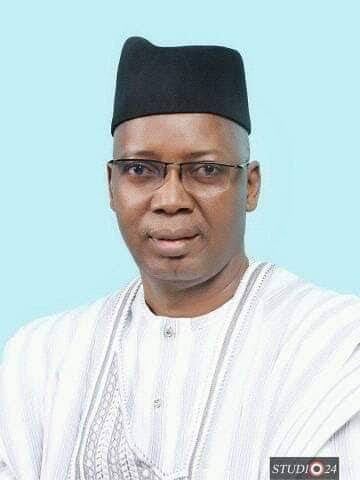
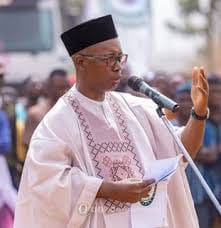
Ten Months of Purposeful Leadership in Ussa: How Abershi Musa Is Changing the Narrative
Security, grassroots engagement, infrastructure and administrative reforms define the early months of the Ussa council administration
USSA, TARABA — Ten months into the administration of Hon. Abershi Musa as Executive Chairman of Ussa Local Government Area of Taraba State, the council’s leadership has placed emphasis on security, community engagement, administrative restructuring and collaboration with the state government to advance development at the grassroots.
Musa assumed office with the responsibility of governing a local government where insecurity, difficult road networks and access to basic services have remained among the issues affecting communities.
Available reports from the council and local news outlets indicate that his administration has sought to address some of these challenges through a combination of security interventions, engagement with communities and collaboration with the administration of Governor Agbu Kefas.
Security as a Foundation for Development
One of the issues receiving particular attention under the administration is security.
The chairman has maintained that peace is essential for economic and social development, particularly in a predominantly agrarian local government where the ability of farmers to access their farms safely is directly connected to food production.
According to reports from the council, Ussa has sustained joint security patrols involving personnel of the Nigerian Army, Nigeria Police Force, Nigeria Security and Civil Defence Corps, local vigilantes, hunters and representatives of the resident Fulani community.
The patrols have covered farming communities and border areas, including the Kwesati/Tati axis through Lissam Pangtso to Kpambo Puri. The council says the approach is designed to protect farmers, strengthen intelligence gathering and prevent security threats before they escalate.
Musa has also attributed the relative peace reported in the area to cooperation among security agencies, traditional institutions, religious leaders, farmers, herders and community stakeholders.
In a separate report, the chairman said Ussa had not recorded a farmer-herder conflict since he assumed office, while acknowledging the contribution of the state government and security agencies. This remains a claim by the council administration rather than an independently audited security assessment.
Peace and Agriculture
For an area where agriculture provides a major source of livelihood, the administration has linked security with food production.
The council has argued that farmers can cultivate and harvest their crops more confidently when their communities and routes to farms are adequately protected.
The administration has therefore presented security not only as a law-and-order responsibility but also as an economic development issue.
Musa has repeatedly called on farmers and herders to respect one another’s rights and embrace dialogue, stressing that sustainable development cannot take place without peaceful coexistence.
Infrastructure and the Rural Road Question
Road infrastructure remains another major concern in Ussa.
The chairman recently disclosed that work on the Takum–Kpambo and Fikyu roads is expected to commence after the rainy season as part of the rural road intervention of the Taraba State Government.
He also provided an update on the Takum–Lissam Road, saying the pace of construction had been affected largely by heavy rainfall. According to the chairman, the project is expected to continue towards completion and commissioning.
The road projects are significant to residents because of their potential implications for transportation, movement of agricultural produce, access to markets and connectivity between communities.
For Ussa, where several settlements are separated by difficult terrain and road conditions, improved transportation infrastructure could have consequences beyond mobility, particularly for agriculture, education, healthcare and commerce.
Health and Education on the Development Agenda
The administration has also highlighted state government projects in education and healthcare as part of the broader development picture in Ussa.
Musa has pointed to the ongoing rehabilitation of schools across the local government under the state government’s education initiatives.
He also reported that equipment for the Lissam General Hospital had been delivered and was awaiting completion of the Takum–Lissam Road before commissioning.
These projects fall within the wider development agenda of the Taraba State Government, with the Ussa council administration positioning itself as a partner in ensuring that residents benefit from state programmes and projects.
A Council Administration Focused on Engagement
Beyond physical infrastructure, the administration has emphasised community engagement.
Musa has maintained that government at the grassroots level must remain close to the people and responsive to their concerns.
His administration’s security strategy, for example, involves traditional rulers, religious leaders, farmers, herders, community leaders and security agencies.
This community-based approach has also been reflected in discussions around peacebuilding and conflict prevention.
In August, Musa joined other Taraba local government chairmen at a leadership and peace-support programme in Kaduna, sponsored by Governor Kefas. The programme focused on leadership, peacebuilding, conflict management and sustainable development at the grassroots.
The chairman said the knowledge gained would be applied to governance in Ussa.
Administrative Restructuring
Another feature of the first ten months has been an attempt to reorganise the council’s administrative structure.
In September, Musa approved the appointment of 20 Senior Special Assistants as part of what the council described as Batch C appointments.
The administration said the appointments were intended to strengthen grassroots engagement and ensure that residents have better access to government programmes and opportunities.
At the same time, the chairman scrapped the office of the Personal Assistant to the Executive Chairman, transferring its responsibilities to the Special Assistant on Domestic Affairs.
The chairman charged the newly appointed aides to demonstrate dedication, integrity and selfless service to the people of Ussa.
The effectiveness of the restructuring, however, will ultimately depend on whether the expanded administrative structure translates into measurable improvements in communication, service delivery and community development.
Connecting Ussa to Government Opportunities
The administration has also encouraged residents, particularly young people, to take advantage of empowerment programmes offered by the state government.
Musa has highlighted opportunities including skills acquisition programmes, financial grants and overseas scholarship initiatives, urging youths in Ussa to take advantage of available opportunities.
The council has said it will continue to work with the state government to ensure that such programmes reach residents of the local government.
Changing the Narrative Through Collaboration
For the Abershi Musa administration, the emerging narrative is built around collaboration rather than local government acting in isolation.
The council has increasingly presented its role as working with the Taraba State Government, security agencies, traditional institutions, religious organisations, farmers, herders and community leaders.
This approach is particularly relevant in Ussa, where security, roads and access to public services require cooperation among multiple levels of government and community stakeholders.
The administration has also repeatedly credited Governor Agbu Kefas with support for security operations and development projects in the area.
Ten Months, and the Road Ahead
Ten months is still an early period in the life of a local government administration, and the durability of the reported initiatives will depend on their completion, continuity and measurable impact on residents.
For the people of Ussa, the key issues remain straightforward: safer communities, better roads, functional schools and healthcare facilities, stronger economic opportunities and a local government that remains accessible.
The Abershi Musa administration has placed these issues prominently within its public messaging and has pointed to ongoing security operations, road interventions, administrative reforms and collaboration with the state government as evidence of its approach to governance.
Whether these efforts ultimately produce a lasting transformation will be measured not only by announcements and projects under implementation, but by the tangible changes experienced by residents across Ussa’s communities.