





By Taraba News
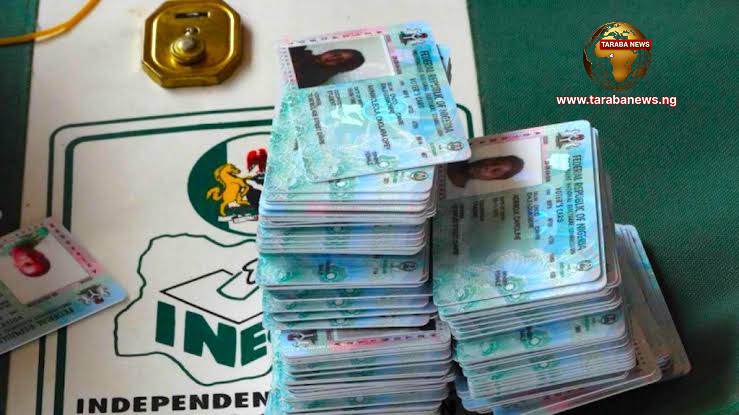
JALINGO — The Independent National Electoral Commission (INEC) has disclosed that 29,314 Permanent Voter Cards (PVCs) remain uncollected in Taraba State ahead of the 2027 general elections, urging eligible voters to collect their cards within the stipulated period.
The Resident Electoral Commissioner (REC) in the state, Dr. Sa’ad Umar Idris, disclosed this during a stakeholders’ meeting on election readiness, PVC distribution and collaboration ahead of the 2027 general elections in Jalingo.
Idris said the outstanding cards comprised 13,826 old PVCs issued between 2011 and 2023, and 15,488 cards from the first phase of the 2025 Continuous Voter Registration exercise.
Providing a breakdown, the REC explained that of the 15,568 old PVCs received by the commission, only 1,742, representing approximately 11 per cent, had been collected.
Similarly, he said that out of the 31,676 new PVCs received under the first phase of the 2025 registration exercise, 16,188, representing 51 per cent, had been collected.
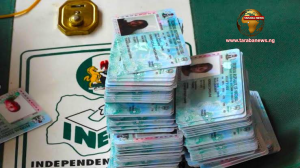
The REC attributed the low collection figures to the need for more intensive voter sensitisation and called on political parties, traditional rulers, religious leaders and other stakeholders to mobilise eligible voters to collect their cards.
INEC Announces PVC Collection Schedule
Idris announced that PVC distribution would continue at INEC offices across Taraba State’s 16 local government areas from October 19 to November 30, 2026, between 9:00 a.m. and 3:00 p.m. on weekdays, excluding public holidays.
He added that a final distribution exercise would take place at the Registration Area level from December 1 to 7, 2026, covering all phases of registration, transfers and card replacements arising from requests made between August 18, 2025, and July 26, 2026.
According to the REC, the commission had also taken PVC distribution closer to residents during the display of the Preliminary Register of Voters and the claims and objections exercise conducted at ward and Registration Area levels from October 9 to 15, 2026.
He disclosed that 2,254,380 registered voters were captured in the register displayed during the exercise but stressed that the figure was not final, as the commission was still processing complaints, claims and objections submitted by members of the public.
The final figure, he explained, would be announced after the completion of the data integration process.
INEC Strengthens Preparations for 2027 Elections
On preparations for the 2027 general elections, Idris said INEC had commenced the renovation of some of its offices, staff training and the mapping of electoral facilities across the state to ensure effective polling arrangements.
He further disclosed that testing of the Bimodal Voter Accreditation System (BVAS) had been completed, while a mock accreditation exercise was scheduled for November to assess the technology’s readiness ahead of election day.
The REC also announced that recruitment of election officials commenced on September 18, 2026, urging interested and qualified Nigerians to apply through the commission’s recruitment portal at pres.inecnigeria.org before the November 18 deadline.
He added that INEC was collaborating with the National Union of Road Transport Workers (NURTW) on vehicle hire and transportation arrangements to ensure the timely movement of election personnel and materials across the state.
Police Assure Political Parties of Neutrality
In a goodwill message, the Taraba State Commissioner of Police, CP Edwin Ogbegbagha, assured political parties that the police would remain neutral throughout the 2027 electoral process.
He warned politicians and their supporters against violence, confrontations and other actions capable of disrupting the elections, stressing that the exercise should not be treated as a do-or-die affair.
Ogbegbagha said security agencies were prepared to work with political parties and other stakeholders to ensure peaceful elections before, during and after the polls.
He emphasised that the responsibility of all stakeholders was to contribute to a credible and peaceful electoral process, adding that the police would remain accessible to political parties, listen to their complaints and provide the necessary guidance.
The police commissioner urged party leaders to educate their supporters on the importance of obeying electoral rules and avoiding confrontations.
He maintained that security agencies would not discriminate against any political party, stressing that their allegiance was to the Nigerian state and the protection of all citizens.
Ogbegbagha also called on political actors to notify security agencies of their campaign activities and cooperate with them to prevent avoidable clashes and threats to public safety.
He noted that maintaining peace during elections required the collective commitment of political parties, civil society organisations and other stakeholders, as security agencies could not achieve the objective in isolation.
IPAC Calls for Stronger Stakeholder Collaboration
In his remarks, the Director-General of the Inter-Party Advisory Council (IPAC), Hon. Kuriya Tafarki Auta, commended INEC for bringing political parties, security agencies, civil society organisations and other stakeholders together ahead of the 2027 elections.
Auta, who said he had been involved in electoral activities for nearly three decades, described the meeting as an important step towards strengthening collaboration among the various actors in the electoral process.
He called for sustained engagement between INEC, political parties, security agencies and civil society organisations, stressing that effective communication and cooperation were essential to addressing electoral grievances and preventing disputes from escalating.
The IPAC director-general urged security agencies to respond promptly to complaints relating to electoral activities.
He also expressed concern about the deployment of security personnel who might not understand the local languages and peculiarities of the communities to which they were assigned, noting that familiarity with local contexts could improve communication and electoral security.
Auta expressed optimism that improved cooperation among stakeholders would contribute to peaceful elections in 2027.
Traditional Rulers Pledge Support for Peaceful Elections
Also speaking, the Aku Uka of Wukari, Dr. Ishaku Ada Ali, who was represented at the meeting, reaffirmed the commitment of traditional rulers in Taraba State to peaceful elections and voter mobilisation.
He said traditional rulers remained non-partisan and would not align themselves with any political party, but would continue to encourage their subjects to fulfil their civic responsibilities.
The monarch pledged the support of traditional institutions in promoting peaceful participation in the electoral process and urged politicians and their supporters to regard one another as brothers and fellow Nigerians, irrespective of their political affiliations.
He also prayed for divine guidance and wisdom for leaders and citizens to sustain peace, unity and mutual understanding throughout the electoral process.
The stakeholders’ meeting forms part of efforts to strengthen electoral preparedness, improve PVC collection, promote voter participation and foster cooperation among political parties, security agencies, traditional institutions and other stakeholders ahead of the 2027 general elections in Taraba State.