




As political activities gather momentum in other states ahead of the 2027 general elections, Taraba’s political landscape remains unusually quiet, with candidates seemingly more occupied with consultations, alliances and behind-the-scenes negotiations than open campaigns. But is the silence a calculated political strategy or a reflection of uncertainty over the forces that will shape the next election?
While political parties and candidates across Nigeria are gradually stepping up mobilisation ahead of the 2027 general elections, Taraba State presents a rather different political picture.
Unlike several states where political rallies, public declarations, grassroots mobilisation and campaign structures are becoming increasingly visible, Taraba’s political atmosphere remains relatively subdued, leaving residents wondering why the expected campaign fever is yet to take hold.

With 19 governorship candidates reportedly cleared for the contest, alongside numerous aspirants seeking seats in the National Assembly and State House of Assembly, the state should ordinarily be witnessing increased political engagement.
Yet, beyond political discussions, stakeholder consultations and occasional public appearances, the level of campaign activities remains limited.
The apparent silence raises important questions about the nature of Taraba politics, the influence of powerful political stakeholders, the ambitions of major contenders and the extent to which candidates are prepared to engage directly with voters.
THE POLITICS OF WAITING: WHO IS HOLDING THE CARDS?
One striking feature of the emerging political landscape is that many candidates appear to be taking their time before committing to full-scale grassroots campaigns.
Rather than embarking on extensive public mobilisation, several aspirants are reportedly concentrating on consultations with political stakeholders, party leaders, community influencers and other influential figures whose support could prove decisive in the forthcoming election.
For now, Senator Emmanuel Bwacha, the Peoples Democratic Party (PDP) governorship candidate, backed by FCT Minister Nyesom Wike, is among the prominent contenders reported to have formally flagged off his governorship campaign in Zing Local Government Area.
Other candidates are yet to demonstrate comparable public campaign activities, although their supporters and political structures may be engaged in internal mobilisation.
The governorship contenders include Governor Agbu Kefas of the All Progressives Congress (APC); Prof. Jerome Nyameh of the Accord Party; Gago Magaji Bulus of the African Action Congress (AAC); Abubakar Umar Tutare of the African Democratic Congress (ADC); Hamman Abubakar Mustapha of the Action Democratic Party (ADP); Danjuma Usman Shiddi of the All Progressives Grand Alliance (APGA); Bawa Ishaka Mohammed of the Allied Peoples Movement (APM); Henry Hanniel Banti of the Action Peoples Party (APP); and Kabiru Bala of the Boot Party (BP).
Others are Aboki Boyanga Stephen of the Democratic Leadership Alliance (DLA); Nathan Sanda of the Labour Party (LP); Yahaya Mohammed Sani and Nuhu Abubakar Atta of the National Democratic Congress (NDC); Uba Sani Abdullahi of the New Nigeria Peoples Party (NNPP); Emmanuel Bwacha of the PDP; Joshua Wukari Wasa of the Peoples Redemption Party (PRP); Yusuf Ali of the Social Democratic Party (SDP); Sa’ad Hassan Abubakar of the Young Progressives Party (YPP); and Bello Adamu of the Zenith Labour Party (ZLP).
With such a crowded political field, the absence of widespread campaign activities makes the unfolding contest even more intriguing.
THE TY DANJUMA FACTOR: THE INFLUENCE BEHIND THE POLITICAL CALCULATIONS
Perhaps one of the most significant factors shaping political conversations in Taraba ahead of 2027 is the enduring influence of former Minister of Defence, General Theophilus Yakubu Danjuma (rtd).
For decades, General Danjuma has remained one of the most influential figures in Taraba’s political and social landscape. His influence, particularly during the period when the Peoples Democratic Party dominated the state’s political establishment, has continued to feature prominently in discussions about political succession and leadership.
Although the extent of his direct involvement in the current political contest remains unclear, political observers believe his standing in the state could influence the calculations of some governorship aspirants.
A politician familiar with developments within the major political parties, who spoke on condition of anonymity, alleged that some aspirants were more interested in securing the elder statesman’s endorsement than investing in extensive grassroots campaigns.
According to the source, some political actors believe that the backing of influential figures could significantly alter the electoral equation.
This perception, whether accurate or exaggerated, reflects a recurring feature of Taraba politics, where political endorsements, elite alliances and influential personalities often attract considerable attention.
However, there is no publicly established evidence that General Danjuma has endorsed any of the governorship candidates.
The question remains whether the 2027 contest will be determined primarily by grassroots mobilisation and voters’ choices or whether the influence of established political figures will once again shape the direction of the election.
KEFAS, TY DANJUMA AND THE TEST OF POLITICAL INDEPENDENCE
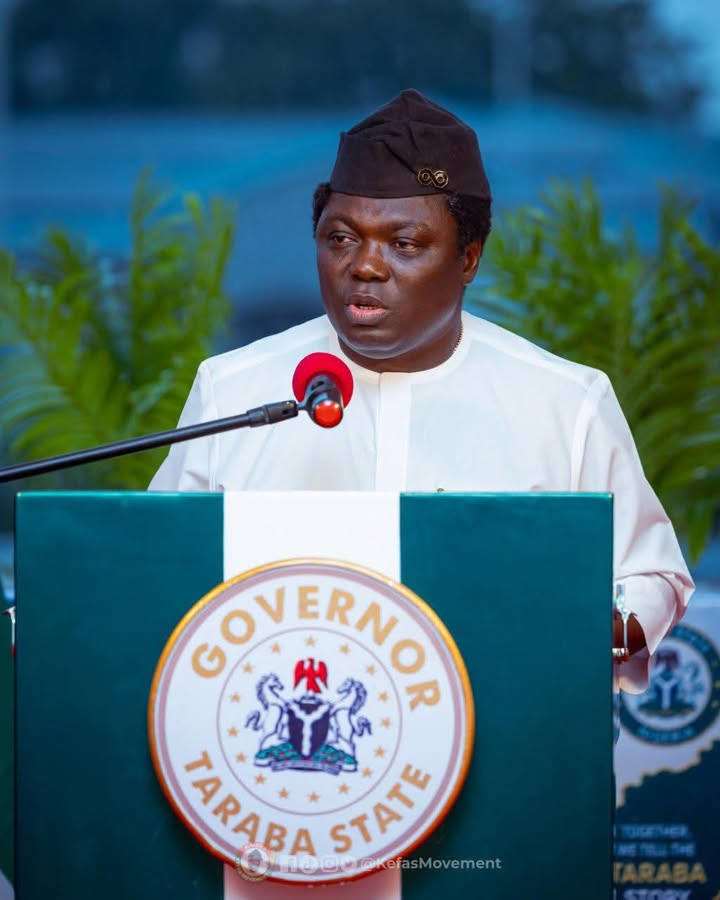
For Governor Agbu Kefas, the forthcoming election presents a different kind of political challenge.
Having moved from the PDP to the APC and now seeking a second term, the governor must not only defend his administration’s record but also consolidate his political influence within the ruling party and across the state.
His relationship with General Danjuma has consequently become a subject of political speculation.
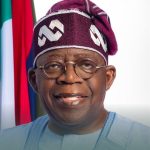
The conversation has gained further attention following General Danjuma’s recent visit to President Bola Ahmed Tinubu at the Presidential Villa, Abuja, alongside other Middle Belt and North-Central leaders, where he endorsed the President’s 2027 re-election ambition.
Although the endorsement was directed at President Tinubu, its possible implications for Taraba’s political alignments have generated discussions among political observers.
Both Kefas and Tinubu are aligned with the APC, but the relationship between the governor and the influential elder statesman remains an important subject of interest.
An APC source noted that Kefas’ position as the incumbent governor and leader of the party in Taraba gives him considerable political leverage.
Nevertheless, the extent to which influential stakeholders will support his second-term ambition remains a subject of political interest.
For the governor, 2027 may therefore be more than an ordinary re-election contest. It could also represent an opportunity to demonstrate the extent of his independent political strength and ability to sustain his influence beyond established political alliances.
THE REAL LOSERS OF THE POLITICAL SILENCE: THE ELECTORATE
While political leaders may be engaged in strategic consultations and negotiations, ordinary residents appear to be waiting for something more concrete.
For many voters, election campaigns represent an opportunity to interact directly with candidates, understand their programmes, assess their achievements and demand explanations on issues affecting their communities.
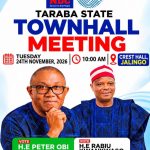
In several states, campaign seasons are characterised by town hall meetings, rallies, community engagements, consultations with traditional institutions and public presentations of manifestoes.
Candidates also use the period to unveil political promises, mobilise supporters and demonstrate their commitment to addressing the needs of the electorate.
In some instances, political mobilisation comes with the distribution of vehicles, motorcycles, tricycles, agricultural equipment and other materials to supporters and community groups. While such gestures may attract attention, they cannot substitute for credible policy proposals and accountable leadership.
In Taraba, however, the relative absence of visible engagements has left some residents questioning when the candidates will begin taking their messages to the grassroots.
A Jalingo-based resident, Jamilu Kaura, expressed concern that the absence of public campaign activities was limiting voters’ opportunities to assess the candidates and their proposed policies.
He argued that residents should not be left to depend on political rumours, endorsements and discussions among influential individuals when candidates should be directly presenting their programmes to the people.
Another resident, Zainab Dangana, called on the governorship contenders to begin engaging communities and explaining how they intend to address unemployment, insecurity, poverty, infrastructure deficits and other development challenges facing the state.
For these residents, the central issue is not simply who will secure political endorsements but who has credible answers to the problems confronting the people.
BEYOND THE GOVERNORSHIP: A QUIET CONTEST ACROSS THE POLITICAL SPECTRUM
The subdued political atmosphere is not restricted to the governorship race.
Aspirants seeking seats in the Senate, House of Representatives and Taraba State House of Assembly are also yet to generate the level of public campaign activities expected in a competitive election season.
Although political consultations and internal party mobilisation may be ongoing, much of the activity remains outside the direct reach of ordinary voters.
For the APC, the advantage of incumbency and the political machinery available to Governor Kefas could play a significant role in shaping the contest.
The ruling party has access to established political structures, elected officeholders and mobilisation networks that could become important as campaigns intensify.
Opposition parties, on the other hand, face the challenge of translating their political ambitions, alliances and candidate profiles into visible grassroots support.
With multiple parties and candidates competing for public attention, the ability to build credible structures and communicate effectively with voters could become a decisive factor.
WHAT ARE THE CANDIDATES WAITING FOR?
The apparent political calm in Taraba raises another important question: are candidates deliberately delaying their campaigns as part of a broader strategy, or are they uncertain about the political forces that will eventually determine the direction of the contest?
It is possible that some candidates are prioritising negotiations, party cohesion and stakeholder endorsements before launching extensive campaigns.
Others may be calculating the financial and organisational demands of a statewide campaign.
However, whatever the reasons, prolonged political silence carries its own risks, particularly for candidates who have yet to establish a strong connection with the electorate.
The 2027 election should not be reduced to a contest of political godfathers, party defections, endorsements and elite negotiations.
It should be an opportunity for candidates to present their records, defend their positions, explain their policies and allow voters to make informed decisions.
2027: TARABA NEEDS ISSUES, NOT JUST POLITICAL ALLIANCES
For a state confronting challenges in security, education, unemployment, poverty, healthcare, agriculture and infrastructure, the forthcoming election should provide an important platform for serious conversations about development.
The incumbent governor should be prepared to defend his administration’s achievements, explain areas where expectations have not been met and present a convincing agenda for another term.
Those seeking to replace him must equally demonstrate that they understand the state’s challenges and possess workable alternatives.
Voters deserve more than political slogans and endorsements from influential individuals. They deserve clear policy directions, measurable commitments and opportunities to hold candidates accountable.
Ultimately, the silence surrounding Taraba’s 2027 political season may not necessarily mean that political activities are absent. Much of the contest may simply be unfolding behind closed doors.
But elections are not won solely in private meetings, political residences or through the influence of prominent personalities.
At some point, candidates must leave the negotiating tables, take their messages to the communities and face the people whose votes they seek.
Until that happens, Taraba’s political atmosphere will remain an unusual contrast to the campaign fever already building elsewhere.
And for an electorate waiting to hear what the next four years could look like, the question is no longer just who has the strongest political connections, but who is ready to stand before the people and make a convincing case for their votes.