
By Iranyang Daniel
Commissioner says 18 model schools are nearing completion as government expands access, distributes learning materials and confronts challenges of overcrowding, rural access and teacher welfare
In Nigeria, a child’s journey to school can sometimes begin with a battle that has little to do with intelligence or ambition. It may start with a parent counting the last naira in a pocket, a school uniform that has become too small, a pair of worn-out sandals, or an examination fee that a struggling household simply cannot afford.
For some children, the consequence is a painful interruption of their education. For others, the classroom becomes a distant dream, sacrificed on the altar of poverty, farm labour and the daily struggle to survive.
It is against this familiar Nigerian reality that Taraba State’s free and compulsory education policy assumes significance. Beyond the political declarations and official pronouncements, the central question is whether a government can remove the financial barriers keeping children out of school and sustain the investment necessary to give them a meaningful future.
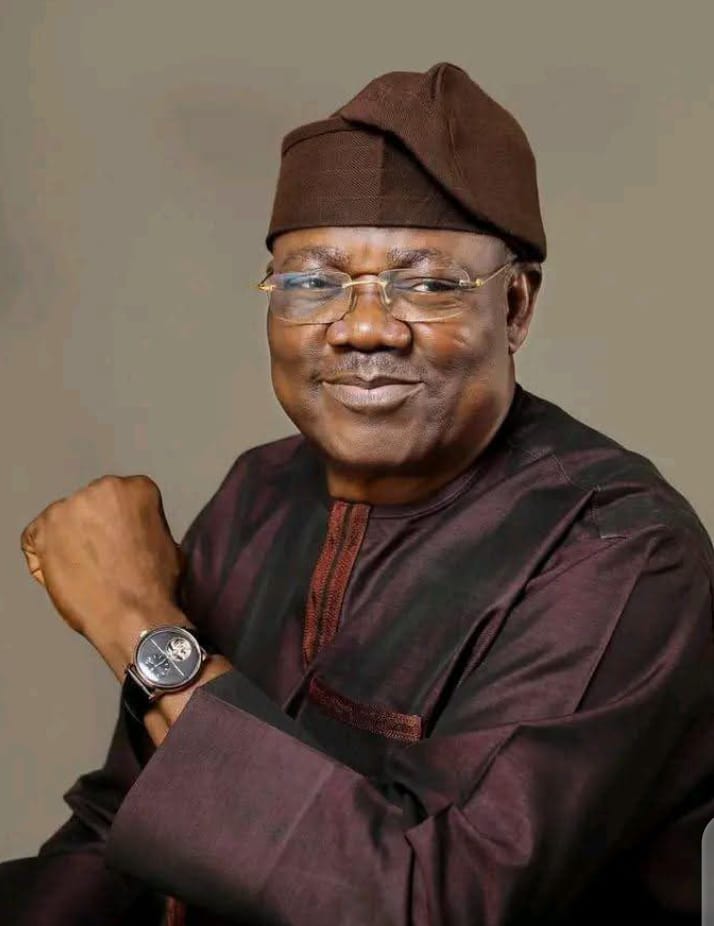
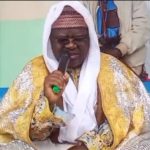
Speaking on Today’s Politics, a public affairs programme on Supa Media Television (SUM TV), the Taraba State Commissioner for Secondary and Vocational Education, Dr. Augustina Yahaya Godwin, said the policy introduced by Governor Agbu Kefas was already making a difference in the lives of families across the state.
According to the commissioner, parents who previously struggled to pay school-related expenses are experiencing relief, while children whose education had been interrupted are returning to the classroom.
Dr. Godwin’s account paints a picture of an education policy whose significance extends beyond the school gates. In a country where poverty can determine whether a child studies or works, access to free education can influence not only individual destinies but also the economic prospects of entire families.
When poverty sends children away from school
One of the most striking accounts offered by Dr. Godwin concerned a parent who, she said, had struggled for two years to raise ₦27,000 for a child’s examination registration. Under the new policy, the parent was reportedly able to send the child for the examination.
The commissioner also recounted the experience of a young woman whose education was interrupted and who subsequently had a baby. According to her, the young woman returned to school, completed her secondary education and proceeded to the College of Agriculture for further studies.
These stories, if sustained by measurable outcomes, illustrate the human value of removing financial barriers to education. They also expose a difficult truth about Nigeria: many children who leave school are not necessarily unwilling to learn; their families simply cannot afford to keep them there.
Dr. Godwin said the initiative had also encouraged some adults to return to learning through mass literacy centres, while other young people had obtained qualifications that enabled them to pursue employment opportunities.
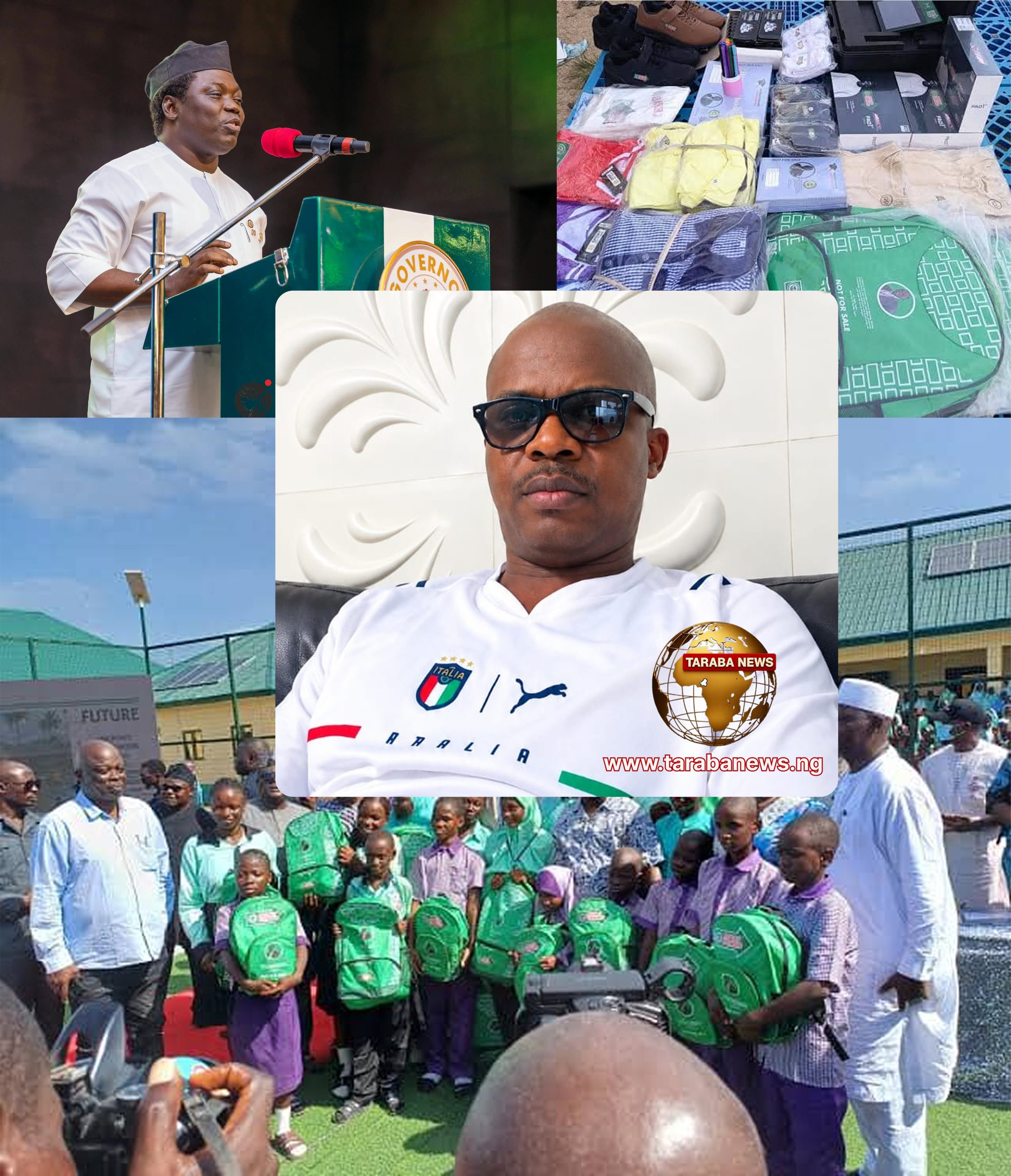
She further disclosed that the government had distributed schoolbags, uniforms, shoes, sportswear, exercise books and raincoats to pupils and students in 82 schools. Additional materials, including textbooks, are expected to reach schools across the state’s 16 local government areas, she said.
For a child who has previously watched classmates attend school in proper uniforms while wearing torn clothes, such assistance can mean more than material comfort. It can restore confidence and a sense of belonging.
Yet, as Nigeria’s experience repeatedly demonstrates, a promising policy must be judged not only by the relief it provides today but also by whether it creates opportunities that endure tomorrow.
A global ambition, a local responsibility
Taraba’s education initiative aligns with Sustainable Development Goal 4 of the United Nations, which seeks inclusive and equitable quality education and lifelong learning opportunities for all by 2030.
The goal recognises that education is not merely about getting children into classrooms. It is also about ensuring that they learn, complete their education and acquire the knowledge and skills necessary to improve their lives.
Experiences elsewhere offer useful lessons. Ghana’s Free Senior High School policy, introduced in 2017, expanded access to secondary education but also exposed the pressures that increased enrolment can place on classrooms, teachers and school facilities.
The lesson is clear for Taraba: removing school fees is an important beginning, but overcrowded classrooms, inadequate furniture, insufficient teaching staff and weak learning outcomes can undermine the very promise that free education seeks to fulfil.
Dr. Godwin acknowledged that increased enrolment had placed additional demands on schools. She said the government had sought the deployment of National Youth Service Corps members to support teachers and had undertaken training programmes to strengthen classroom instruction, including training in information and communication technology and contemporary teaching methods.
She also cited regular salary payments and minimum wage adjustments as measures intended to improve teachers’ morale.
The challenge, however, is to ensure that these measures translate into better teaching, stronger learning outcomes and improved performance in public examinations.
Rebuilding schools, rebuilding hope
Education cannot flourish where children sit on bare floors, learn under trees or struggle to concentrate in deteriorating classrooms.
Recognising the scale of the infrastructure problem, Dr. Godwin said the administration had embarked on school renovations and the construction of model schools across the state.
She disclosed that 18 model schools were between 90 and 95 per cent complete. According to her, the projects employ hydroform-bonded brick-making machines acquired by the government, with young people trained to operate the equipment and participate in construction within their respective communities.
The initiative, she explained, combines infrastructure development with skills acquisition and employment for young people.
Dr. Godwin also described the reconstruction of Government Comprehensive Secondary School, Jalingo, as a major intervention. She said classrooms, offices, dormitories, a dining hall and a library had been completed, with solar power installed. Furniture and other items were expected to be supplied before the facilities could be fully utilised.
She added that Government Science Secondary School, Jalingo, was undergoing extensive renovation and that the ministry had commenced an assessment of 190 secondary schools for possible renovation.
These are significant claims, but their full public value will depend on independent verification of project completion, the delivery of furniture, actual school occupancy and the quality of facilities available to learners.
The children beyond the cities
Perhaps one of the most revealing aspects of the commissioner’s account was her acknowledgement that some children in remote communities still learn under trees because their schools lack adequate buildings.
Dr. Godwin said she had visited interior communities where residents expressed surprise at receiving visits from senior education officials. She maintained that the deterioration of educational facilities had accumulated over many years and would require sustained investment to reverse.
This is where the real test of equity lies. A child in a remote Taraba community deserves the same opportunity to learn as a child in Jalingo. Free education loses part of its promise if a family can enrol a child but has no accessible school, no adequate classroom or no teacher available to teach.
The commissioner said principals and head teachers had been encouraged to visit families and persuade parents to send their children to school. She recalled a community where a principal reportedly increased enrolment from just 15 pupils through regular household visits and engagement with parents.
Such community-level efforts are important, particularly where poverty, farming responsibilities and distance from schools discourage attendance.
Accountability must protect the promise
Dr. Godwin also expressed concern over reports that some school materials intended for pupils had allegedly been diverted. She recounted an incident in which youths reportedly broke into a school at night and removed educational materials.
The commissioner said the Nigeria Security and Civil Defence Corps and the safe schools security team had responded to the incident and traced some of the suspected perpetrators. The allegations were not independently verified in the interview.
The reported incidents underline the need for transparent distribution records, school-level inventories and effective monitoring. Public resources intended for children must reach their destinations, and any diversion must be investigated fairly and addressed through appropriate procedures.
Dr. Godwin further disclosed that a framework for improving teachers’ welfare, professional development and access to housing was being prepared for consideration by the State Executive Council, with implementation envisaged from 2027, subject to approval.
The future is the real examination
Taraba’s free education policy carries a promise that reaches beyond the present administration. A child who acquires quality education today may become tomorrow’s teacher, engineer, farmer, entrepreneur, health worker or public servant. The benefits can extend to families, communities and the wider economy.
But hope must be supported by evidence. The government will need to demonstrate progress through enrolment and attendance records, completion rates, examination results, literacy and numeracy assessments, teacher availability and improvements in rural school infrastructure.
For now, Dr. Godwin says the foundations are being laid through expanded access, learning materials, school construction and teacher support.
The ultimate examination will not take place in a television studio or at a government briefing. It will take place in classrooms across Taraba, where children must be able to learn, teachers must be equipped to teach and families must see education opening doors that poverty once kept firmly shut.
If the policy can deliver on that promise consistently, free education may become more than a government programme. It could become one of the enduring investments through which Taraba gives its children a better chance of escaping poverty and shaping their own future.