

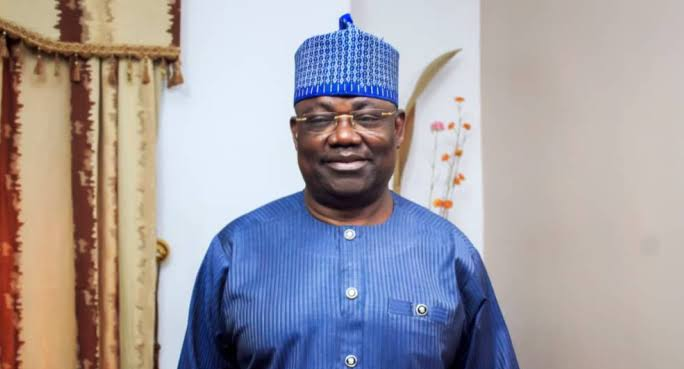
Bwacha Campaign Team Unveils Scorecard, Says Taraba Will Witness ‘Wonders’ if Elected Governor
JALINGO — The campaign team of the Peoples Democratic Party governorship candidate in Taraba State, Senator Emmanuel Bwacha, has unveiled what it describes as an extensive scorecard of the former lawmaker’s years of representation, arguing that his performance in the National Assembly offers a glimpse of what Tarabans should expect if he is elected governor in 2027.
The team said Bwacha’s candidacy should not be judged merely by campaign promises, but by what it described as verifiable interventions across infrastructure, education, healthcare, water supply, security, employment and economic empowerment during his years representing Taraba South.
At the centre of the campaign’s argument is a simple question: if Bwacha could attract this level of development as a legislator without control of a state budget, what could he achieve with the executive powers and resources available to a governor?
According to the scorecard, communities including Nyivo, Kumbu, Nyitan and Mararraba benefited from rural electrification interventions attributed to Bwacha, while more than 20 transformers were reportedly installed in different communities across the senatorial district. Published accounts have also credited him with interventions on the Donga–Mararraba road.
Water supply also featured prominently in the scorecard, with more than 53 solar-powered boreholes reportedly provided across communities in Taraba South.
Education and Federal University Wukari
The campaign pointed to Bwacha’s interventions at the Federal University Wukari as another major part of his record.
Laboratory equipment was provided for several departments of the university, including Microbiology, Biology, Chemistry, Agriculture, Crop Science and Biochemistry, as well as the Central Laboratory.
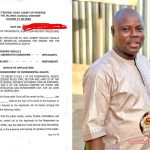
Significantly, some of these interventions are documented in the Independent Corrupt Practices and Other Related Offences Commission’s Constituency and Executive Projects Tracking Initiative report, which lists laboratory equipment projects at Federal University Wukari as sponsored by Senator Emmanuel Bwacha.
The scorecard also credits him with providing a utility vehicle to the university and establishing a fully equipped ICT centre at the Wukari Local Government Secretariat.
His scholarship programme was another intervention highlighted by the campaign.
In one documented exercise in 2018, 262 students received ₦20,000 each as scholarship support, while 138 motorcycles were distributed and empowerment funds were provided across 52 wards. Fifty persons living with disabilities also received financial support.
Supporters say the scholarship programme subsequently became an annual intervention benefiting more than 260 indigent students.
Jobs, Youth and Women Empowerment
The campaign team also highlighted Bwacha’s record in employment and economic empowerment, describing youth unemployment as an area where the former senator demonstrated practical intervention rather than merely making political promises.
Published accounts credit him with facilitating more than 500 federal employment opportunities and partnering with the National Directorate of Employment to train and empower more than 750 youths and other beneficiaries in vocational and entrepreneurial skills.
His empowerment programmes were also reported to have reached about 2,200 widows, while thousands of livelihood-support items were distributed.
Among the items attributed to his empowerment programmes were approximately 2,500 tricycles, more than 100 motorcycles and 200 grinding or milling machines, alongside other forms of assistance intended to help beneficiaries establish sources of income.
Healthcare and Security
In healthcare, the scorecard points to the establishment and upgrading of a primary healthcare facility at Mararraba, providing services including maternal and child healthcare.
Bwacha’s interventions in security were also highlighted, with published accounts crediting him with facilitating police infrastructure in Mararraba, Donga and Wukari and providing patrol vehicles to strengthen policing in the area.
Solar streetlights were also reportedly provided in communities across Takum, Donga, Ussa, Wukari, Ibi and Yangtu, while Mararraba benefited from additional streetlighting infrastructure.
The construction of a magistrate court in Mararraba was similarly listed among projects associated with his representation.
‘Imagine What He Will Do as Governor’
But beyond the individual projects, the campaign team said the significance of the scorecard lies in the office Bwacha occupied when the interventions were undertaken.
A senator, the team argued, does not control the finances of a state, preside over ministries or exercise the executive authority available to a governor.
Yet, according to his supporters, Bwacha was able to use his position in the National Assembly to attract projects, facilitate employment and undertake empowerment programmes that reached communities throughout Taraba South.
The campaign therefore argues that putting the state’s executive machinery in the hands of someone with such a record could produce a substantially greater impact across all 16 local government areas of Taraba State.
“If he could do all these as a Senator, imagine what he will do as Governor. Taraba will witness wonders,” the campaign’s argument goes.
For the Bwacha camp, therefore, the 2027 election is not simply about what its candidate is promising to do in the future, but about comparing those promises with what he has done with previous opportunities to serve.
The message the campaign hopes to take across Taraba is that past performance should become one of the major yardsticks for determining who is entrusted with the state in 2027.
However, Bwacha’s constituency-project record has not been without controversy. Previous ICPC project-tracking findings raised questions over aspects of some constituency projects associated with him, including the handling and custody of certain assets. This means that while his campaign is entitled to present the projects as evidence of his performance, the wider public record also contains criticisms that form part of any comprehensive assessment of his years in office.
As campaigns gather momentum, the debate over performance may ultimately extend beyond Governor Agbu Kefas and his record in Government House to every major contender seeking the state’s highest office.
For Bwacha, who has spent years in public office, the advantage — and challenge — is that voters have a record against which both his promises and his capacity to deliver can be measured.