




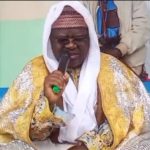




The Academic Staff Union of Universities, ASUU, Taraba State University Chapter, has rejected the recent constitution of a committee by the Taraba State Government to review the remuneration and workforce of tertiary institutions.
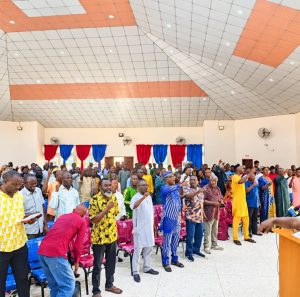
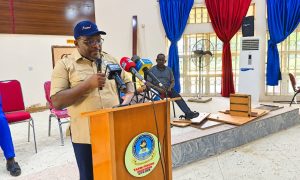
The union made its position known on Friday, October 2, 2026, during a press conference at the ASUU-TSU Secretariat in Jalingo.
The chapter said the new committee was unnecessary, considering the extensive verification, consultation, negotiation, financial computation and reporting processes already undertaken by representatives of the government and the union.
According to ASUU-TSU, the union has been engaging the Taraba State Government since February 2026 on the implementation of the 2025 Federal Government of Nigeria/ASUU Agreement.
The union said it formally submitted its position and demands to the Governing Council of Taraba State University on March 17, 2026, while the National Universities Commission representative on the council also submitted the applicable salary table for implementation.
ASUU-TSU stated that a government verification committee subsequently assessed salary structures across tertiary institutions in the North-East and presented its report at a meeting held on September 22, 2026.
The union said the verification report established 100 percent implementation of the applicable remuneration framework in the institutions covered, with no alternative options or variations indicated.
It added that following the verification, a tripartite committee was constituted to calculate the financial implications of implementing the agreed salary structure and determine accumulated arrears arising from delays in implementation.
According to the union, the committee completed its assignment and submitted its report on September 24, 2026.
ASUU-TSU further disclosed that during a meeting on September 24, the government appealed to the union to suspend industrial action and requested an additional two-week extension to resolve the outstanding issues.
The union said it considered the request in good faith and, at its meeting on September 29, agreed to grant the government the additional time.
However, ASUU-TSU said the subsequent constitution of another review committee has raised concerns among its members, particularly because the earlier verification and financial computation processes had already been concluded.
The union maintained that its decision to refrain from industrial action was not an indication that its members had abandoned their demands, but a demonstration of respect for the government’s appeal and commitment to dialogue.
It therefore called on the Taraba State Government to act decisively, honour its commitments and proceed with the implementation of the agreed remuneration framework.
The union stressed that its patience should not be interpreted as weakness, warning that continued delays could undermine its confidence in the ongoing engagement.
ASUU-TSU said it remains open to lawful and constructive engagement with government but insisted that dialogue must not be used as a means of indefinitely postponing implementation.
The union’s position comes amid growing concerns over the implementation of the agreed remuneration framework for academic staff at Taraba State University.