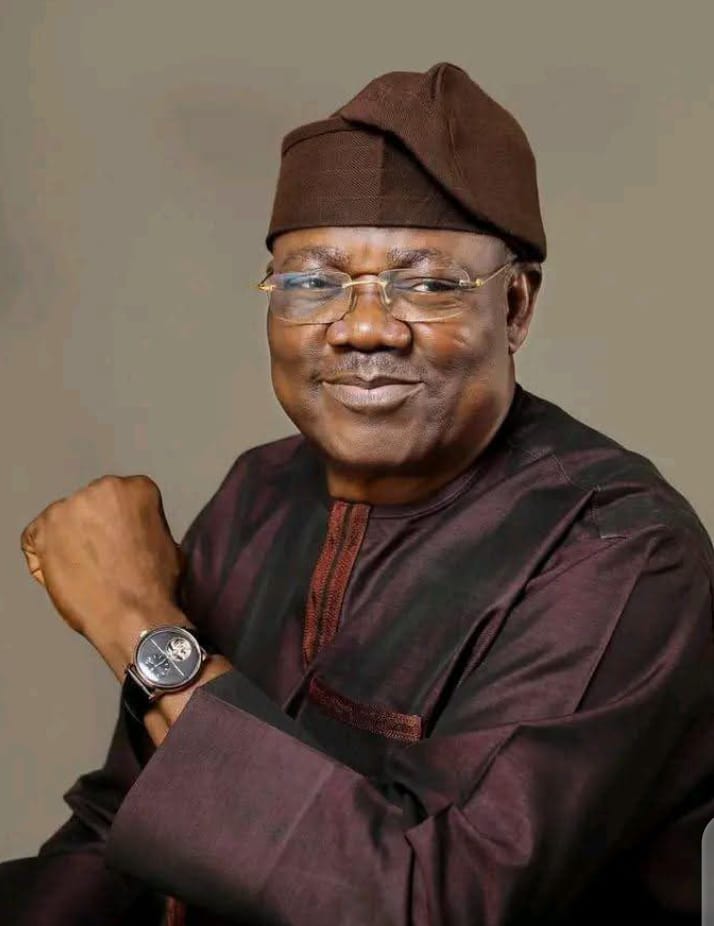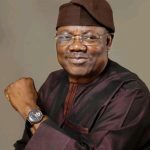



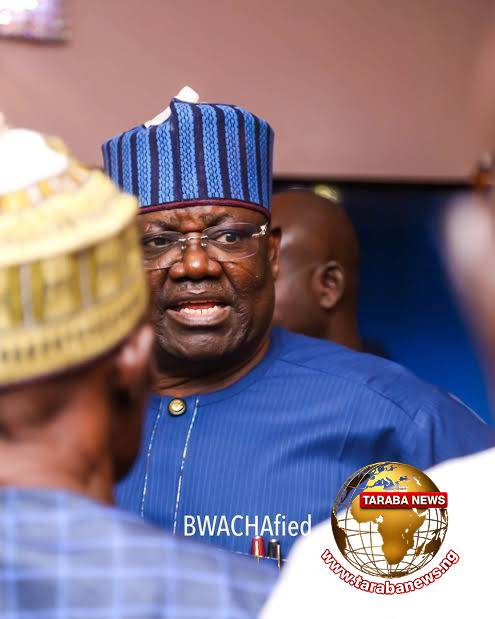
The 2027 Governorship Campaign Council of Senator Emmanuel Bwacha has described the former lawmaker as one of the best senators of his time, highlighting his legislative contributions, leadership positions and constituency development interventions during his years at the National Assembly.
The council’s position is anchored on Bwacha’s 12-year representation of Taraba South Senatorial District in the Senate between 2011 and 2023, during which he served three consecutive terms and occupied strategic positions in the upper legislative chamber.
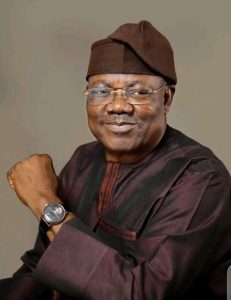
According to legislative records published in January 2023, Bwacha sponsored seven bills during the Ninth National Assembly, including the Federal University Wukari (Establishment) Bill, which was passed.
Other legislative initiatives credited to him include the Anti-Corruption Bill 2020, which passed first reading, and the Police Service Commission (Establishment) Bill 2020, which reached the committee stage.
The establishment of the Federal University Wukari remains one of his notable legislative contributions. Official National Assembly records show that Bwacha sponsored the bill, which passed second reading on May 18, 2016, providing the legislative framework for the institution’s administration and management.
Beyond sponsoring legislation, Bwacha held important leadership positions in the Senate, serving as Deputy Minority Leader for two consecutive terms.
He also chaired the Senate Committee on Agriculture and Rural Development before subsequently heading the Senate Committee on Public Procurement.
**CONSTITUENCY PROJECTS AND INFRASTRUCTURAL DEVELOPMENT**
In the area of constituency development, Bwacha’s reported interventions covered roads, electricity, water supply, education, healthcare and security across Southern Taraba.
Among the major road projects associated with his representation was the rehabilitation of the 36.5-kilometre Wukari–Ibi road, which was flagged off in April 2018 as a federally funded project estimated at ₦1 billion.
He also facilitated interventions on the Donga–Mararraba road, which reportedly improved transportation and connectivity for communities in the area.
Other reported infrastructural projects included rural electrification initiatives in Nyivo, Kumbu, Nyitan and Mararraba, installation of solar streetlights across communities in Takum, Donga, Ussa, Wukari, Ibi and Yangtu, as well as the provision of more than 53 solar-powered boreholes.
**EDUCATION AND SCHOLARSHIP PROGRAMMES**
Education featured prominently in Bwacha’s constituency interventions.
A January 2021 report by *The Guardian* documented scholarship support for more than 300 students from Taraba South, with beneficiaries and parents expressing appreciation for the intervention.
Another interview published in Nigerian NewsDirect in 2021 quoted Bwacha as saying that 1,582 students benefited from his scholarship scheme between 2014 and 2021.
He also facilitated the provision of laboratory equipment and a utility bus to Federal University Wukari, alongside the establishment of an ICT centre at the Wukari Local Government Secretariat.
A September 2025 report by *The Nation* further highlighted an annual scholarship programme supporting 265 indigent students pursuing tertiary education.
**HEALTHCARE AND SECURITY INTERVENTIONS**
In healthcare, reported interventions included the upgrading of Mararraba Primary Healthcare Centre, provision of healthcare facilities and support for medical services across the senatorial district.
On security, Bwacha facilitated the establishment and improvement of police facilities, including police divisions and barracks in parts of Southern Taraba.
He also donated patrol vehicles, including eight Hilux vans reported in a 2025 account by *The Nation*, to support security operations.
His legislative interventions also extended to security concerns in Taraba. In 2016, he sponsored a Senate motion calling for urgent action against insurgents regrouping in the state and the killings affecting communities.
**YOUTH, WOMEN AND ECONOMIC EMPOWERMENT**
The former senator’s empowerment programmes reportedly targeted young people, women, farmers, artisans and other vulnerable groups.
According to reports published by *The Nation* in September 2025, his interventions included:
– Training more than 750 youths through the National Directorate of Employment.
– Skills empowerment support for over 2,200 widows.
– Facilitation of more than 500 federal employment opportunities for constituents.
– Distribution of 2,500 tricycles to beneficiaries.
– Distribution of 100 motorcycles and 200 grinding machines.
– Support for farmers and other small-scale economic activities.
The initiatives were aimed at improving livelihoods, promoting self-employment and expanding economic opportunities across the district.
**CAMPAIGN COUNCIL’S POSITION**
The 2027 Governorship Campaign Council maintains that Bwacha’s legislative experience, national political exposure and constituency interventions distinguish his record in public service.
It argues that his years in the National Assembly provided him with valuable experience in lawmaking, public procurement, agriculture, national policy formulation, federal governance and representation.
The council’s assessment comes as political activities ahead of the 2027 governorship election in Taraba State gather momentum, with candidates and political groups increasingly presenting their records and policy credentials to the electorate.
**ACCOUNTABILITY AND PUBLIC RECORD**
Meanwhile, constituency project records have also attracted public scrutiny. In 2022, the Independent Corrupt Practices and Other Related Offences Commission (ICPC), through its Constituency and Executive Projects Tracking Initiative, raised concerns about certain projects associated with Bwacha’s senatorial district, including procurement and project implementation issues.
Bwacha subsequently denied allegations of diverting constituency projects, arguing that the projects were handled by federal ministries and agencies. The ICPC’s general clarification also stressed that responsibility for project infractions could involve contractors, government officials and legislative aides, and not necessarily lawmakers alone.
The issues underscore the importance of transparent project documentation, independent verification and accountability in assessing the performance of public office holders.
As the 2027 political season approaches, Bwacha’s legislative record and constituency interventions are expected to remain part of the conversation surrounding his political experience and contributions to Taraba State.