





How Taraba Govt Got Involved in Alleged ‘Fake’ Federal Agency — Official
Fresh details have emerged on how the Taraba State Government became involved with the controversial Made-in-Nigeria Project Office, following revelations that the appointment of the state’s coordinator originated from a formal request purportedly from the Office of the Secretary to the Government of the Federation (OSGF).
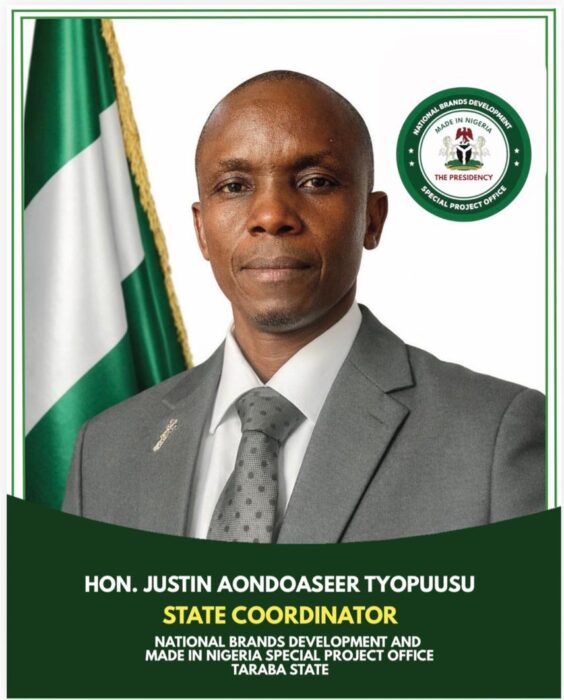
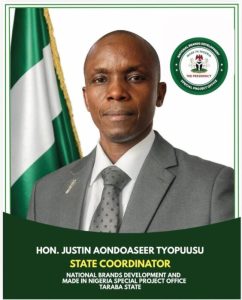
The Taraba State Coordinator of the project, Hon. Justin Aondoasee Tyopuusu, said the OSGF wrote to the Taraba State Government on January 9, 2026, requesting the nomination of a coordinator for the project.
According to him, Governor Agbu Kefas subsequently approved his nomination, while the Office of the Secretary to the Taraba State Government formally communicated the approval in a letter dated January 10, 2026.
The disclosure provides an account of how Taraba became connected to the project, which has since become the subject of controversy following questions raised by the Independent Corrupt Practices and Other Related Offences Commission (ICPC) over the status of the national office.
Tyopuusu, speaking amid growing public enquiries over his role, insisted that he neither established the project nor appointed himself as its Taraba coordinator.
“My appointment was therefore not the product of a personal initiative or an arrangement created by me. It was made by the appropriate authority in Taraba State pursuant to a request communicated to the State Government by the OSGF,” he said.
His explanation indicates that the Taraba State Government acted on what was presented to it as an official request from the Federal Government through the OSGF.
OSGF Letter Preceded Kefas’ Approval
According to Tyopuusu’s account, the chain of events began with the January 9 correspondence from Abuja requesting Taraba to nominate a state coordinator.
Governor Kefas then approved Tyopuusu for the position, with the approval communicated by the Office of the Secretary to the Taraba State Government the following day.
The sequence is significant because it suggests that Taraba’s participation did not originate from an independently created state arrangement but followed correspondence presented as coming from a central federal institution.
Tyopuusu said he had no involvement with the establishment, administration or activities of the Made-in-Nigeria Project Office before his appointment.
He maintained that his responsibilities began only after he was formally nominated and appointed to serve as Taraba State Coordinator.
‘I Cannot Determine Whether National Office Is Legal’
Tyopuusu also distanced himself from questions surrounding the legal and administrative status of the national project office.
According to him, his mandate as a state coordinator did not give him the authority to determine whether the national body was properly established.
“As a State Coordinator, my responsibility is limited to the mandate and responsibilities assigned to me within the framework under which I was appointed,” he said.
He added that he was not the appropriate authority to authenticate or make a conclusive pronouncement on the legal status of the national office, particularly following questions raised by a federal anti-corruption agency.
Tyopuusu therefore urged journalists, activists and members of the public seeking answers about the creation and legitimacy of the project to direct their enquiries to the OSGF.
He argued that the OSGF was better positioned to explain the project’s establishment, mandate, administrative history and the process through which state governments were requested to appoint coordinators.
Taraba Among Several States Drawn Into Controversy
The development has attracted national attention because Taraba was not the only state associated with the project.
The organisation established a network of state coordinators as part of what was presented as a nationwide initiative to promote Nigerian-made products and brands.
However, the ICPC’s intervention and questions surrounding the status of the national office have thrown those appointments into controversy.
For Taraba, Tyopuusu’s account now establishes a clearer sequence: a request presented as originating from the OSGF was sent to the state government; Governor Kefas approved a nominee; and the Taraba SSG’s office communicated the appointment.
The controversy therefore places the circumstances surrounding the original federal correspondence at the centre of the unfolding investigation.
Until the status and origin of that correspondence are conclusively clarified by the appropriate federal authorities, Tyopuusu maintains that he acted strictly on an appointment formally conveyed to him by the Taraba State Government.