






Riders:
– All tertiary institutions in Taraba remain shut as government is yet to respond to unions’ demands – JACTI
– Stakeholders urge government to implement agreement if approval has truly been granted
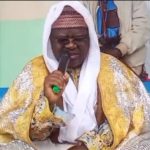
The Chairman of the Academic Staff Union of Universities (ASUU), Taraba State University Branch, Dr. Joshua Garba Mbave, has said there has been no meaningful engagement between the Taraba State Government and the university lecturers’ union one month after the commencement of the industrial action.
Dr. Mbave made this known during a live Facebook programme organised by social media influencer, Abdulmumin Imam, to discuss possible ways of resolving the ongoing strike and getting students back to their classrooms.
He expressed the union’s readiness to call off the strike within 24 hours if the state government implements its demands, stressing that the union’s major demands are the implementation of the 2025 Federal Government/ASUU agreement and the payment of 10 months’ arrears covering January to October.

According to him, the union began engaging the state government on the matter in March and had followed all necessary procedures to secure the implementation of the agreement. He disclosed that several meetings had been held with the Ministry of Tertiary Education, alongside the establishment of committees to facilitate the process.
He further explained that one of the committees had visited some universities in the North-East to examine their implementation framework and payment structures.
However, Dr. Mbave expressed reservations about the newly constituted committee headed by the Secretary to the State Government, Barrister G.T. Kataps, arguing that setting up another committee could amount to renegotiating an agreement that had already been negotiated and concluded.
He maintained that ASUU was not asking the government to renegotiate the agreement but to implement what had already been agreed upon.
The ASUU chairman recalled that the union initially issued a 14-day ultimatum to the government, after which the government reportedly requested an additional 14 days to enable it to address the demands. He said the union granted the extension in good faith, but proceeded on strike after the government failed to implement the agreement within the extended period.
Meanwhile, the Joint Action Committee of Tertiary Institutions (JACTI) in Taraba State has maintained that the industrial action across the state’s tertiary institutions remains in force, accusing the government of failing to take concrete steps towards addressing workers’ demands.
In its Bulletin No. 4, dated November 8, 2026, JACTI reaffirmed that its two-week warning strike, which commenced at 11:59 p.m. on November 4, would continue as scheduled.
The committee directed its members to fully comply with the strike directive and refrain from performing official duties throughout the duration of the warning strike. It also urged members to remain united, disciplined and law-abiding while awaiting further directives.
### STAKEHOLDERS CALL FOR URGENT RESOLUTION
Speaking during the live Facebook discussion, former Bursar of Taraba State University and Accord Party candidate for Taraba Central Senatorial District, Dr. Victor Falack, appealed to both the state government and ASUU to shift their positions in the interest of students who have remained at home.
Dr. Falack warned that prolonged closure of tertiary institutions could expose students to social vices, including drug abuse, thuggery and other antisocial activities.
He urged the government to rise to its responsibilities by addressing the unions’ demands, while calling on ASUU to demonstrate flexibility and consider reasonable proposals the government might present towards resolving the dispute.
Also speaking, the Chief Executive Officer of Taraba News and SUM TV, Mr. Gabriel Motunrayo Olayinka, said the only lasting solution to the ongoing industrial crisis was for the state government to implement the agreements reached with the respective unions.
Olayinka, who said his interactions with government officials and union leaders had given him a clearer understanding of the dispute, maintained that implementation of the existing agreements remained the most practical way to end the prolonged industrial action.
He warned that failure to implement the agreements would only prolong students’ stay at home and further undermine the state’s tertiary education system.
He explained that the government’s position, as presented by the Commissioner for Tertiary Education, Dr. Mike Dio Jen, was that the unions should suspend the strike and return to the negotiating table, following the constitution of a committee headed by the Secretary to the State Government, Barrister G.T. Kataps, with representatives of the unions reportedly participating.
However, he noted that ASUU’s position remained that the government must first implement the agreement before expecting the union to suspend its industrial action.
Olayinka argued that asking the unions to return to the negotiating table without implementing the existing agreement could lead to a cycle of repeated meetings without a concrete resolution.
He suggested that the government could begin implementing the agreement while simultaneously holding constructive discussions with the unions on a practical framework for settling the outstanding arrears.
The ongoing dispute continues to generate concern among parents, students and other stakeholders, as tertiary institutions across Taraba State remain affected by the industrial action.
Stakeholders have therefore called on the state government and the unions to urgently resolve their differences, warning that the continued closure of institutions could have far-reaching consequences for students and the state’s educational development.
Editorial note: I have retained the distinction between the ASUU strike and JACTI’s two-week warning strike. Also, the one-month duration in the headline should be understood as referring to the ASUU dispute, not JACTI’s strike, which commenced on November 4, 2026.