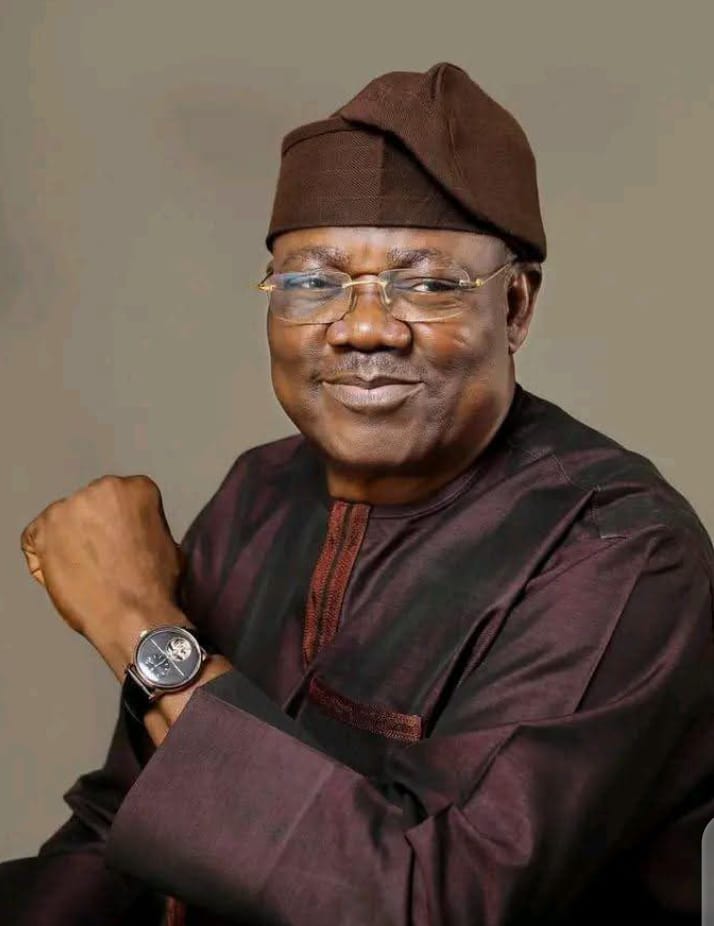









By Liberty Andrew JP, a media practitioner, writes from Jalingo, the Taraba State capital.
The recent protest by some pensioners in Taraba State demanding the removal of the Secretary to the Government of the State, Chief Gebon Timothy Kataps, over alleged interference in the payment of gratuities raises an important question that should concern every objective observer: is the Secretary to the State Government actually the officer responsible for determining, processing and paying pensioners’ gratuities?
There is absolutely no argument against the right of retired workers to demand what legitimately belongs to them. Pensioners devoted decades of their productive lives to the service of Taraba State and deserve to receive their pensions and gratuities without unnecessary hardship. Their concerns should therefore be heard with sympathy and seriousness. But legitimate frustration should not result in directing anger at the wrong institution or individual. The question of responsibility, Pension and gratuity administration is essentially an institutional process involving the appropriate pension authorities, the Ministry of Finance, Establishment and Records, relevant pension boards and other designated government organs responsible for verification, computation, approval and payment.
The Office of the Secretary to the State Government is principally a coordinating and policy office within the government structure. The SSG is not ordinarily the officer who personally computes a retiree’s gratuity, verifies his or her retirement records, prepares the payment schedule or releases funds from the treasury, Indeed, the official structure of the Taraba State Government identifies the Ministry of Finance as responsible for public finance management, while pension-related agencies and administrative structures have their own responsibilities.
Therefore, if a pensioner has not received gratuity, the appropriate question should be: Where exactly is that retiree’s file in the payment chain? Has the person been screened? Has the retirement record been verified? Has the gratuity been computed and approved? Is the person included in the current payment batch? If not, why?, Those are the questions that can produce answers.

Calling for the removal of the SSG without demonstrating his direct responsibility for the non-payment of a particular retiree’s entitlement risks turning a genuine welfare issue into a political confrontation. Kefas inherited a problem; he did not create it
There is another fact that must not be lost in the political debate. The backlog of pensions and gratuities in Taraba did not begin with the administration of Governor Agbu Kefas. Available reports indicate that the state inherited outstanding pension and gratuity obligations accumulated over many years, with some liabilities dating back more than a decade. In January 2026, the administration announced a ₦5 billion intervention for outstanding pensions, gratuities and death benefits, by July 2026, the Taraba State Government reported that Governor Kefas had approved or released more than ₦7 billion for pensions, gratuities, death benefits and other retirement entitlements. The government also stated that it was sustaining monthly funding to reduce the outstanding backlog.
That is not the record of an administration that has abandoned pensioners, It may not yet be enough to satisfy every retiree—and that is precisely why the process must continue—but it is evidence that the government has recognised the problem and is putting substantial resources into addressing it.
A backlog accumulated over years cannot disappear overnight, this is where political maturity is required. If thousands of retirees are owed money accumulated over several administrations, government cannot necessarily settle every beneficiary simultaneously, there must be verification, documentation, prioritisation, budgeting and disbursement.
The administration has indicated that the process is being used to address outstanding obligations in stages. In February, for example, the announced ₦5 billion intervention included screening of 2015 retirees as well as a mop-up of outstanding beneficiaries from earlier cohorts, that demonstrates that the payment process is not supposed to be a political lottery where the loudest protester gets paid first, It should be a transparent, verifiable and orderly process.
If the government has reached a particular retirement year and a retiree falls within that category, the person should receive his or her entitlement subject to completion of the necessary processes. If the retiree’s year has not yet been reached, the government should communicate the timetable clearly rather than leaving people guessing.
But government must also listen to the protesters, defending the administration does not mean dismissing the pensioners, far from it. The protest should be used as an opportunity for government to improve communication with retirees.
The government should publish, as much as practicable, the retirement years or batches currently being processed, the number of beneficiaries screened, the amount approved for each phase, the number paid and the outstanding categories. Such transparency would remove unnecessary suspicion and prevent politicians from exploiting the anxiety of vulnerable retirees.
Pensioners should not have to depend on rumours to know whether their names are on a payment schedule.
The removal of the SSG is a different question, there is also a fundamental difference between saying “pay our gratuity” and saying “remove the SSG.” The first is a legitimate welfare demand, the second requires evidence. If protesters believe Chief Kataps personally interfered with the payment of their gratuities, they should present evidence showing what he did, when he did it, which payment he stopped and under what authority he intervened.
Was there a written directive from him stopping a particular payment?
Did he remove beneficiaries from an approved payment schedule?
Did he instruct the Ministry of Finance or pension authority not to pay?
Did he personally withhold an appropriation or release of funds?
If the answer to these questions is no, then the demand for his removal appears difficult to justify on the basis of delayed gratuity alone.
Political allegations should be supported by facts, especially when they concern the reputation of a senior government official. The politics of 2027 should not distort the pension debate, It is understandable that pensioners will consider their welfare when deciding who to support in the 2027 election. That is democracy.
But the ballot should be based on the total record of a government, not on anger generated by a particular payment delay, interestingly, the political picture among Taraba retirees is not even uniform. In September 2026, retired local government workers in Bali publicly expressed support for Governor Kefas’s second-term bid, citing improvements in pension welfare, minimum-wage-linked pension payments and ongoing processing of gratuities.
That contrasting position is important, It demonstrates that pensioners are not a politically homogeneous group. Some are dissatisfied because they are still waiting for their entitlements; others acknowledge improvements they say they have experienced. Both voices deserve to be heard.
The real question should be: who is solving the problem?
Tarabans should ask a simple question: Which administration is actually putting money on the table to clear the inherited backlog?
The answer, based on the publicly reported interventions, is the administration of Governor Agbu Kefas, the government approved ₦5 billion early in 2026 for outstanding pensions, gratuities and death benefits. By July, the state reported more than ₦7 billion in releases for retirement-related obligations.
That does not mean every pensioner should stop asking questions, It means the debate should be about how to accelerate the process, make it transparent and ensure that every legitimate beneficiary is eventually paid, rather than finding a convenient political scapegoat. Patience must not become an excuse for indefinite delay
At the same time, the government must understand that telling pensioners simply to “be patient” is not enough, these are people who have already given their working lives to the state. Many depend on their gratuity for medical treatment, family support, housing and basic survival.
Government therefore has a moral responsibility to make the process predictable, If the payment is being done year by year, let the government say so clearly. If there are documentary problems, tell affected pensioners. If a retiree’s name is missing from a list, provide a mechanism for correction. If funds are released for a particular batch, publish the progress. Transparency will achieve more than political confrontation.
Governor Kefas should remain focused, governor Agbu Kefas should therefore resist the temptation to allow the pension and gratuity issue to become a political battle between individuals. He should continue funding the payment programme, strengthen the relevant pension and establishment institutions, demand accountability from officials directly responsible for processing beneficiaries, and insist that retirees receive clear information about when they should expect payment. If an official is genuinely found to have obstructed payment, that official should face appropriate administrative action—regardless of position.
But where there is no evidence of such obstruction, removing an SSG merely because pensioners are angry over delayed gratuity would establish a dangerous precedent: that an official can be punished for a responsibility that does not belong to his office.
Conclusion
The pensioners of Taraba State deserve their gratuities. They deserve respect. They deserve timely payment. And they have every democratic right to protest when they feel neglected.
But their legitimate grievance must be directed at the right place. Demand the money. Demand transparency. Demand accountability. Demand a timetable. Demand that every legitimate beneficiary be paid. But let the evidence determine who is responsible. The Secretary to the State Government should not become a convenient scapegoat for a backlog that accumulated over several years unless there is credible evidence that he personally interfered with the payment process. The more constructive political position is therefore to encourage Governor Agbu Kefas to sustain and accelerate the ongoing clearance of inherited gratuity liabilities while ensuring that the relevant pension and establishment institutions operate transparently.
Ultimately, the pensioner does not need a political enemy.
The pensioner needs his or her money. And the government that is currently putting substantial resources into clearing the inherited backlog should be judged not merely by how quickly every problem disappears, but also by whether it is genuinely moving the state from years of accumulated arrears toward a more sustainable pension and gratuity system.