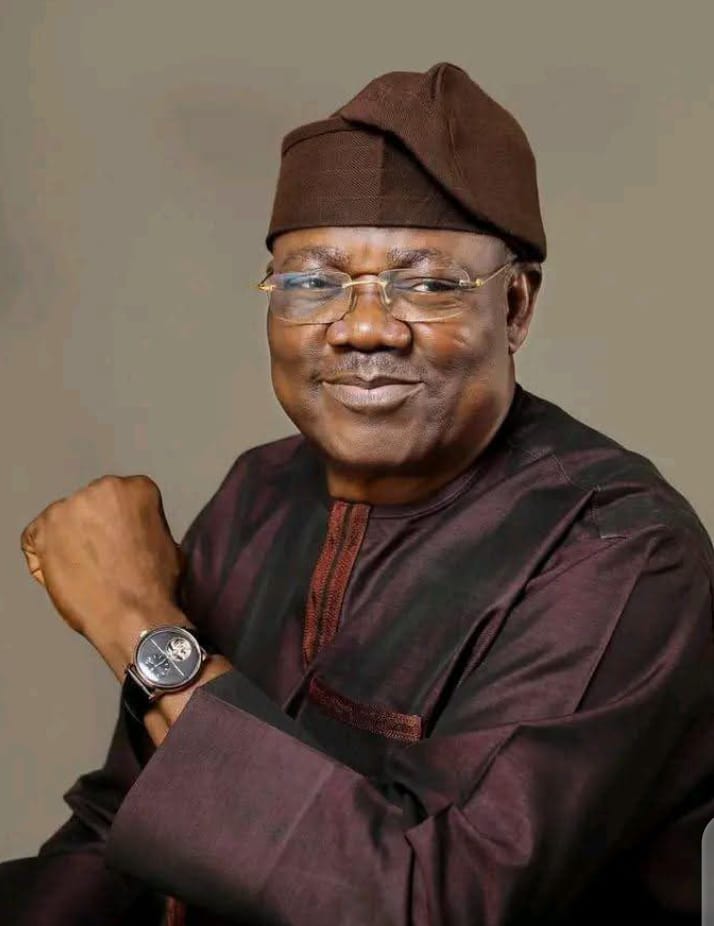







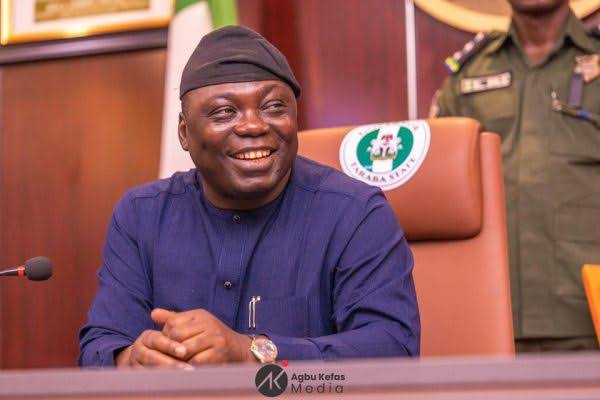
Gov Agbu Kefas and his emergence to power before 2023
By Joshua Nafinji Yohanna
There is a fundamental difference between being politically astute and being politically manipulative. One requires strategy, foresight and an understanding of the political environment; the other relies on calculated deception, concealment and the exploitation of people’s trust. Unfortunately, the distinction appears to have been lost in the politics of Agbu Kefas.
Before the 2023 governorship election, Agbu Kefas stood on a church pulpit and publicly dismissed suggestions that he had an interest in contesting for the governorship of Taraba State. His position was captured on both local and national television. Yet, events that followed presented an entirely different political reality.
He kept his intentions closely guarded, maintaining a public posture that gave people a different impression of his ambitions. Among those who trusted him were his then principal, former Governor Darius Dickson Ishaku, and Victor Bala Kona, of blessed memory, alongside many others who believed in him, embraced him and supported his political journey.
The question, therefore, is not whether a politician has the right to change his mind or aspire to higher office. Of course, he does. Political ambition is legitimate. But there is a moral obligation to be honest with the people whose confidence, loyalty and political goodwill one relies upon. When public declarations and subsequent political actions appear so fundamentally different, questions of sincerity and integrity become unavoidable.
This is not simply about partisan politics. It is about character, leadership, integrity and the political philosophy upon which public confidence is built.
These are not the days of Napoleon Bonaparte or the aristocratic power brokers of his era, when political intrigue, calculated deception and the pursuit of power by all means necessary were often instruments of statecraft. We live in an evolved society, in an age where democratic institutions, public accountability, transparency and the people’s right to demand answers must mean something.
Political cunning should never be confused with leadership. The ability to outmanoeuvre political opponents does not automatically translate into the ability to inspire confidence, build consensus or govern with integrity. Winning a political contest is one thing; earning the moral authority to lead is another.
And this is where the concerns about Agbu Kefas become particularly relevant to Northern Taraba.
If people who trusted him, including those who provided the political platform and relationships that facilitated his emergence, were left questioning the sincerity of his intentions, what assurance does another political constituency have that its confidence will be treated differently?
Why should the North disregard questions of trust, consistency and political sincerity? Why should any community surrender its political confidence without demanding clarity about the character, commitments and principles of the person seeking its trust?
Trust is not a political inheritance. It is earned. It is sustained by consistency between words and actions, and demonstrated through sincerity, especially when circumstances become politically inconvenient.
A leader must understand that people are not merely instruments for acquiring power. They are stakeholders in the political process, and their intelligence deserves respect. You cannot continually ask people to believe your words while your actions invite entirely different interpretations.
The tragedy of politics is that people sometimes become so preoccupied with the mechanics of acquiring power that they forget the responsibilities that come with it.
Power may be acquired through political manoeuvring, but legitimacy is sustained through trust. Political strategy may help a person ascend, but only character, integrity and accountability can earn enduring respect.
My position is simple: these questions should have been asked before trust was extended in the first place. They should certainly not be ignored now.
Because the question is no longer just about how Agbu Kefas came to power. It is about what his political journey teaches us about the kind of leadership we should be willing to trust.