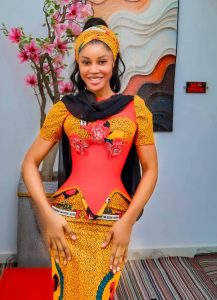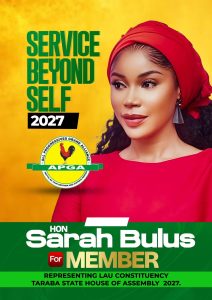





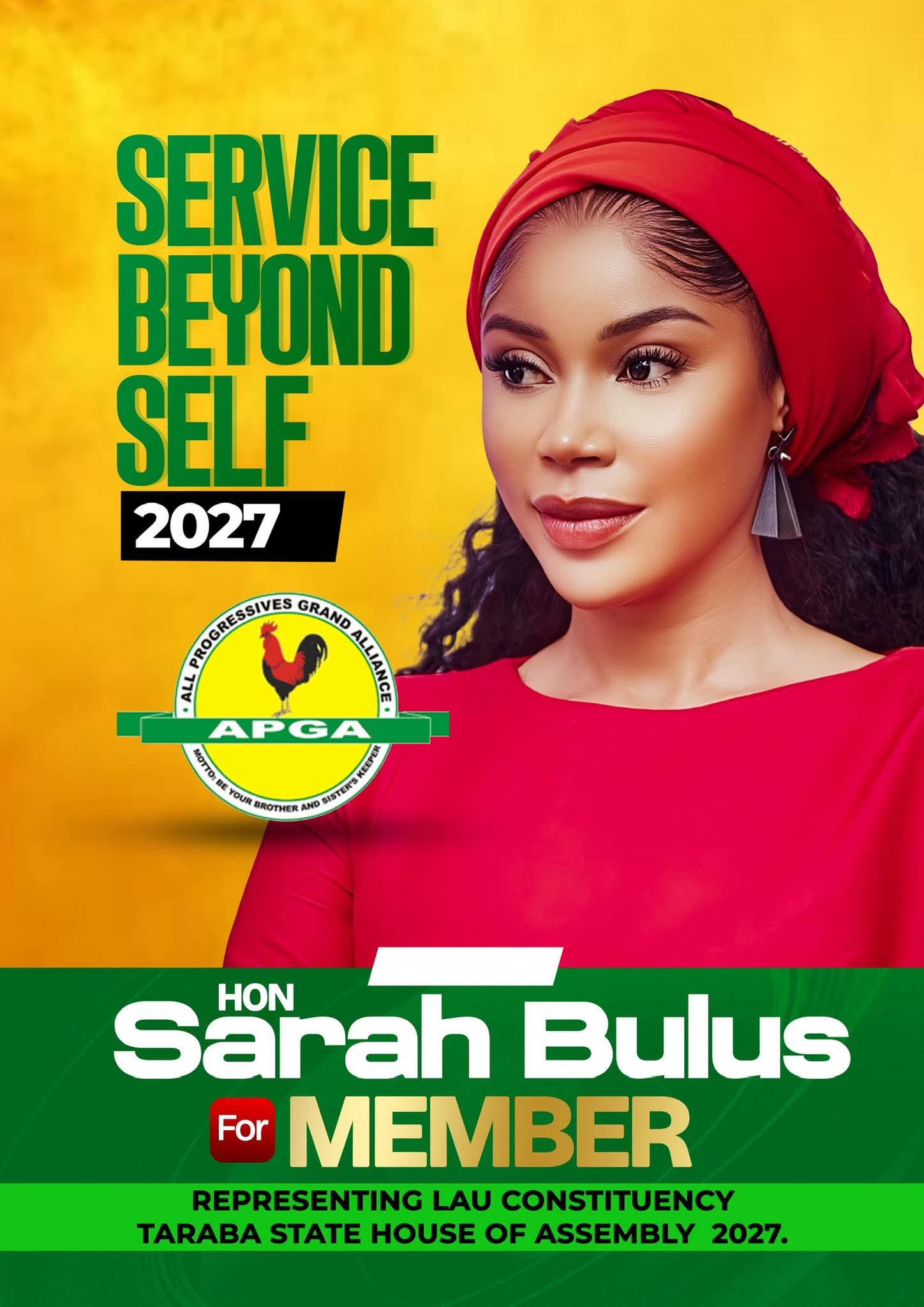
The 2027 Taraba State House of Assembly hopeful outlines plans for improved education, rural infrastructure, skills acquisition and inclusive representation.
By Iranyang Daniel
For Her Royal Majesty Sarah Bulus, the ambition to represent Lau State Constituency in the Taraba State House of Assembly is rooted in years of community service and a desire to expand opportunities for underserved populations.
The All Progressives Grand Alliance (APGA) candidate for the 2027 election says her political aspiration is a continuation of the humanitarian work she began in 2017, when she initiated interventions to support vulnerable children and other disadvantaged members of society.
Bulus outlined her vision during an appearance on Today’s Politics, a current affairs magazine programme on SUM TV that provides political leaders and aspirants with a platform to present their ambitions, discuss development priorities and engage with the electorate.
During the interview, she identified education, rural road development, access to potable water, vocational training and the economic empowerment of women and young people as key priorities she would pursue if elected.
Her proposed agenda, she explained, is informed by her experiences within communities across Lau Local Government Area and her understanding of the challenges confronting residents, particularly those in underserved rural settlements.
From community service to political ambition
Bulus traced her understanding of community needs partly to her family background and her mother’s pastoral ministry with the United Methodist Church in Nigeria (UMCN).
According to her, her mother’s service in different communities across Lau Local Government Area provided opportunities to interact with residents and observe the challenges affecting their daily lives.
She mentioned Garin Sarki, her birthplace and her father’s hometown, alongside Yiti and Abari, which she associated with her family background. These connections, she said, helped shape her appreciation of the circumstances confronting people outside the more prominent centres of political activity.
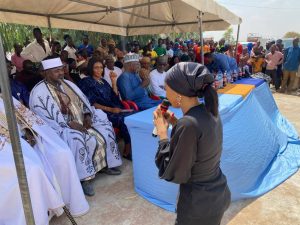
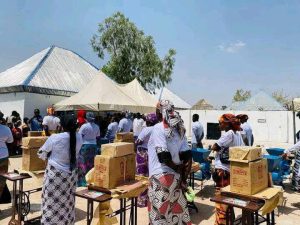
Her humanitarian activities began in 2017, when she initiated a school-uniform support project for vulnerable children. She explained that her participation in beauty pageants provided an early platform through which she could mobilise resources and organise interventions for disadvantaged members of society.
Bulus said she financed her first school-uniform project with personal funds and contributions from people who believed in the initiative. She also acknowledged the support of a former chairman of Lau Local Government Area, Hon. Peter Julius, whom she said assisted the project after she approached him through his wife.
She identified timber trading and activities in the film industry among the sources of income that helped sustain her humanitarian work, alongside contributions from supporters who subsequently joined her efforts.
Reflecting on the values that informed her commitment to service, Bulus recalled that her family encouraged sharing food and other necessities with neighbours who lacked them. She said these early lessons reinforced her belief in helping people facing difficult circumstances.
For her, seeking elective office represents an opportunity to extend this commitment through public institutions and constituency representation.
## Rural infrastructure and access to basic services
Improved rural infrastructure is central to Bulus’s development agenda for Lau State Constituency.
She identified poor road conditions and inadequate access to potable water as challenges affecting residents, arguing that communities require better infrastructure to support economic activities, mobility and access to essential services.
Among the roads she highlighted were the Maraban Kunini–Garin Sarki route and roads serving Abari, Lau and Garin Dogo.
Recounting a recent journey to her village, she described the difficulties associated with travelling on some rural roads and called for sustained attention to infrastructure needs across the constituency.
While acknowledging interventions by the former Speaker of the Taraba State House of Assembly, Hon. Alkinjo Joseph Abasokun, Bulus maintained that additional efforts were needed to address outstanding development challenges.
She argued that improved roads and access to basic amenities would not only ease movement but also support education, commerce and the delivery of essential services to rural communities.
Her position is that effective representation should build on previous achievements while identifying and pursuing projects that respond to the current needs of constituents.
Education beyond school enrolment
Education occupies a prominent place in Bulus’s proposed legislative agenda. She believes that improving educational outcomes requires more than enrolling children in school; it also demands a conducive learning environment, adequate facilities and attention to teachers’ welfare.
Drawing on her experience as a former student of Jehovah Jireh Primary and Secondary School in Apagada, she argued that Taraba State has capable teachers but that inadequate infrastructure can limit their effectiveness.
She advocated improvements to public school facilities, the provision of conducive classrooms and more attention to teachers’ welfare, including the timely payment of salaries.
Bulus questioned why children from low-income households should be compelled to learn in substandard environments simply because their parents cannot afford private education.
According to her, strengthening public education requires a coordinated approach that addresses both the physical condition of schools and the welfare of the teachers responsible for educating future generations.
Skills acquisition and youth economic empowerment
Beyond formal education, Bulus wants young people to have practical skills that can help them earn a living and become economically independent.
She observed that academic qualifications alone have not guaranteed employment for many Nigerian graduates, making vocational training and entrepreneurship important components of youth development.
Among the skills she identified were yoghurt production, crochet work and other small-scale, income-generating activities that can be established with relatively modest resources.
She argued that young people who do not proceed to higher institutions should still have opportunities to acquire marketable skills, establish businesses and contribute to their families’ livelihoods.
However, she stressed that empowerment programmes must be designed around beneficiaries’ actual needs and capabilities rather than the distribution of money or equipment without adequate preparation.
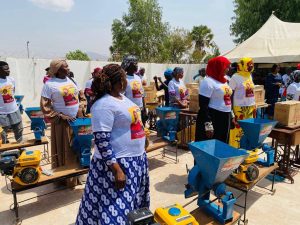
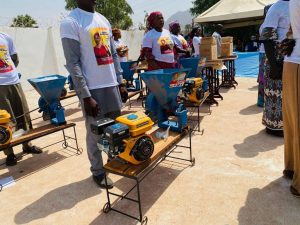
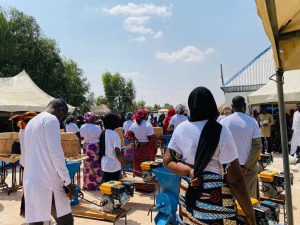
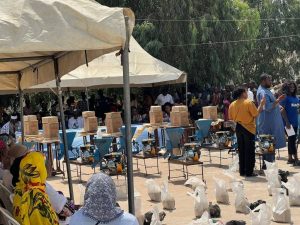
Drawing on her previous interventions involving sewing and grinding machines, Bulus said she sought to support individuals who had already acquired the relevant skills but lacked the equipment required to operate independently.
She also expressed interest in follow-up arrangements to encourage beneficiaries to use the support productively.
The approach she described emphasises practical competence, appropriate support and accountability as important elements of sustainable empowerment.
Women’s empowerment and inclusive representation
Bulus also identified women’s participation in politics and public decision-making as an area requiring greater attention.
Speaking about her participation as a keynote speaker at the Exceptional Ladies Conference on October 10, she argued that encouraging women to contest elections is only one part of the process. Creating opportunities for them to participate meaningfully in governance is equally important.
If elected, she said, she would use her position and influence to encourage greater involvement by women in politics at the local, state and national levels.
She also clarified that her commitment to supporting vulnerable people extends beyond women and girls. According to her, victims of abuse and injustice deserve assistance irrespective of gender, including boys and men whose rights have been violated.
Party changes and a commitment to collaboration
Bulus’s political journey has involved changes in party affiliation. She disclosed that she initially considered the All Progressives Congress (APC), later joined the African Democratic Congress (ADC), and subsequently moved to APGA.
She attributed these changes to challenges encountered in the political process and her determination to pursue her ambition without compromising her principles.
Looking beyond party differences, she expressed willingness to work with legislators from other political parties whenever cooperation could advance the interests of Lau State Constituency.
She maintained that development priorities should take precedence over partisan considerations, particularly where collaboration could facilitate projects and initiatives that benefit constituents.
During the interview, Bulus also alleged that some of her supporters, including civil servants, had been pressured to withdraw their support for her candidacy. The allegations were not independently verified during the broadcast, and those implicated were not represented to respond.
A promise to build on previous achievements
One of the defining themes of Bulus’s appearance was her emphasis on continuity, performance and accountability in public office.
Rather than dismissing the contributions of previous representatives, she said she intended to build on their achievements while pursuing further interventions in areas she considers essential to the development of Lau.
“I want to start from where the past leaders have stopped,” she said.
She added that, at the end of her first term, she would want her record to be judged by completed projects and measurable interventions rather than another set of unfulfilled promises.
Her priorities include improved public schools, better rural roads, access to potable water, vocational training and increased economic opportunities for women and young people.
Translating these proposals into tangible outcomes, however, would require effective legislative engagement, collaboration with relevant government institutions, realistic project planning and sustained attention to constituency needs.
As the 2027 election approaches, Bulus’s candidacy adds to the debate over the future of representation in Lau State Constituency. Her appearance on SUM TV’s Today’s Politics provided an opportunity to explain the experiences behind her ambition and the development priorities she hopes to advance.
Ultimately, voters will assess her proposals alongside the records, programmes and commitments of other candidates before deciding who is best placed to represent their interests in the Taraba State House of Assembly.
For Bulus, the central challenge is to translate a record of community service into effective legislative representation, with the impact of her proposed agenda ultimately measured by what it delivers for the people of Lau.