





Promises revolving capital fund, job creation within 100 days, with focus on youths and women
By Iranyang Daniel
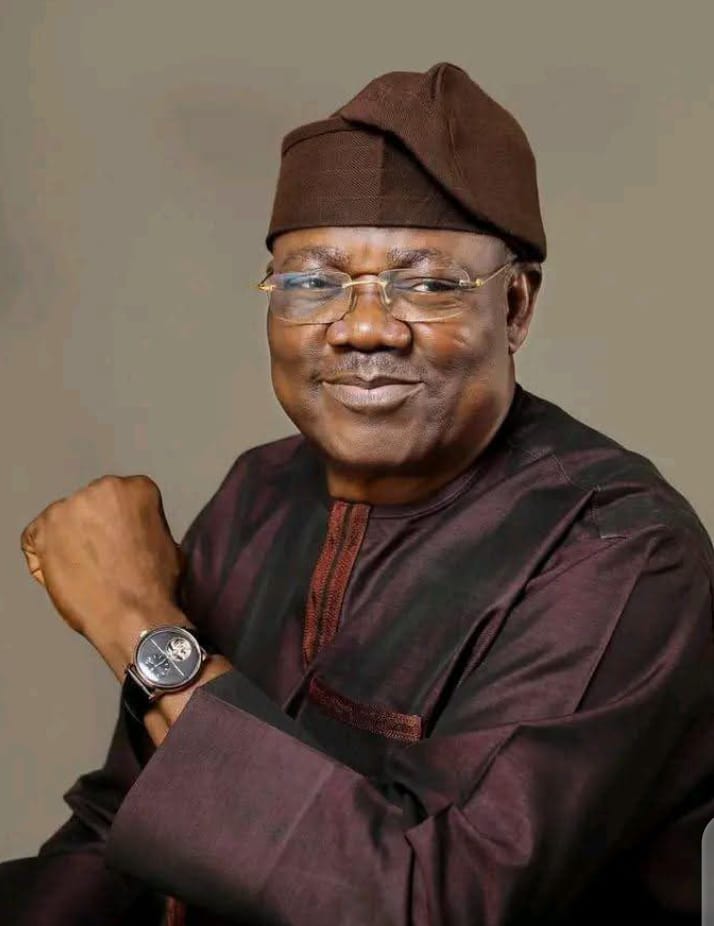
Dr. Victor Falack, the Accord Party senatorial candidate for Taraba Central, has called for more effective, accessible and people-oriented representation, criticising what he described as inadequate engagement between the district’s incumbent senator, Haruna Manu, and the people he represents.
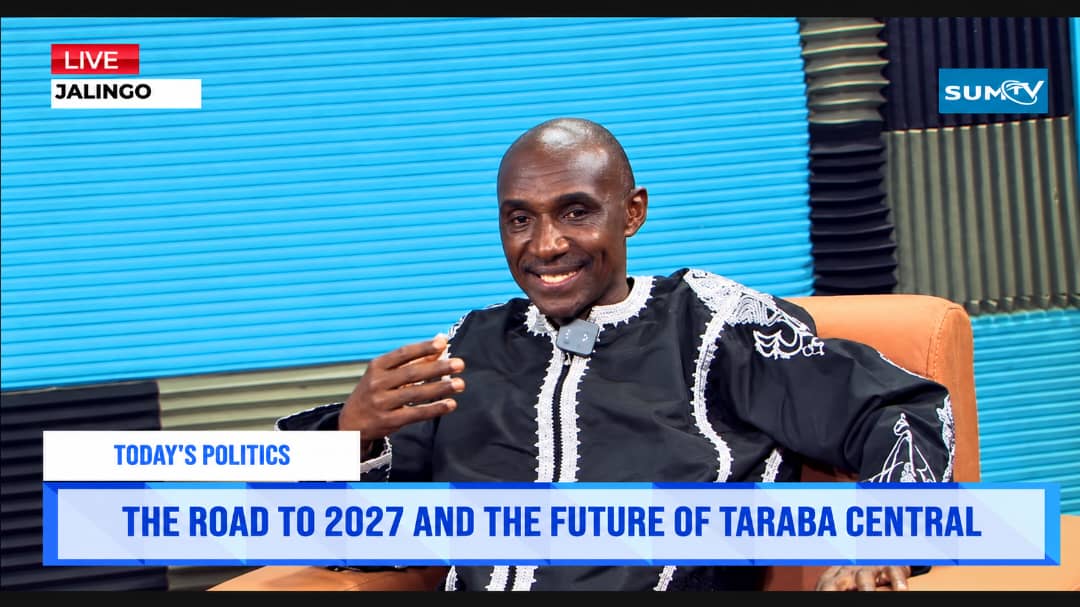
Falack made the remarks during an appearance on SUM TV’s *Today’s Politics*, where he discussed his political ambition, his departure from the Peoples Democratic Party (PDP), his relationship with Professor Gilbert Gills Nyanganji, allegations of religious bias and his plans for Taraba Central ahead of the 2027 general elections.
The senatorial candidate argued that representation should go beyond occupying a seat in the National Assembly, insisting that elected officials must remain connected to their constituents, understand their challenges and pursue solutions to their needs.

He also promised to introduce a revolving capital fund and initiate job-creation opportunities within his first 100 days in office if elected, with particular emphasis on youths and women.
FALACK CHALLENGES NYANGANJI OVER SARDAUNA
Responding to Professor Gilbert Gills Nyanganji’s reported allegation that he was creating confusion in Sardauna Local Government Area, Falack challenged him to identify the specific actions he considered divisive.
Falack said his consultations with community stakeholders were intended to build relationships and support across ethnic and religious groups, rather than create division ahead of the 2027 elections.
He listed the Mambila, Kaka, Fulani, Kambo and Panso communities among the groups with whom he said he had engaged during his consultations.
According to him, the visits attracted support and endorsements that were subsequently reported in the media.
Falack urged Nyanganji to visit Gembu and other parts of Sardauna to engage directly with stakeholders and explain the basis of his concerns.
He maintained that political consultations should promote understanding and peaceful coexistence among communities rather than generate unnecessary controversy.
Nyanganji’s response to the allegations would be necessary to establish his position on the dispute.
QUESTIONS MANU’S ACCESSIBILITY AND REPRESENTATION
Falack also questioned the quality of representation provided by Senator Haruna Manu, arguing that constituents deserve regular engagement and a representative who remains responsive to their needs.
He maintained that issues such as healthcare, roads, social amenities and the welfare of vulnerable residents should receive greater attention in the representation of Taraba Central.
According to Falack, effective representation requires accountability, accessibility and sustained communication between elected officials and the electorate, rather than engagement limited to election campaigns.
He called for a change in the approach to representation, promising to prioritise the concerns of constituents and ensure that their voices receive attention at the National Assembly.
The allegations concerning Manu’s accessibility and constituency performance remain Falack’s position and could not be independently verified from the interview material available.
PROMISES REVOLVING CAPITAL FUND, JOBS WITHIN 100 DAYS
Outlining his economic agenda, Falack promised to establish a revolving capital fund and create employment opportunities within his first 100 days in office if elected.
He said the proposed initiative would focus particularly on youths and women, with the broader objective of supporting entrepreneurship, expanding small businesses and improving economic opportunities at the grassroots.
The candidate presented the proposed fund as part of his commitment to addressing unemployment and helping constituents become economically self-reliant.
He also emphasised the importance of practical interventions that could improve household incomes, support vulnerable groups and encourage productive economic activities across the district.
Details of the proposed fund, including its financing structure, eligibility criteria and implementation arrangements, were not fully outlined in the interview material available.
REJECTS RELIGIOUS POLITICS
Falack rejected suggestions that his senatorial ambition was driven by religious considerations, arguing that his political team includes people from different religious and ethnic backgrounds.
He cited the involvement of Muslims in leadership and coordination positions within his campaign structure, including roles connected to the central zone, Sardauna, Gashaka and Gassol.
He maintained that his ambition was to build a broad-based political movement capable of attracting support across community and religious lines.
Although acknowledging the influence of religion and ethnicity on Nigerian politics, Falack said neither should be used to exclude qualified individuals or divide the electorate.
DENIES RECEIVING ₦50 MILLION FROM BWACHA
The Accord candidate also denied an allegation that he received ₦50 million from Senator Emmanuel Bwacha.
Falack said he had never had a financial transaction with Bwacha and rejected claims that money had changed hands in connection with their political disagreements.
He maintained that his grievances concerning the PDP arose from internal party decisions and what he described as unfulfilled political assurances, rather than any financial arrangement.
EXPLAINS DEPARTURE FROM PDP
Falack traced his departure from the PDP to a series of disagreements over party leadership positions and electoral nominations.
He said he had served as acting chairman of the party’s caretaker committee and believed he had made significant contributions to its internal organisation and activities.
According to him, he was subsequently asked to relinquish the chairmanship because he and the party’s governorship candidate at the time, Senator Emmanuel Bwacha, were both Christians.
Falack alleged that he was assured of receiving the senatorial ticket in return, but that the ticket eventually went to Hon. Iliyasu Goje.
He further claimed that subsequent assurances concerning the House of Representatives ticket for the Gashaka, Kurmi and Sardauna Federal Constituency were not fulfilled, as the ticket went to the incumbent lawmaker, Hon. David Fuoh.
Falack described the developments as a major factor in his decision to leave the PDP and pursue his political ambition under the Accord Party.
The allegations represent his account of the events. The PDP officials involved have not provided their response in the interview material available for this report.
SAYS HE SOUGHT DIALOGUE WITH NYANGANJI
Falack also discussed his relationship with Nyanganji, saying he had made repeated attempts over approximately 18 months to arrange a meeting with him.
He described the proposed meeting as an opportunity for them to discuss their respective political ambitions and explore a possible understanding, rather than an attempt to compel Nyanganji to withdraw.
Falack said he would have been willing to reconsider his own ambition and support Nyanganji if he had been convinced that his fellow aspirant had a stronger case.
He added that their disagreements could have been addressed through dialogue and mutual understanding.
DESCRIBES HIMSELF AS A PROFESSIONAL AND HUMANITARIAN
Falack described himself as a retired civil servant, chartered accountant, chartered tax consultant, chartered economist and clergyman who also operates a private firm.
He said his professional experience had taught him patience, resource management and the importance of balancing competing interests when making decisions.
He also spoke about his support for vulnerable individuals and students, presenting humanitarian assistance as a commitment that extends beyond his political ambition.
Falack argued that these experiences would inform his approach to leadership and the management of the competing demands of communities across Taraba Central.
2027: REPRESENTATION, JOBS AND INCLUSION IN FOCUS
Falack’s appearance on *Today’s Politics* placed accessibility, economic empowerment, religious inclusion and accountability at the centre of his campaign message ahead of the 2027 senatorial election.
His proposed revolving capital fund and promise of job-creation initiatives within 100 days are among the commitments he has presented to voters as he seeks to distinguish his candidacy from the incumbent representation.
As political activities gather momentum, the electorate will have the opportunity to assess the competing candidates on their policy proposals, records, credibility and capacity to deliver on their promises.
For Falack, the central argument is that Taraba Central needs representation that remains responsive to the people while pursuing practical solutions to unemployment, infrastructure deficits and other challenges confronting the district.