

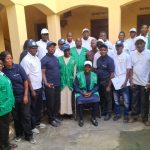

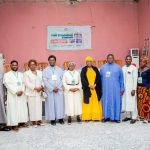
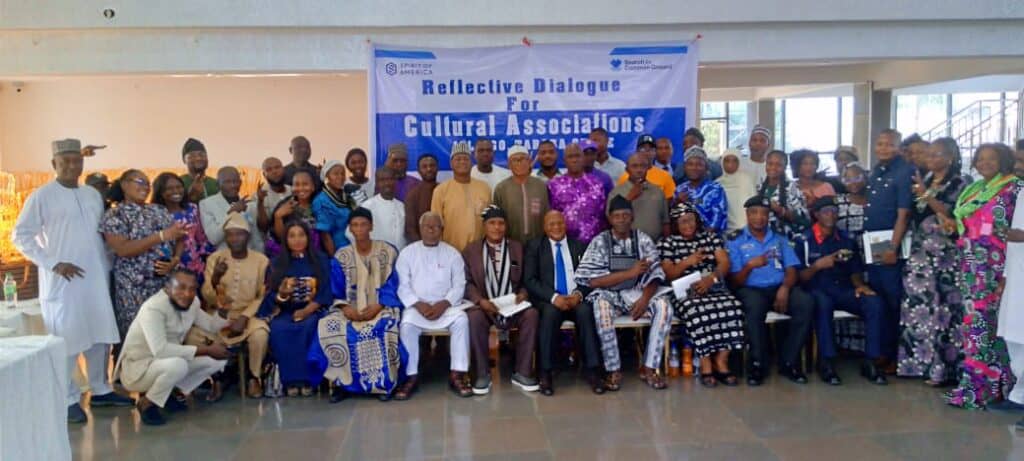
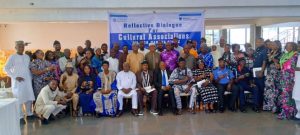
The Taraba State Bureau for Peace and Conflict Management, in collaboration with Search for Common Ground, has engaged Cultural Development Associations from Southern Taraba in a reflective dialogue aimed at strengthening peace, reconciliation and social cohesion in the region.
The dialogue, held in Jalingo to commemorate the 2026 World Peace Day, was organised under the theme, “Invest in Peace for Everyone, Everywhere, Every Day.”
The meeting provided an opportunity for stakeholders to examine the continuing impact of violent conflicts and insecurity across Southern Taraba and neighbouring communities.
Participants reflected on the effects of conflict, including displacement, loss of livelihoods, destruction of property, damaged relationships and declining trust among communities.
At the end of the engagement, participants issued a communiqué containing recommendations and commitments aimed at addressing the underlying causes of conflict and strengthening sustainable peace.
They emphasised that peace should not be defined merely as the absence of violence, but should also encompass justice, equality, human dignity, accountable governance, protection of civilians, respect for diversity and inclusive participation in decisions affecting communities.
Justice and Accountability
Participants called on the Taraba State Government and relevant federal institutions to ensure transparent implementation of outstanding recommendations from judicial panels, commissions of inquiry, White Papers and other lawful processes relating to inter-communal conflicts in Southern Taraba.
They also called for prompt and impartial investigation of alleged perpetrators of violence, while urging that survivors be given access to justice, psychosocial support and compensation or reparations where applicable.
Inclusive Governance and Traditional Institutions
The stakeholders advocated fair representation and non-discrimination at state, local government, ward and community levels.
They also recommended stronger involvement of traditional institutions in dialogue, mediation, reconciliation, early-warning systems and community dispute resolution, while stressing that such responsibilities must operate within the framework of human rights and the rule of law.
Land, Boundaries and Natural Resources
Land, boundary disputes, natural resources and livelihoods were identified as major areas requiring sustained attention.
Participants urged the Federal Governments and the Governments of Taraba and Benue States, alongside relevant institutions, to pursue peaceful, transparent and participatory processes for resolving outstanding boundary issues.
They further called for inclusive land-use and resource-management systems that involve affected communities, traditional authorities, women, youth, farmers, herders and displaced persons.
Improved Security and Protection of Civilians
The dialogue also called for stronger civilian protection and improved security measures, particularly in conflict-prone, border, rural and hard-to-reach communities.
Participants recommended better intelligence gathering, stronger community engagement and accountable security operations, alongside coordinated efforts to tackle kidnapping, banditry, cattle rustling, trafficking, arms proliferation and other forms of organised violence.
Support for Displaced Communities
On internally displaced persons, participants stressed that returns and resettlement must be voluntary, safe, dignified, informed and sustainable.
They called for coordinated support covering shelter, livelihoods, education, healthcare, psychosocial services, civil documentation and protection for displaced and conflict-affected populations.
Dialogue Between Tiv and Jukun Communities
The stakeholders placed particular emphasis on sustained dialogue between Tiv and Jukun stakeholders, especially in communities where peacebuilding and development interventions are already underway.
They called for regular intra- and inter-community engagements involving government institutions, traditional rulers, religious organisations, civil society groups, women and youth organisations and other relevant stakeholders.
Women and Youth Participation
Participants called for greater inclusion of women, young people and other marginalised groups in peacebuilding and decision-making processes.
Women were identified as important actors in mediation, negotiation, leadership and early-warning initiatives, while greater opportunities were recommended for young people through skills development, entrepreneurship, decent employment, civic participation, sports, arts and digital innovation.
Responsible Media and Communication
The dialogue further highlighted the important role of the media in preventing conflict.
Media organisations, journalists, social media users, political actors, religious leaders and community influencers were urged to avoid unverified information, inflammatory language, stereotypes and hate speech.
Journalists were encouraged to adopt accurate, balanced, verified and conflict-sensitive reporting, particularly when covering issues capable of escalating tensions between communities.
Strengthening Early-Warning Systems
Participants recommended the strengthening of community-based Early Warning and Early Response mechanisms across vulnerable communities in Southern Taraba.
They proposed the involvement of traditional rulers, women and youth representatives, religious leaders, farmers, herders, teachers, civil society organisations, local government representatives, security agencies and other trusted community actors.
The stakeholders also proposed the establishment or strengthening of a multi-stakeholder peace and security coordination mechanism for Southern Taraba.
Such a mechanism, they said, should develop a clear implementation plan containing priority actions, responsible institutions, resources, measurable indicators and mechanisms for public reporting.
The participants reaffirmed their commitment to building a Southern Taraba where residents can live in safety, dignity and mutual respect, while rejecting violence, collective blame, discrimination, hate speech and the manipulation of identity for political or economic interests.
They urged governments, security agencies, traditional and religious leaders, civil society organisations, development partners, the media and communities to work collectively towards preventing violence, addressing grievances peacefully, strengthening accountability and promoting inclusive development across the region.