





JALINGO — The Taraba State Internal Revenue Service (TIRS) and the Taraba State Geographic Information Service (TAGIS) have resolved to strengthen collaboration aimed at improving the collection of ground rent and other property-related revenues across the state.
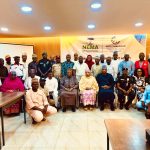
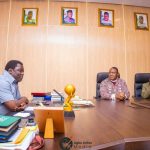
The resolution was reached on Tuesday, August 18, 2026, during a strategic meeting between officials of both agencies at the TAGIS office in Jalingo.
The TIRS delegation comprised Board Members Magai B. Agyo, Theophilus K. Japheth and Idi A. Ivo, while the TAGIS management team was led by its Director-General, Dr. Mark Ma’aku Joshua.
The meeting followed issues arising from a presentation to the Taraba State Executive Council and focused on identifying revenue leakages, addressing collection challenges and developing practical strategies to improve the state’s internally generated revenue.

The TIRS representatives congratulated Dr. Ma’aku Joshua on his leadership of TAGIS and emphasised the need for both agencies to work closely in identifying existing challenges and closing gaps affecting revenue mobilisation.
Speaking during the meeting, the TAGIS Director-General explained that the agency had commenced efforts to reposition its operations towards achieving optimal revenue generation.
According to him, although several challenges had affected effective revenue collection in the past, TAGIS was now determined to intensify its efforts to convert available revenue opportunities into actual collections.

He identified the low collection of ground rent associated with Certificates of Occupancy (C of O) as one of the major areas requiring urgent attention, noting that the sector holds significant revenue potential for the state.
The meeting underscored the importance of sustained government attention, political will and stronger inter-agency coordination in unlocking revenue from ground rent and other property-related sources.
The two agencies agreed that improved collaboration would help strengthen revenue administration, reduce collection gaps and contribute to the growth of Taraba State’s internally generated revenue.