




By Iranyang Daniel
For decades, Taraba State has possessed resources capable of supporting a thriving agricultural economy, from fertile farmlands and livestock to fisheries, forests and valuable mineral deposits. Yet, the challenge of converting these resources into widespread prosperity has remained a concern for residents, farmers, traders and investors.
Now, two major infrastructure developments are presenting an opportunity to change that story.
The Federal Executive Council’s approval of approximately ₦62 billion for the construction of the Tungo Karamti Road linking Taraba and Adamawa states, alongside the development of the Kashimbila Integrated Cargo and Agro Allied Airport in Takum Local Government Area, could lay the foundation for a more connected and commercially productive Taraba.
The road approval, announced by the Minister of Works, David Umahi, after the Council meeting presided over by President Bola Ahmed Tinubu on Wednesday, October 28, 2026, includes five bridges.
The airport initiative, championed by retired General Theophilus Yakubu Danjuma, has a broader agricultural and commercial vision that extends beyond aviation.
If both projects are delivered and connected through an effective transport and logistics network, Taraba could move closer to transforming its agricultural resources into a major source of employment, investment, trade and revenue.
The challenge is ensuring that these developments become functioning economic assets rather than remaining impressive announcements on paper.
DANJUMA’S AIRPORT VISION: BUILDING FOR AN ECONOMY THAT HAS YET TO REACH ITS FULL POTENTIAL
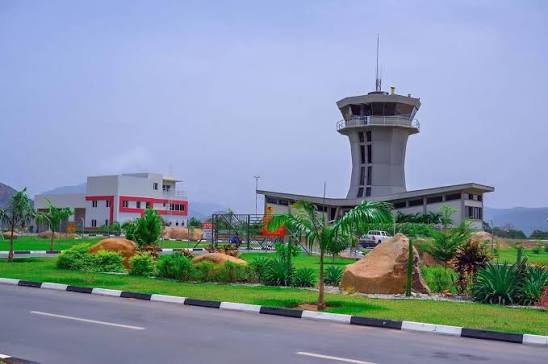
In Kashimbila, Takum Local Government Area, General Theophilus Yakubu Danjuma has supported an ambitious infrastructure initiative that could reshape the economic prospects of southern Taraba.
The project is officially known as the Kashimbila Integrated Cargo and Agro Allied Airport. It involves upgrading an existing airstrip into a cargo airport and developing associated agricultural and commercial facilities.
In February 2025, the Federal Executive Council approved the project’s concession under a public private partnership arrangement, according to the Infrastructure Concession Regulatory Commission.
The wider development plan includes more than 3,000 hectares of farmland, fish farming facilities, a livestock ranch, agricultural logistics infrastructure, business parks and a proposed Free Trade Zone.
The project is designed to connect agricultural production with storage, processing, transportation and export markets.
This is where the vision becomes particularly important.
An airport built primarily for cargo operations can serve a different economic purpose from an airport designed mainly to transport passengers. It can help move eligible agricultural products and other goods to distant markets, provided there are sufficient production volumes, appropriate storage facilities, reliable logistics and the required aviation approvals.
For Taraba, where agriculture supports a large share of the population, the possibility of linking production to wider markets is significant.
General Danjuma deserves recognition for advancing an investment concept that places infrastructure at the centre of economic development. His initiative goes beyond constructing a physical facility. It seeks to connect aviation with agriculture, livestock production, fisheries and commercial activity.
That ambition is especially relevant to a state whose economic potential has not always translated into comparable opportunities for its rural communities.
Nevertheless, the project’s ultimate value will depend on its completion, operational readiness, commercial viability and the delivery of the supporting infrastructure.
THE ROAD THAT COULD STRENGTHEN THE WIDER ECONOMIC NETWORK
The Federal Government’s approval of approximately ₦62 billion for the Tungo Karamti Road introduces another important element into the development equation.
The project is intended to improve connectivity between Taraba and Adamawa and includes five bridges.
For farmers and traders, the importance of road infrastructure is straightforward. Agricultural products must travel from farms to collection points, processing facilities, markets and, where export opportunities exist, transport hubs.
A cargo airport cannot fulfil its economic purpose if producers struggle to move their goods from farms to storage facilities or if transport costs make their products uncompetitive.
Similarly, an improved road network becomes more valuable when it connects production centres to processing plants, commercial centres and larger distribution networks.
The Tungo Karamti Road could contribute to this wider objective by strengthening road connectivity between the two states and improving the movement of goods and people along its actual route.
However, the available project announcement does not establish that the road directly connects to Kashimbila Airport. The two projects should therefore be understood as potentially complementary infrastructure investments, with their combined impact depending on the quality of connecting roads and logistics arrangements.
For the benefits to reach the airport, the relevant authorities must ensure that the road network connecting Kashimbila to production centres, major highways and other commercial destinations is adequate.
This is the difference between building isolated infrastructure and creating an integrated economic corridor.
TARABA AND ADAMAWA HAVE THE AGRICULTURAL RESOURCES
The economic case for improved connectivity begins with the resources available in the two states.
Taraba produces crops such as maize, rice, yam, cassava, sorghum and millet, alongside groundnuts, cotton, coffee and tea. Livestock production and fishing also contribute to livelihoods across the state.
Adamawa has a strong agricultural base that includes rice, maize, beans, groundnuts, cotton, onions and tomatoes, as well as livestock and fisheries.
An Adamawa State Government economic planning document estimates that agriculture, including crops and livestock, accounts for 53.7 per cent of the state’s gross domestic product. That figure relates to the period covered by the document and should not be interpreted as a current measurement for Taraba or as a newly verified figure for Adamawa.
Nevertheless, the agricultural resources of both states provide a basis for expanding commercial activity through better transportation and market access.
Consider the possibilities for rice and maize producers, livestock farmers, fish farmers and vegetable growers.
Where reliable roads reduce journey delays, producers can potentially reach more buyers. Where storage and processing facilities are available, more produce can be preserved or converted into higher value products. Where export logistics are commercially viable, suitable products can potentially reach markets beyond Nigeria.
These opportunities are not automatic. They require investment, adequate electricity, finance, standards compliance, security and dependable demand.
But without reliable transportation, even productive farms and modern processing facilities can struggle to compete.
FROM KASHIMBILA TO INTERNATIONAL MARKETS
The cargo airport’s wider development plan includes the proposed integration of agriculture, logistics and commercial activities.
The Infrastructure Concession Regulatory Commission stated in February 2025 that the concession was expected to support agricultural productivity, improve market access, attract agribusiness investment and create employment.
The Commission also announced an expected revenue projection of approximately ₦4.1 trillion over the concession period. That figure is a projected revenue estimate associated with the wider development, not money already generated, government revenue already collected or a guaranteed economic return.
The distinction matters because projections must eventually be tested against actual investment, production, traffic volumes, operating costs and market demand.
Even so, the project’s concept highlights an important opportunity for Taraba.
Instead of selling only raw agricultural products, the state could attract businesses involved in processing, packaging, cold storage, quality control and distribution. Such activities can create additional employment and allow more economic value to remain within producing communities.
For example, properly handled agricultural produce could be collected from farms, graded, packaged and transported to domestic markets or export destinations where demand and regulatory requirements permit.
Livestock and fish production could also benefit from improved processing, storage and distribution systems.
The airport alone cannot guarantee these outcomes. It will need reliable road connections, suitable cargo handling facilities, dependable power, cold chain infrastructure where required, competitive freight services and the necessary regulatory clearances.
If those conditions are met, Kashimbila could become an important component of a broader agricultural economy rather than simply an aviation facility.
WHY THE TUNGO KARAMTI PROJECT MATTERS BEYOND TARABA
The potential benefits are not limited to Taraba and Adamawa.
Improved transport infrastructure can support trade between states, help producers access larger markets and improve the movement of agricultural goods to consumers.
The Food and Agriculture Organization of the United Nations has consistently identified agriculture as an important part of Nigeria’s economy and rural employment. Better connections between producing communities and markets can therefore contribute to national food distribution and economic activity.
For consumers, more efficient transportation may help reduce some distribution costs. However, lower transport costs do not automatically translate into lower food prices. Fuel prices, insecurity, storage losses, market competition, seasonal shortages and other factors also influence what consumers pay.
For businesses, more reliable transportation can improve delivery schedules and make it easier to plan production and distribution.
For government, successful infrastructure investment can support commercial activity, employment and a broader tax base over time.
The important point is that a road connecting agricultural communities is not merely a local construction project. When properly integrated into the wider transport network, it can contribute to the movement of goods across state boundaries and strengthen national commerce.
BEYOND POLITICAL GIMMICKS AND THE SEARCH FOR VOTES
Infrastructure announcements frequently attract political attention, particularly when they involve large sums of public money or projects expected to transform a region.
Yet, the people of Taraba and Adamawa need more than announcements. They need completed roads, functioning bridges, operational cargo facilities and visible improvements in economic opportunities.
The Tungo Karamti Road must therefore be judged by its implementation, not simply by the reported contract sum.
The Kashimbila airport project must equally be judged by its operational readiness and ability to attract agricultural producers, cargo operators, investors and customers.
If the road is approved but not delivered, its economic promise will remain unrealised. If the airport’s wider facilities are not completed or the necessary logistics connections are missing, its capacity to stimulate agricultural exports will be constrained.
The relevant authorities should publish clear information about project timelines, contractors, construction progress, funding, completion targets and operational requirements.
Residents should also be able to determine which communities will benefit directly and how the projects will connect with existing roads and markets.
These are essential questions of accountability, not political hostility.
General Danjuma’s initiative merits recognition for its economic ambition, but the lasting significance of that initiative will be measured by what it enables people to produce, sell, transport and earn.
Likewise, the Federal Government’s road approval should ultimately be measured by the improvement it brings to the movement of people and goods.
WHAT TARABA MUST DO TO MAXIMISE THE OPPORTUNITY
The Taraba State Government has an important role in ensuring that these investments complement one another.
First, it should work with the Federal Ministry of Works and relevant project authorities to identify and improve the connecting roads linking Kashimbila to agricultural production centres and major commercial routes.
Second, the state should encourage private investment in agricultural processing, warehouses, cold storage, grain handling and packaging facilities.
Third, agricultural producers should receive support through extension services, improved inputs, access to finance and reliable market information.
Fourth, the authorities should work with aviation regulators and prospective cargo operators to establish the standards, facilities and commercial arrangements required for safe and sustainable cargo operations.
Finally, the state should establish transparent mechanisms for monitoring the economic outcomes of these investments, including employment, agricultural volumes handled, transport efficiency, private investment and the number of businesses operating along the corridor.
These measures would help ensure that the benefits extend beyond construction workers and contractors to farmers, traders, young people and local businesses.
A MOMENT OF OPPORTUNITY FOR TARABA
The story of the Tungo Karamti Road and the Kashimbila Integrated Cargo and Agro Allied Airport is ultimately a story about the relationship between infrastructure and economic opportunity.
General Theophilus Yakubu Danjuma has helped advance an ambitious airport initiative in southern Taraba, while the Federal Government’s newly announced road approval presents another opportunity to strengthen regional connectivity.
The two projects are not yet a proven, fully connected economic corridor. Their combined potential will depend on implementation, supporting infrastructure, investment and the development of viable commercial activities.
But the vision is worth pursuing.
Imagine a future in which farmers can move their produce from rural communities through reliable roads to collection centres, processing facilities and competitive markets. Imagine businesses investing in storage, packaging and distribution because they can depend on transportation. Imagine agricultural products reaching distant customers through properly equipped cargo facilities, creating new opportunities for producers and workers.
That future will not emerge from political speeches alone. It will require planning, funding, competent execution and accountability.
For Taraba, the opportunity is to move from possessing abundant resources to building an economy that can process, distribute and market those resources more efficiently.
For Adamawa, better connectivity could strengthen trade and agricultural exchange with its neighbour.
For Nigeria, successful implementation could contribute to stronger regional commerce, improved food distribution and wider economic activity.
The road approval is a beginning, not the destination. The airport is an investment opportunity, not a guarantee of prosperity.
The real breakthrough will come when the road is completed, the airport is operational, the connections between them are effective and the people of Taraba and Adamawa begin to experience measurable economic benefits.
That is when the vision will move beyond announcements and become a lasting development legacy.
Iranyang Daniel is a General Manager @ SUM TV and Senior Correspondent with Taraba News