UMCN–GMCN Crisis: Fresh Arguments Erupt Over WMC Membership, Methodist History and Church Properties
The continuing disagreement between the United Methodist Church in Nigeria (UMCN) and the Global Methodist Church Nigeria (GMCN) has opened another chapter in the debate over Methodist identity, history, property and legitimacy in Nigeria.
Recent comments attributed to Bishop Ande Emmanuel following his participation in the World Methodist Council General Assembly in El Salvador have again brought these issues to the forefront.
Bishop Emmanuel’s central argument is that the wider Methodist tradition is historically rooted in peace, justice, dialogue and reconciliation, and that the present disagreement in Nigeria should be approached within those principles.
However, a rejoinder to his position raises historical questions about the evolution of the United Methodist Church in Nigeria and challenges the suggestion that membership of international Methodist bodies should be regarded as a measure of Methodist legitimacy.
At the centre of the controversy are two different questions which, although related, should not be confused: Who legitimately represents the Methodist tradition, and who has a historical or legal claim to church institutions and properties?
Bishop Ande: Global Methodist Tradition Should Guide Nigeria
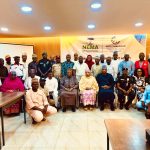
Bishop Ande Emmanuel said his participation in the World Methodist Council General Assembly provided an opportunity to interact with Methodist denominational leaders from different parts of the world.
According to him, one of his major observations was that Methodists traditionally emphasise peace and justice.
He argued that among the Methodist denominations represented at the gathering, he did not encounter a denomination whose emergence involved merely changing the name of an existing Methodist body and forcibly taking possession of another denomination’s properties.
His comments were apparently directed at the continuing division involving members who left UMCN and aligned with the Global Methodist Church.
Despite his criticism, Bishop Emmanuel maintained that the door to dialogue remained open.
According to him, those who left would be welcomed should they decide to return. But if they choose to remain in the new denomination, he said UMCN would still be willing to listen to their concerns and explore ways of achieving peace and stability.
His broader message was that denominational disagreements should not overshadow the Christian principles of peace, justice, reconciliation and the mission of Christ.
Rejoinder Raises Historical Questions
Those challenging Bishop Emmanuel’s position, however, argue that the history of Methodism in Nigeria — particularly the history of the church that became UMCN — is more complicated than the recent division alone.
Their argument centres on the transition from earlier church structures, particularly Ekklisiyar Kristi a Nigeria, EKAN, into what became the United Methodist Church in Nigeria.
According to the rejoinder, UMCN emerged under that identity in Nigeria in 1986 following the transformation involving EKAN.
The writers consequently pose a historical question: if the UMCN identity emerged in 1986, what was the process through which properties and institutions established before that date came under UMCN administration?
Among the examples cited are Banyam Theological Seminary in Bambur, said to have been established in 1946, as well as church properties at Gwaten, Lankaviri and Zing whose origins, according to the rejoinder, predate 1986.
The argument is essentially that the present UMCN inherited institutions and assets from an earlier ecclesiastical structure and that this historical transition should form part of any discussion about church succession and property.
From that perspective, supporters of GMCN contend that it would be incomplete to discuss the present separation without acknowledging how previous Methodist structures themselves evolved and inherited assets.
However, historical succession does not automatically settle present-day legal ownership. Questions concerning title, trusteeship, incorporation, denominational constitutions and Nigerian property law would ultimately require documentary evidence and, where disputed, determination by the appropriate legal authorities.
Does WMC Membership Determine Who Is Methodist?
Another major issue emerging from the exchange concerns the World Methodist Council.
Bishop Emmanuel’s reference to the World Methodist Council has prompted his critics to question whether membership of the international organisation should be regarded as proof of Methodist legitimacy.
The rejoinder argues that numerous Methodist and Wesleyan denominations exist globally and that not every Methodist denomination belongs to the World Methodist Council.
Its position is therefore straightforward: non-membership of the WMC does not, by itself, mean that a denomination is not Methodist.
This distinction is important.
Membership of an international ecumenical or denominational association and the theological identity of a church are related but separate matters. A church may claim Wesleyan theology and Methodist heritage without necessarily belonging to every international Methodist organisation.
Conversely, affiliation with an established international Methodist body can provide institutional recognition and relationships, but membership alone does not resolve every historical, theological or property dispute between denominations.
Therefore, the debate over whether GMCN currently belongs to the World Methodist Council or the Africa Methodist Council should not, on its own, determine the wider question of its Methodist identity.
Similarly, UMCN’s historical and international relationships cannot, by themselves, settle questions surrounding individual congregations, clergy or properties arising from the recent separation.
Two Narratives, One Difficult History
What is becoming increasingly clear is that both sides are interpreting the dispute through different historical lenses.
From the UMCN perspective, members and leaders who moved to GMCN departed from an established denomination with recognised structures, institutions and international relationships. Consequently, UMCN leaders maintain that denominational separation should not automatically translate into taking church assets into another organisation.
From the opposing perspective, however, the history of UMCN itself demonstrates that church organisations can undergo structural and denominational transitions while continuing to administer institutions and properties established under previous identities.
That argument raises legitimate historical questions worthy of documentation and scholarly examination.
Yet history alone may not determine ownership.
There is a difference between ecclesiastical heritage, congregational affiliation and legal ownership of property. A congregation may overwhelmingly choose one denomination while the legal title to its church building is vested in trustees belonging to another structure. Equally, historical use of a property does not necessarily establish legal ownership.
This is why rhetoric from either side cannot finally resolve the dispute.
The Bigger Question: Where Does Nigerian Methodism Go From Here?
Beyond the disagreement over names, international recognition and property lies a much bigger challenge.
Both UMCN and GMCN trace their Christian identity to the Wesleyan tradition. Both proclaim Jesus Christ. Both contain families, ministers and congregations whose relationships existed long before the present denominational disagreement.
The danger is that a theological and administrative disagreement could become a permanent communal conflict.
That would contradict the very Methodist values both sides claim to defend.
If Bishop Emmanuel’s appeal for peace and reconciliation is to have practical meaning, dialogue must recognise the concerns of those who left UMCN.
Equally, if GMCN supporters seek historical fairness, that principle must include respect for due process in determining ownership and control of disputed properties.
Neither side benefits from violence, intimidation, inflammatory language or attempts to settle complex questions through force.
Historical records should be produced. Incorporation and trusteeship documents should be examined. Property titles should be established. Church constitutions should be considered. Where interpretation remains disputed, dialogue, mediation and lawful adjudication provide better options than confrontation.
The World Methodist Council question is therefore only one part of a much larger story.
Whether GMCN is presently a member of the WMC or the Africa Methodist Council may matter in terms of institutional affiliation and international recognition, but it does not by itself answer the historical, theological or legal questions surrounding the Methodist division in Nigeria.
Likewise, UMCN’s longer-established institutional recognition does not remove the need to address questions being raised about its own historical development from earlier Methodist structures.
Ultimately, the most important test for both sides may not be which organisation wins the argument over history, but whether they can demonstrate the Wesleyan values they both profess.
For a movement founded on spreading scriptural holiness and transforming society through faith, the Nigerian Methodist family now faces a defining challenge: Can two sides that disagree profoundly about their institutional future still find enough common Christian ground to pursue truth without hostility, resolve property questions without violence and allow congregations to worship in peace?
The answer to that question may ultimately matter more to ordinary Methodists than the initials written on the signboard outside their church.