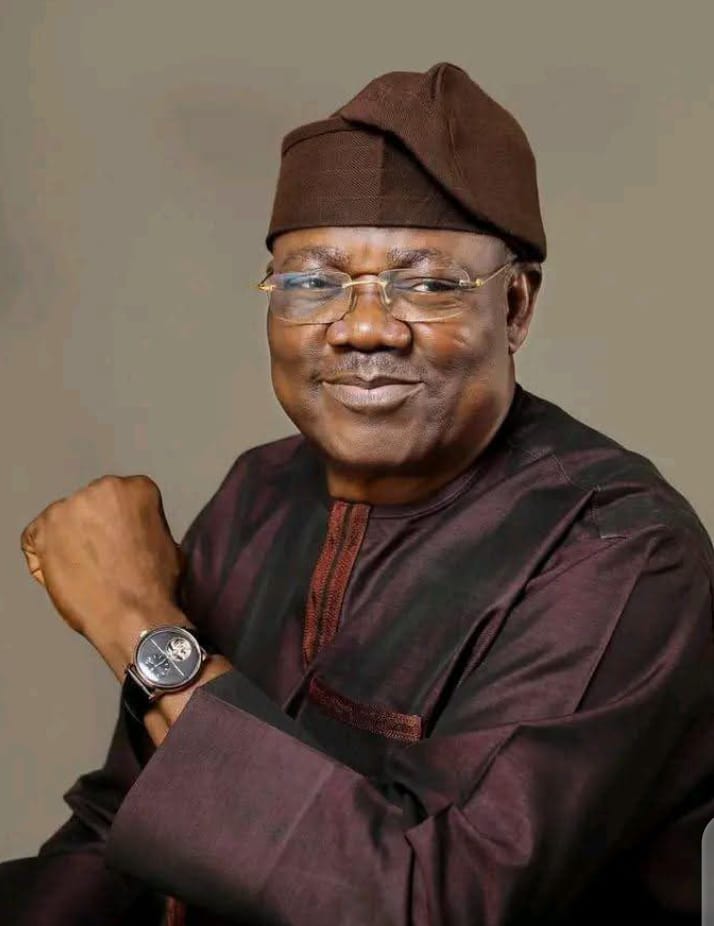



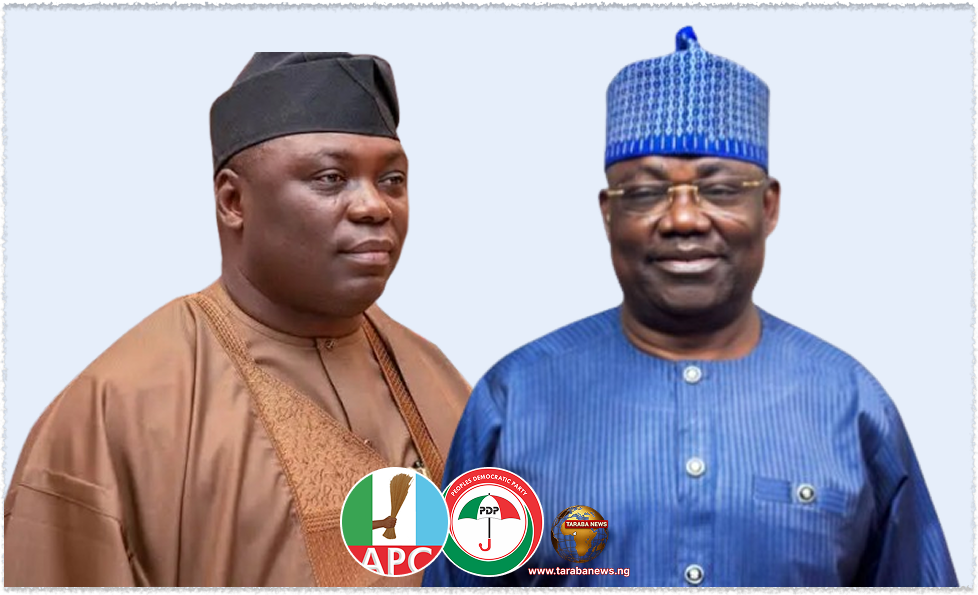
PDP CANDIDATE QUESTIONS GOV. KEFAS AS FAAC AND IGR FIGURES REVEAL NARROW REVENUE GAP WITH NASARAWA
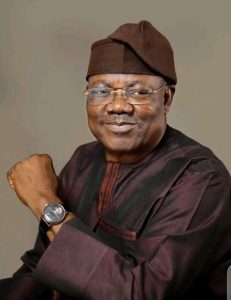
Comparative analysis presented by PDP governorship candidate Senator Emmanuel Bwacha shows Taraba received ₦22.6bn more in federal allocations, while Nasarawa generated ₦25.09bn more internally, raising questions about infrastructure delivery, public expenditure and accountability.
A comparative analysis of federal allocations and Internally Generated Revenue (IGR) between Taraba and Nasarawa States has raised questions about the management of public resources in Taraba, with Peoples Democratic Party (PDP) governorship candidate, Senator Emmanuel Bwacha, challenging Governor Agbu Kefas to account for the state’s financial resources.
The comparison, covering 2023, 2024, 2025 and January–July 2026 for Federation Account Allocation Committee (FAAC) receipts, alongside IGR figures for 2023 to 2025, indicates that Taraba received more federal allocations than Nasarawa but generated considerably less revenue internally.
According to the figures presented by Bwacha, Taraba received a cumulative ₦486.39 billion in FAAC allocations during the period under review, compared with ₦463.79 billion received by Nasarawa State.
This represents an allocation advantage of approximately ₦22.6 billion in favour of Taraba.
However, the situation changes when internally generated revenue is considered.
1. FAAC ALLOCATION: TARABA RECEIVED MORE
The comparative figures presented by the PDP candidate show the following:
Year| Nasarawa| Taraba
2023| ₦111.54bn| ₦123.05bn
2024| ₦94.43bn| ₦99.29bn
2025| ₦149.67bn| ₦153.33bn
2026 (Jan–July)| ₦108.15bn| ₦110.72bn
Total| ₦463.79bn| ₦486.39bn
Taraba received approximately ₦22.6 billion more than Nasarawa in federal allocations over the period.
This is significant because it challenges arguments that Taraba’s infrastructure challenges can simply be attributed to receiving substantially less money from the Federation Account than comparable states.
2. INTERNALLY GENERATED REVENUE: NASARAWA OUTPERFORMS TARABA
The IGR comparison presents a different picture.
Year| Nasarawa| Taraba
2023| ₦23.49bn| ₦10.87bn
2024| ₦25.52bn| ₦17.46bn
2025| ₦32.57bn| ₦28.16bn
Total| ₦81.58bn| ₦56.49bn
Nasarawa generated approximately ₦25.09 billion more internally than Taraba over the three-year period.
The figures suggest that Nasarawa demonstrated stronger revenue-generating capacity despite receiving less in federal allocations.
They also raise questions about Taraba’s revenue administration, economic productivity, tax collection and the government’s capacity to expand its internally generated revenue base.
3. THE COMBINED REVENUE PICTURE
When both FAAC allocations and IGR are considered, the financial comparison becomes particularly interesting.
Revenue source| Nasarawa| Taraba
FAAC| ₦463.79bn| ₦486.39bn
IGR| ₦81.58bn| ₦56.49bn
Combined total| ₦545.37bn| ₦542.88bn
The difference is approximately ₦2.49 billion in favour of Nasarawa.
In other words, both states operated with broadly comparable combined revenues within the periods presented.
However, Bwacha argues that the difference in visible infrastructure development between the two states raises serious questions about expenditure priorities, project execution and public accountability in Taraba.
4. NASARAWA’S INFRASTRUCTURE INVESTMENT
Under Governor Abdullahi Sule, Nasarawa State has embarked on several major infrastructure projects, particularly in road construction, flyovers, underpasses and urban transportation.
Some of the projects highlighted in the comparison include:
Lafia Flyover, Underpass and Interchange
₦16 billion+
Reportedly completed.
Mararaba–Nyanya Twin Flyover and Elevated Road
₦43–44 billion
Reportedly under construction, with the government announcing a December 2026 completion target.
Keffi Total Flyover and Underpass
₦11.5 billion
Reported project cost, with construction progress put at approximately 85 per cent.
Akwanga Interchange and Underpass
₦6.6 billion
Reportedly completed.
Shendam Road Dualisation, Lafia
₦5.5 billion
Reportedly completed.
Garaku–Gurku–Dari Road, Kokona LGA
₦3.67 billion
Reportedly completed.
The reported costs of these six projects amount to approximately ₦86.27 billion to ₦87.27 billion, depending on whether the Mararaba project is calculated at ₦43 billion or ₦44 billion.
The projects, particularly the flyovers and interchanges, illustrate the scale of infrastructure investment being undertaken in Nasarawa State and provide a basis for examining how public resources are translated into visible development.
5. THE TARABA QUESTION: WHERE HAS THE MONEY GONE?
This is where the comparison becomes politically significant.
Taraba has received more federal allocations than Nasarawa over the stated period. Nasarawa, on the other hand, has generated more revenue internally.
Despite this, Bwacha argues that Taraba has not demonstrated a comparable level of large-scale infrastructure delivery.
The administration of Governor Agbu Kefas must therefore be prepared to answer questions concerning:
– How much of the approximately ₦542.88 billion combined revenue was spent on capital projects?
– What percentage went into recurrent expenditure, salaries, overheads and government administration?
– How much has been committed to road construction, bridges, healthcare, education and rural development?
– What are the actual costs of ongoing projects, and how much has been paid to contractors?
– How many projects have been completed, and how many remain abandoned or delayed?
– What independent audit mechanisms exist to establish that public funds were properly utilised?
These questions are particularly important in a state where citizens continue to demand improved roads, electricity, healthcare facilities, educational infrastructure and economic opportunities, the PDP candidate argued.
6. IS THERE CORRUPTION IN TARABA’S PUBLIC EXPENDITURE?
The comparison raises important questions about transparency and accountability. However, differences in revenue and infrastructure delivery alone do not establish that corruption has occurred.
Establishing possible misappropriation of public funds requires verifiable evidence from audited financial statements, procurement records, contract payments, project inspections and investigations by relevant anti-corruption agencies.
The Taraba State Government should therefore publish comprehensive details of its revenue receipts, expenditure, contract awards, project implementation status and outstanding liabilities.
The government also deserves an opportunity to explain its spending priorities, project costs and developmental achievements.
The issue should not end with political accusations. It should lead to verifiable answers.
7. SENATOR BWACHA’S CHALLENGE TO GOVERNOR KEFAS
The PDP candidate’s central argument is that Taraba cannot continue to blame inadequate federal allocations for its development challenges when the figures he presented show that it received more FAAC revenue than Nasarawa during the period under review.
The challenge to Governor Kefas is straightforward:
If Taraba received more federal allocations and had almost the same combined revenue as Nasarawa, why is there such a significant public debate about the pace and scale of infrastructure development in the state?
Where are the roads, bridges, hospitals, schools, electricity projects and other tangible investments that should reflect the resources available to the government?
Where is the money?
These are questions that deserve answers from the state government, not merely political rebuttals.
EDITOR’S NOTE
The financial figures and comparative analysis contained in this report were presented by Senator Emmanuel Bwacha, the PDP governorship candidate. Taraba News has not independently verified all the figures and therefore publishes them as claims and information attributed to the politician, not as independently established financial findings.
The reported project costs and completion percentages for Nasarawa State are similarly subject to independent documentary verification.
As of the time of filing this report, the Taraba State Government and Governor Agbu Kefas’s media team had yet to respond to the allegations and questions raised in the comparative analysis. Taraba News remains open to the government’s response and will publish any official clarification or rebuttal.
The central issue remains public accountability: the people of Taraba deserve to know how their resources are being managed and what tangible development those resources have delivered.