



JALINGO — The Agro-Climatic Resilience in Semi-Arid Landscapes (ACReSAL) project has partnered with the Federal Polytechnic, Bali, to establish a 30-hectare Gum Arabic plantation across the three senatorial zones of Taraba State.
The initiative is aimed at promoting climate-smart agriculture, restoring degraded landscapes, strengthening agricultural research and creating sustainable livelihood opportunities for farmers and communities.
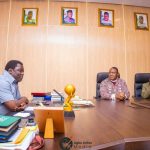
The partnership followed an earlier engagement between the management of the Federal Polytechnic, Bali, led by its Rector, Dr. Mohammed Usman, and officials of ACReSAL at the project’s headquarters in Jalingo.
During the engagement, both institutions explored areas of collaboration covering agriculture, environmental sustainability, research, climate resilience and community development.
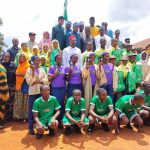
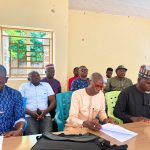
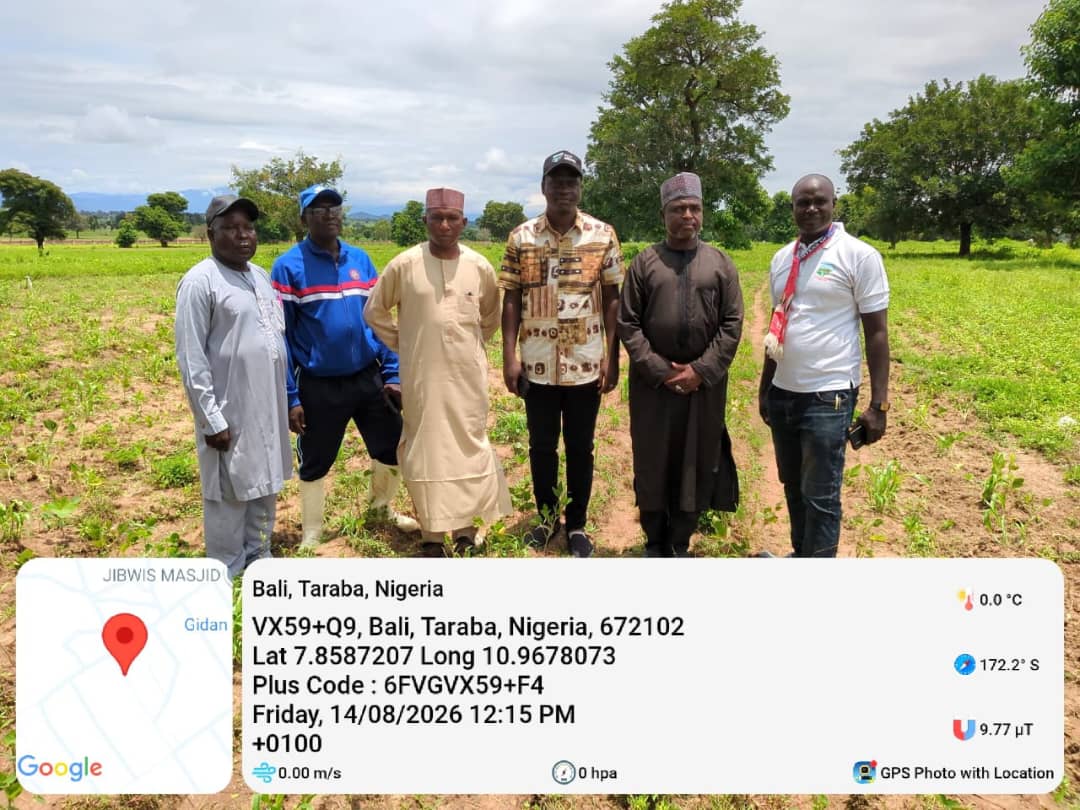
In continuation of the partnership, an ACReSAL team visited the Federal Polytechnic, Bali, on Friday to inspect and identify suitable land for the proposed Gum Arabic plantation.
The delegation comprised the ACReSAL Desk Officer for Natural Resources, Mbwayi Haliru, and Photographer/Videographer, Khama Godfrey.
The delegation was received by the Polytechnic’s Registrar, Muhammad Tukur Lamido; Acting Head of the Department of Crop Production Technology, Samaila Yakubu Rajab; Chief Lecturer, Dr. Abdu Talaka; and an official of the Physical Planning Unit, Engr. Malanta Abdulhamid.
Three Locations Selected
The 30-hectare plantation will be spread across the three senatorial districts, with approximately 10 hectares expected to be established at each location.
The Federal Polytechnic, Bali, will serve as the project site for Taraba Central, while the College of Agriculture Science and Technology, Jalingo, will represent Taraba North.
For Taraba South, Chediya community in Wukari Local Government Area has been identified as the proposed location.
The decision to establish the plantation at three different locations is expected to provide an opportunity for researchers and agricultural experts to study the performance and adaptability of Gum Arabic under different ecological conditions.
Data generated from the three sites could also help stakeholders determine suitable areas for future expansion of Gum Arabic cultivation in the state.
Environmental Benefits
Beyond agricultural production, the project is expected to contribute to environmental restoration and climate resilience.
Gum Arabic trees could help increase vegetation cover, improve soil conservation and reduce erosion, while also contributing to carbon sequestration.
The plantation is therefore expected to support efforts to address land degradation and strengthen the ability of communities to cope with changing climatic conditions.
Economic Opportunities
The project is also expected to create opportunities along the Gum Arabic value chain, from seedling production and plantation management to harvesting, processing, packaging and marketing.
The partnership could provide farmers and young people with opportunities to acquire practical skills in tree-based agriculture and sustainable land management.
With increased production and proper value-chain development, Gum Arabic could also become an additional source of income for participating communities.
Boost to Agricultural Research
For the Federal Polytechnic, Bali, the plantation is expected to serve as a research and demonstration centre for students and lecturers.
It could provide a practical environment for research into crop production, agroforestry, environmental management, climate-smart agriculture and other related fields.
The involvement of institutions in the three senatorial zones will also allow researchers to compare the growth and productivity of Gum Arabic under different soil and climatic conditions.
Such research could generate valuable information for future commercial cultivation and expansion of the crop.
ACReSAL’s Climate Resilience Mandate
The initiative is in line with the objectives of the World Bank-supported ACReSAL programme, which focuses on sustainable landscape management, climate resilience and improved livelihoods across northern Nigeria.
The partnership between ACReSAL and the Federal Polytechnic, Bali, therefore provides a platform for linking environmental restoration with agricultural education, research and economic development.
If successfully implemented, the project could contribute to the development of a stronger Gum Arabic value chain while providing practical benefits to farmers, students, researchers and surrounding communities.
The partners are expected to continue with the necessary planning and preparatory activities towards the establishment of the three plantation sites.