






JALINGO — Taraba State capital, Jalingo, is facing a worsening transportation crisis as two critical road corridors linking the city to the southern part of the state come under increasing threat from infrastructure failure.
The situation has become particularly alarming following reports that the contractor handling the reconstruction of the Namnai Bridge, awarded by the North East Development Commission (NEDC), has abandoned the project site, while sections of the Suntai–Jalingo road continue to deteriorate rapidly.
The development has renewed concerns among motorists, farmers, traders, transporters and residents who depend on the two corridors for the movement of people, agricultural produce, livestock and commercial goods.
For communities along these routes, what began as an infrastructure problem is increasingly becoming an economic and humanitarian concern.
Namnai Bridge: Two Years of hardship and a project now abandoned
The collapse of the Namnai Bridge in Gassol Local Government Area following flooding in 2024 severed one of Taraba’s important transport links towards Benue and other parts of North-Central and southern Nigeria.
The bridge had served as a major route for farmers taking agricultural produce to markets, traders transporting goods and passengers travelling between Taraba and neighbouring states.
Its collapse forced travellers to resort to boats and canoes to cross the River Benue.
More than two years later, however, residents and travellers are still struggling with the consequences of the collapse.
The latest concern is that the contractor reportedly engaged by the North East Development Commission to reconstruct the bridge has abandoned the project site, leaving Tarabans once again facing uncertainty over when normal vehicular movement will return.
The reported abandonment has raised serious questions about the status of the project, the circumstances surrounding the contractor’s withdrawal and the response of the NEDC.
Residents are asking a straightforward question:
Why has the contractor abandoned the Namnai Bridge project, and when will work resume?
Crossing the river now comes at a steep price
With the bridge still unavailable, motorists and travellers have been forced to depend on makeshift river-crossing arrangements.
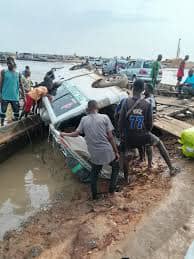
The financial burden has reportedly become enormous.
According to accounts from people using the route, motorists are now being charged about N5,000 to cross the river in a small saloon car, while fully loaded vehicles can pay as much as N20,000 to reach the opposite side.
For commercial transporters, farmers and traders who must use the route repeatedly, such charges represent a significant additional cost.
The irony is striking: a bridge originally intended to make transportation easier has, following its collapse and the reported abandonment of reconstruction works, become a source of additional hardship and financial pressure for the people it was meant to serve.
The situation also raises questions about the safety and regulation of the alternative crossing arrangements.
Residents and road users are asking:
- Where is the NEDC?
- Who is monitoring the reconstruction project?
- Who is responsible for protecting stranded travellers from excessive charges and unsafe crossing conditions?
These questions require urgent answers.
A history of danger
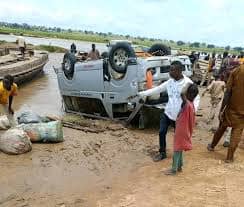
The dangers associated with the makeshift crossing are not new.
Previous reports documented boat accidents, loss of property and fatalities linked to the alternative river crossing.
In July 2025, a boat mishap at the collapsed bridge site reportedly claimed three lives, while several others were initially reported missing.
The tragedy underscored the dangers of leaving a major transport artery without a safe and permanent crossing.
The economic consequences have also been significant, with disruption to agricultural trade and increased transportation costs affecting communities dependent on the route.
The continued reliance on boats and canoes therefore represents more than an inconvenience. It is a serious safety and economic issue.
What happened to the promised reconstruction?
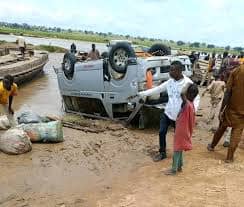
There had been renewed optimism earlier in 2026 when reports indicated that the NEDC had commenced reconstruction work at the Namnai Bridge site.
Contractors were reportedly mobilised, while damaged portions of the existing structure were being demolished in preparation for reconstruction.
That development raised hopes among residents that the prolonged crisis was finally approaching an end.
But the reported abandonment of the site has now cast fresh uncertainty over the project.
The people of Taraba deserve to know whether the project has been suspended, terminated, delayed or abandoned, and why.
They also deserve clarity on the amount committed to the project, the contractor’s obligations, the project’s completion timeline and what measures the NEDC is taking to ensure that the people are not left stranded indefinitely.
Suntai–Jalingo road presents another threat
While the Namnai crisis continues, the Suntai–Jalingo corridor is developing into another major danger zone.
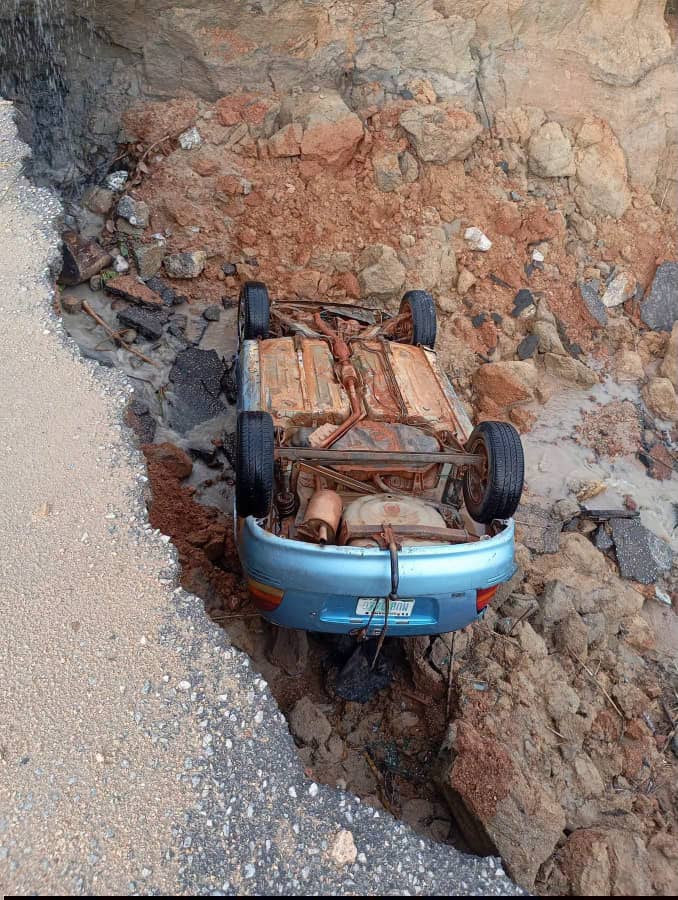
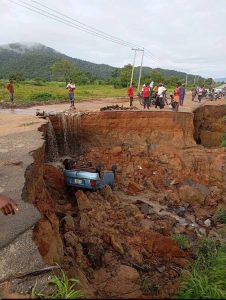
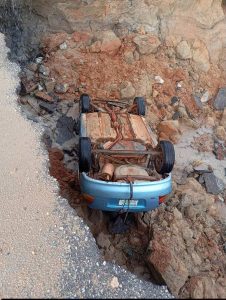
Sections of the road, particularly around Zagah and Suntai in Bali Local Government Area, have reportedly suffered deep cracks, potholes, erosion and structural failures that are increasingly threatening motorists.
A recent incident in which a vehicle reportedly tumbled into a deep crack along the badly damaged Zagah–Suntai section has further heightened concerns.
For motorists who use the route regularly, the question is no longer whether the road is deteriorating, but how long it can remain safe for heavy traffic.
The danger is particularly serious because articulated vehicles, trucks carrying livestock and other commercial vehicles regularly use the corridor.
Without urgent intervention, further deterioration could result in complete blockage or serious accidents.
Jalingo’s southern access routes under pressure
The significance of the situation goes beyond the immediate communities affected.
The two corridors provide important connections between Jalingo, southern Taraba and wider regional markets and transport networks linking the state with places such as Benue, Plateau, Cross River and Ebonyi.
Agricultural produce, livestock, passengers and commercial goods depend on these routes.
If the Namnai crossing remains dysfunctional while the Suntai–Jalingo road continues to collapse, Jalingo could face increasing difficulties receiving food, livestock and commercial supplies from the southern part of the state and beyond.
The situation could also have implications for food prices and transportation costs.
Farmers who cannot easily move their produce to markets may suffer losses, while traders and transporters will inevitably factor higher operating costs and risks into their charges.
Ultimately, consumers bear much of the burden.
More than a road problem
Taraba’s economy is heavily dependent on agriculture, livestock and inter-community commerce.
Roads and bridges are therefore not simply physical infrastructure. They are economic lifelines.
When a bridge collapses, farms can become inaccessible to markets.
When roads deteriorate, vehicles spend more on fuel and repairs.
When alternative routes become dangerous, transporters increase their charges.
And when those costs rise, food and other essential commodities become more expensive.
The Namnai experience has already demonstrated this chain reaction.
Allowing another major corridor, such as the Suntai–Jalingo road, to reach the same point would compound the problem.
A warning for Jalingo
The growing crisis should be treated as an early warning.
Jalingo cannot afford to have multiple access routes deteriorating simultaneously.
The Namnai corridor is already severely compromised, while the Suntai–Jalingo route is showing signs of potentially catastrophic failure.
If urgent preventive measures are not taken, the state capital could find itself increasingly dependent on limited and vulnerable routes.
The question should therefore not be whether Jalingo has already been cut off.
The question is how much longer the city can continue to rely on infrastructure that is visibly failing.
NEDC must explain the Namnai situation
The reported abandonment of the Namnai Bridge project demands an immediate response from the North East Development Commission.
Tarabans need transparency.
They need to know:
– Why has the contractor reportedly left the project site?
– Has the contract been suspended, terminated or reviewed?
– What percentage of the reconstruction has been completed?
– What is the revised completion timeline?
– What action has the NEDC taken against delays or non-performance?
– When will construction resume?
– What temporary measures are being provided to protect travellers using the river crossing?
– Who is responsible for regulating the charges being imposed on motorists?
These are legitimate questions from citizens who have endured the consequences of the collapsed bridge for more than two years.
The people should not be expected to continue paying thousands of naira simply to cross a river that a public infrastructure project was supposed to make accessible.
Taraba cannot afford another infrastructure emergency
The Namnai Bridge crisis has already exposed the human and economic consequences of delayed infrastructure intervention.
Now, the deteriorating Suntai–Jalingo corridor is presenting another warning.
Waiting until the road completely collapses or another major accident occurs would be a costly mistake.
The state government, the NEDC and other relevant authorities need to treat the two corridors as matters of urgent public interest.
The immediate priority should be to restore safe passage at Namnai, ensure that the reconstruction project resumes and progresses transparently, and urgently assess and rehabilitate the dangerous sections of the Suntai–Jalingo road.
For the people living along these routes, the issue is not political rhetoric.
It is about whether they can travel safely, move their farm produce, transport livestock, access markets and earn a living without paying exorbitant costs simply to cross a river or navigate a failing road.
The people of Taraba have waited long enough.
Namnai has been disrupted for more than two years. The contractor is now reportedly gone. Motorists are paying up to N20,000 to cross. The Suntai–Jalingo road is deteriorating.
The warning signs are clear.
Haba, don Allah. How long are Tarabans expected to continue like this?
The time for explanations and urgent intervention is now — before the next bridge collapses, before the next vehicle crashes, and before Jalingo is effectively cut off from a major part of the state and the country.