








2027: Nyameh Unveils Tomato Industrialisation Plan, Targets Jobs, Revenue for Taraba
Accord governorship candidate in Taraba State, Professor Jerome Nyameh, has unveiled plans to develop a tomato processing industry in the state if elected governor in 2027, saying Taraba must move away from merely producing agricultural commodities to processing and adding value to them.
Nyameh said the proposed initiative would establish a complete tomato value chain covering commercial farming, processing, packaging, storage, transportation and distribution, with opportunities for farmers, youths, women and local entrepreneurs.
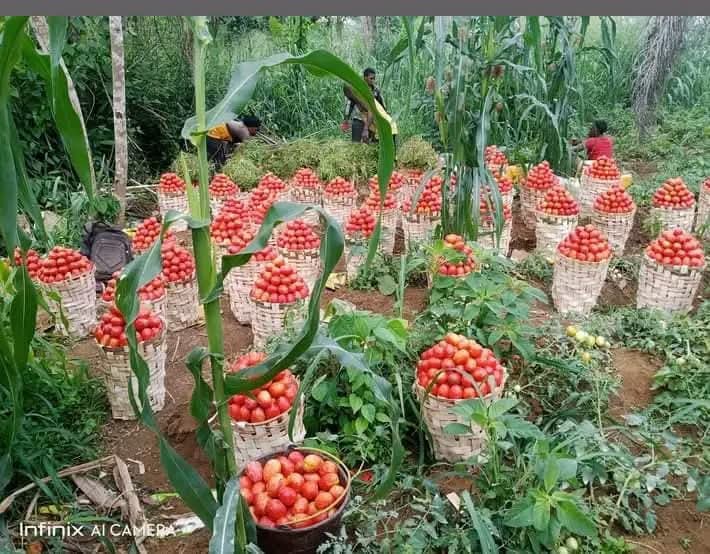
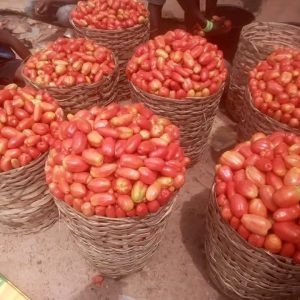
The governorship candidate disclosed the plan after a recent visit to Zing, where he said the large quantity of tomatoes available in the market demonstrated an economic opportunity that Taraba had yet to fully exploit.
According to him, tomato-producing areas including Zing, Yorro, Lau and Sardauna have the agricultural potential to support commercial production capable of supplying both consumers and processing industries.
“Last week when I was in Zing, I saw tomatoes everywhere in the market. I just shook my head because this is money, job opportunities and revenue on a large scale,” Nyameh said.
He questioned why Taraba should continue producing and selling tomatoes largely in their raw form while processing, industrial jobs and other economic benefits associated with the commodity are created elsewhere.
Under his proposed programme, farmers would receive support through improved seedlings, irrigation facilities, agricultural extension services and better access to markets.
Nyameh said his administration would encourage investment in tomato processing and packaging plants, paste and puree production, drying and preservation facilities as well as cold-storage and aggregation centres.
The plan would also seek to stimulate transportation, logistics, packaging and distribution businesses around the tomato value chain.
According to the Accord candidate, developing these activities locally would create opportunities beyond farming by bringing processors, traders, transporters and other entrepreneurs into the agricultural economy.
He said reducing post-harvest losses would be another major objective of the programme, arguing that tomatoes currently lost because of inadequate preservation and processing facilities could instead be converted into marketable products.
“Instead of allowing our tomatoes to perish after harvest, we will create systems that preserve, process and add value to what our farmers produce,” he said.
Nyameh summarised the proposed policy as: “Grow it in Taraba. Process it in Taraba. Package it in Taraba. Sell it from Taraba. Create jobs for Tarabans. Generate revenue for Taraba.”
He said the tomato initiative forms part of his “Taraba Therapy Agenda,” which seeks to use the state’s natural and agricultural resources to stimulate industries, employment, businesses and internally generated revenue.
According to him, government should not exist merely to consume public revenue but should create an enabling environment for private enterprise and productive economic activities.
“Government must create the environment where people produce, businesses grow, jobs are created and prosperity is shared,” Nyameh said.
He maintained that with appropriate policies, infrastructure and private-sector participation, tomato production could develop from predominantly agricultural activity into an industry capable of contributing to Taraba’s wider economy.
“Tomatoes are not just food. With the right leadership, tomatoes can become an industry,” he added.
Nyameh is contesting the 2027 Taraba governorship election on the platform of Accord and has continued to unveil components of his economic programme under the Taraba Therapy Agenda as the governorship race gathers momentum.