




“GOV. KEFAS OPERATES AN OLIGARCHIC SYSTEM, BUT HE REMAINS BETTER THAN ALL THOSE CONTESTING AGAINST HIM IN 2027” — RIKWENSE MURI
By Taraba News
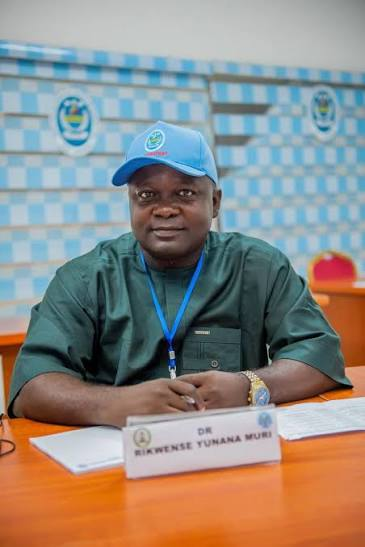
Public affairs commentator, Dr. Rikwense Muri, has criticised what he described as the excessive concentration of political and administrative power in the Taraba State Government, saying Governor Agbu Kefas operates a system with “oligarchic tendencies,” even as he maintained that the governor remains a better option than those currently seeking to challenge him in the 2027 governorship election.
Speaking on the SUM TV Morning Show on Friday, September 5, 2026, Muri said his concerns about the Kefas administration centre largely on the structure of governance rather than the governor’s intentions.
According to him, too much influence and decision-making appear to be concentrated in the hands of a few individuals, leaving many other government officials with limited room to exercise the responsibilities attached to their offices.
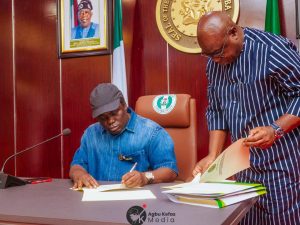
“Governor Agbu Kefas operates what I would describe as an oligarchic system of government, where power and influence are concentrated in the hands of a few individuals.
“However, despite my concerns about this style of governance, when I look at those currently seeking to contest against him in the 2027 governorship election, I still believe Governor Kefas remains a better option than all of them,” Muri said.
Muri argued that the challenge is visible both within the executive and legislative arms of government.
He claimed that at the Taraba State House of Assembly, considerable influence revolves around the office of the Speaker, while within the executive arm, substantial power is concentrated around the office of the Secretary to the State Government, thereby limiting the influence of commissioners and other political appointees.
According to him, a government can have commissioners, special advisers, special assistants, permanent secretaries, directors and board members, yet remain ineffective if those officials are not sufficiently empowered to make decisions or contribute meaningfully to governance.
Muri described the situation as a problem of responsibility without corresponding authority.
He argued that commissioners should be able to initiate policies within their ministries, advisers should be allowed to advise freely, permanent secretaries should be able to exercise administrative authority, while other officials should be given room to perform the duties for which they were appointed.
He warned that where institutions become weaker than personal access to political power, governance could gradually become a competition over who is closest to the governor or other powerful officials rather than a system driven by institutional responsibility and performance.
Muri also linked his position to recent criticism of the administration by opposition figures, including APGA governorship candidate Hon. Danjuma Usman Shiddi, popularly known as Danji SS.
Danji SS had questioned the priority and value for money of the proposed ₦80 billion Wukari township infrastructure project, which includes a flyover.
Muri said Danji’s argument on the project deserved consideration, especially in a predominantly rural state where many communities still struggle with poor roads, limited access to potable water, healthcare, electricity and transportation.
He argued that Taraba’s infrastructure priorities should focus heavily on connectivity, particularly roads that connect farming communities to markets and improve economic productivity.
However, Muri questioned the timing of Danji’s criticism, noting that the Wukari township road project had been flagged off months before the opposition candidate publicly raised his objections.
According to him, criticism is more effective when it comes early enough to influence policy rather than after implementation has substantially commenced.
He nevertheless maintained that political motivation does not automatically invalidate an argument.
“The fact that criticism may be politically motivated does not mean government should refuse to listen,” he argued, insisting that the administration should clearly explain the economic, developmental and traffic justification for the Wukari project if it believes the expenditure represents an appropriate priority.
Muri’s comments also echo concerns raised by APGA chieftain Achinyang Danladi Kitan, who recently argued that opposition to the Wukari flyover should not be interpreted as opposition to the development of Wukari.
Kitan said the debate should instead focus on priority, economic value and value for money, pointing to challenges such as potable water and healthcare as areas requiring urgent attention.
The APGA chieftain also claimed that Danji SS had resorted to writing letters to Governor Kefas because the governor was difficult to access and allegedly unreceptive to advice.
Muri, however, maintained that despite the weaknesses he identified in the current administration, the opposition has not yet demonstrated that it offers a fundamentally better governance alternative.
He argued that criticising the Kefas administration alone would not be sufficient to convince Tarabans ahead of the 2027 election.
According to him, opposition parties and candidates must clearly explain how they intend to govern differently, distribute political power, strengthen institutions, accommodate dissent and promote internal democracy within their own political parties.
He questioned whether political actors who allegedly impose themselves or preferred candidates within their parties could convincingly promise a more democratic system of governance if elected.
“A different candidate does not automatically mean a different government, and a different political party does not automatically mean a different governance philosophy,” Muri argued.
He said Governor Kefas could still enjoy significant political support in 2027, not necessarily because every Taraban is satisfied with his administration, but because the opposition has yet to convince the electorate that it presents a stronger alternative.
Muri, however, warned the governor against interpreting weaknesses within the opposition as an automatic endorsement of everything his administration is doing.
He urged Kefas to use his present political advantage to reform the structure of government by empowering commissioners, strengthening institutions, creating room for advisers and permanent secretaries to function, improving access to leadership and accommodating constructive criticism.
He also called for greater political inclusion within the APC following the governor’s movement into the party, arguing that both longstanding members and new entrants must feel recognised and involved in the political structure.
According to Muri, the central issue is whether the machinery of government is capable of translating the governor’s intentions into measurable results.
He maintained that Governor Kefas may have genuine intentions to develop Taraba, but good intentions alone cannot guarantee effective governance where the institutional structure is weak or decision-making is excessively centralised.
For Muri, the 2027 debate should therefore move beyond personalities.
The real question, he said, is whether Taraba can build a system in which responsibility comes with authority, institutions function effectively, political appointees are empowered, criticism is accommodated and citizens have meaningful access to government.
Despite his criticism, Muri concluded that, based on the present field of contenders, Governor Kefas still appears to him to be the stronger political option.
His position presents what may become an increasingly important argument ahead of 2027: Tarabans can criticise the weaknesses of the Kefas administration without necessarily being convinced that the available opposition represents a better alternative