TARABA @ 35: THE GOOD, THE BAD AND THE UGLY
Thirty-five years after its creation, Taraba has survived political upheavals, communal conflicts and economic challenges while recording undeniable progress. But has the “Nature’s Gift to the Nation” become what its founders dreamed it would be?
By Olayinka Gabriel, FCA
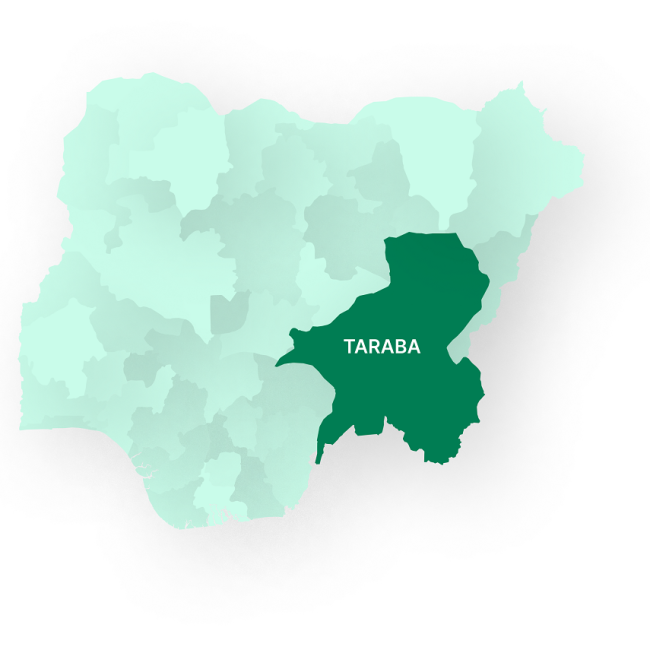
On August 27, 1991, the military administration of General Ibrahim Babangida created Taraba State out of the old Gongola State.
Thirty-five years later, Taraba has travelled a long and complicated road.
From the Mambilla Plateau to the valleys of the Benue and Taraba rivers; from Jalingo to Wukari, Takum, Gembu, Ibi, Bali, Lau, Zing and Karim Lamido, Taraba remains one of Nigeria’s most naturally endowed and culturally diverse states.
Its enormous agricultural land, livestock, tourism assets, hydroelectric potential and mineral resources provide an economic foundation many states would envy.
Yet the story of Taraba at 35 cannot simply be told as a story of success.
Neither can it fairly be described as 35 wasted years.
It is a story of the good, the bad and, sometimes, the ugly.
It is a story of governments that built, governments that promised, citizens who persevered, communities that suffered, opportunities that were seized and enormous opportunities that remain unrealised.
Above all, it is the story of a state that, at 35, must begin asking itself a difficult question:
What should Taraba have become by now?
FROM 1991 TO 2026: A STATE SEARCHING FOR ITS DESTINY
Taraba’s political history has been eventful.
After military administrations in its early years, Reverend Jolly Nyame became the first elected civilian governor in January 1992. Democracy was interrupted by the military in 1993, but Nyame returned as governor in 1999 and served until 2007.
Pharmacist Danbaba Danfulani Suntai succeeded him and governed from 2007 until the October 2012 plane crash that dramatically changed both his life and Taraba’s political trajectory.
The accident produced one of the most turbulent periods in the state’s political history, including a prolonged leadership crisis involving Suntai, acting governor Garba Umar and later Abubakar Sani Danladi.
Architect Darius Dickson Ishaku subsequently governed between 2015 and 2023.
Dr. Agbu Kefas assumed office on May 29, 2023, opening another chapter in Taraba’s continuing political journey.
The administrations have come with different slogans, personalities and priorities.
But 35 years later, the ultimate assessment should not be about slogans.
It should be about results.
THE GOOD
Taraba Has Survived And Built Institutions
Perhaps the first achievement is easily overlooked: Taraba has survived some extraordinarily difficult periods.
Governments have changed. Political parties have competed. New institutions have emerged. Local government structures, traditional institutions, tertiary institutions and an expanding civil service have developed over three and a half decades.
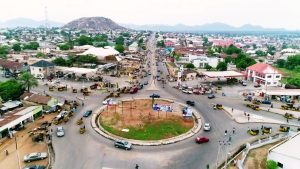
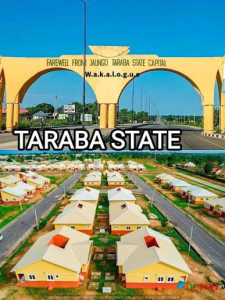
Jalingo in 1991 is certainly not Jalingo in 2026.
Roads, government buildings, schools, hospitals, businesses, universities, hotels, financial institutions and residential communities have transformed the capital.
Development has also reached other parts of the state, although very unevenly.
That institutional growth matters.
Education Has Expanded Dramatically
In 1991, opportunities for higher education within Taraba were extremely limited.
Today, the state has Taraba State University, the College of Agriculture, Science and Technology, College of Nursing and Midwifery, College of Health Technology and other public and private institutions serving thousands of students.
Thousands of Tarabans who might once have travelled far from home for tertiary education can now study within the state.
Successive governments deserve portions of the credit for that expansion.
Under the current administration, education has again become a major policy focus, particularly through the free-education policy and other human-capital programmes.
Whether every intervention eventually delivers the promised results will require long-term assessment, but education has undeniably moved from the margins to the centre of Taraba’s development conversation.
Taraba’s Agricultural Potential Remains Extraordinary
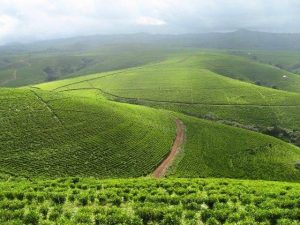
Taraba possesses something money cannot easily manufacture: land, water and favourable climatic diversity.
Rice, maize, cassava, yam, sesame, soya beans, tea, coffee, vegetables and livestock can flourish across different parts of the state.
The Mambilla Plateau presents possibilities in tea, livestock, tourism, vegetables and renewable energy.
Southern Taraba possesses rich agricultural land.
Central Taraba has significant farming and livestock potential.
Northern Taraba combines agriculture, commerce and strategic access to neighbouring states.
Taraba therefore has the ingredients to become one of Nigeria’s major food-producing and agro-processing centres.
New Economic Ambitions Are Emerging
The current administration is attempting to push Taraba beyond simply producing raw agricultural commodities.
In June 2026, the state announced financing agreements with the ECOWAS Bank for Investment and Development totalling about $268 million, covering proposed investments in an integrated industrial park, irrigated rice production and processing, and solar energy.
If fully implemented, these are potentially transformational projects.
But Taraba’s history teaches an important lesson:
Announcements are not achievements until projects are completed and citizens begin receiving the benefits.
These projects should therefore become part of the state’s public accountability scorecard in the years ahead.
The Potential for Tourism Is Almost Unmatched
Few Nigerian states possess Taraba’s tourism portfolio.
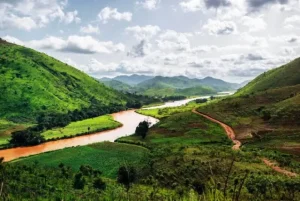
The Mambilla Plateau, Gashaka-Gumti National Park, waterfalls, mountains, rivers, forests and diverse cultures could support an entire tourism economy.
The state possesses landscapes that could attract Nigerian and international visitors.
Yet even the fact that tourism continues to be described primarily as “potential” after 35 years points directly towards the other side of Taraba’s story.
THE BAD
Thirty-Five Years Later, Where Are Taraba’s Cities?
One uncomfortable question deserves to be asked at this anniversary:
After 35 years, where are Taraba’s truly developed cities?
Apart from Jalingo, Wukari and perhaps Takum and Gembu, most local government headquarters in Taraba still retain largely rural characteristics.
Even the few places we commonly describe as cities remain considerably behind many comparable Nigerian urban centres in terms of roads, drainage, electricity, water supply, organised housing, waste management, transportation, commercial infrastructure and other basic features of modern urban life.
Jalingo has undoubtedly expanded enormously since 1991. Wukari has grown. Takum remains an important commercial and historical centre, while Gembu possesses a unique position on the Mambilla Plateau.
But should these settlements, after 35 years of statehood, be the full extent of Taraba’s urban-development achievement?
A visitor travelling through many local government headquarters could easily mistake them for large villages rather than administrative centres that have existed for decades.
This is not an insult to the communities.
It is an indictment of decades of inadequate urban planning and investment.
Local government headquarters should be centres of economic activity. They should have functioning road networks, electricity, water, healthcare facilities, markets, banking services, telecommunications and environments capable of attracting businesses.
Taraba cannot develop only Jalingo and expect the entire state to prosper.
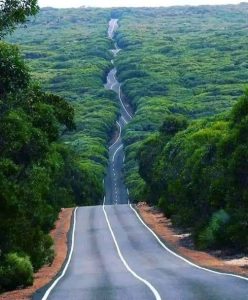
Too Much Potential, Too Little Transformation
This may be Taraba’s greatest disappointment.
For decades, people have repeated that Taraba is rich in agriculture, tourism, minerals and hydropower.
The same statements were made 20 years ago.
They are still being made today.
Potential cannot employ people.
Potential cannot construct roads.
Potential cannot increase household income.
Potential cannot improve hospitals.
Potential only becomes development when leadership, capital, infrastructure and private enterprise convert natural resources into productive economic activity.
After 35 years, Taraba should arguably be exporting processed agricultural products on a much larger scale.
Its tourism industry should be employing thousands.
Its mineral resources should be generating significant legitimate revenues.
Its agricultural value chains should have created major processing industries.
Instead, the economy remains heavily dependent on government expenditure and federal allocations.
That is not a sustainable foundation for the next 35 years.
Some Communities Still Struggle for Basic Road Access
Perhaps nothing demonstrates Taraba’s infrastructure deficit more clearly than the condition of roads connecting several local government areas and communities.
At 35, residents of places including Yorro, Lau, Karim Lamido, Kurmi and Ussa still face serious challenges associated with inadequate or deteriorated road connections.
In some areas, particularly during the rainy season, travelling becomes extremely difficult.
This has consequences far beyond inconvenience.
A bad road means a farmer may lose produce before reaching the market.
A bad road means a pregnant woman or accident victim may struggle to reach a hospital.
A bad road increases transportation costs.
A bad road discourages investors.
A bad road isolates communities.
And a bad road ultimately contributes to poverty.
For an overwhelmingly agricultural state, roads are economic infrastructure.
A farmer who produces 100 bags of grain but cannot move them economically to a market has not fully benefited from the state’s agricultural potential.
After 35 years, every local government headquarters in Taraba should be accessible through dependable all-season paved roads.
That should no longer be considered an ambitious development target.
It should be a minimum standard.
Electricity: A State Still Largely in Darkness
Electricity presents another uncomfortable anniversary question.
Beyond Jalingo and a limited number of locations connected to public electricity supply—including Mutum Biyu, headquarters of Gassol Local Government Area—large parts of Taraba remain without dependable grid electricity.
Many local government headquarters and surrounding communities depend heavily on generators, solar systems or simply live without reliable power.
For a state celebrating 35 years, this is a fundamental development problem.
Electricity is not a luxury.
Without power, industries cannot thrive.
Small businesses cannot compete.
Hospitals cannot efficiently operate sophisticated equipment.
Students struggle to study.
Cold-chain agriculture becomes difficult.
Digital businesses are constrained.
Hotels, shops, welders, barbers, tailors and other small enterprises spend scarce income generating their own electricity.
And investors naturally ask a simple question:
If I establish a factory here, how will I power it?
Taraba possesses enormous hydro and solar-energy potential.
The tragedy therefore is not merely that much of the state lacks reliable electricity.
The deeper irony is that a state with significant energy potential continues to struggle to provide energy to its own people.
At 35, We Are Still Talking About Water
Water is perhaps the most basic measure of development.
Yet in many Taraba communities, access to clean and dependable water remains a daily struggle.
Women and children still spend valuable hours searching for water.
Communities depend on boreholes, wells, streams and other sources whose reliability and safety vary considerably.
Governments have invested in water projects over the decades.
But after 35 years, the question should no longer be how many water projects were announced or commissioned.
The question should be:
How many Tarabans can turn on a tap in their homes today and reliably get clean water?
That is the measurement that matters.
Healthcare: When Basic Diagnosis Requires Leaving the State
Healthcare perhaps provides one of the strongest tests of Taraba’s development.
The state has hospitals, primary healthcare centres and dedicated health workers.
Successive administrations have invested in healthcare facilities.
But significant gaps remain.
At 35, residents still travel outside Taraba for medical investigations and specialist treatments that should ordinarily be available within a functioning state healthcare system.
A striking example is advanced diagnostic imaging.
If something as fundamental to modern diagnosis as a CT scan is unavailable or not reliably accessible within hospitals and diagnostic facilities in the state, that should concern everyone.
A patient suffering from a suspected stroke, serious head injury, internal injury or other emergency should not have to begin contemplating a journey outside Taraba before receiving essential diagnostic investigation.
Healthcare development cannot be measured merely by counting hospital buildings.
A hospital without adequate doctors, nurses, medicines, laboratories, diagnostic equipment and emergency capacity is only a building.
At 35, Taraba should have at least one properly equipped referral hospital capable of providing advanced diagnostic and specialist services around the clock, while strengthening secondary and primary healthcare across the local governments.
Thirty-Four Years Without a Comprehensive Development Master Plan
Perhaps one of the most remarkable revelations about Taraba’s development history came when the current government acknowledged that the state had operated for decades without a comprehensive statewide development master plan.
Think about what that means.
For more than three decades, administrations built roads, schools, government offices, housing estates and other infrastructure without an enduring comprehensive development framework guiding the state across successive governments.
That helps explain one of Taraba’s biggest structural weaknesses:
Every administration tends to arrive with its own agenda, while the state itself has lacked a binding long-term destination.
Taraba @ 35 must therefore mark the end of government-by-government development planning.
Taraba needs a Taraba 2050 Vision that survives governors and political parties.
THE UGLY
Communal Violence Has Left Deep Scars
The ugliest chapter of Taraba’s 35-year history is written in blood.
Different communities have experienced violent conflicts at different periods.
Farmer-herder clashes, ethnic disputes, communal conflicts, political violence, kidnapping and other security challenges have claimed lives, displaced families and destroyed livelihoods.
Communities that had traded and interacted for generations have sometimes turned against each other.
Homes have been destroyed.
Farmers have abandoned fields.
Children have lost parents.
Families have become internally displaced in their own state.
No road or government building can compensate for a life unnecessarily lost.
Security therefore remains fundamental to Taraba’s future.
Taraba cannot become prosperous if its diversity is continually weaponised.
Ethnicity and Religion Have Too Often Entered Politics
Taraba’s diversity should be one of its greatest strengths.
Instead, elections and political appointments have sometimes been interpreted primarily through ethnicity, religion, zone and local government.
- Who becomes governor?
- Which zone?
- Which religion?
- Which tribe?
- Which local government?
Representation matters in a diverse state.
But when identity becomes more important than competence, performance and integrity, development suffers.
Thirty-five years after creation, Taraba must develop a political culture where a candidate’s ethnicity or religion matters less than the person’s ability to deliver electricity, roads, jobs, schools, security and accountable government.
The Accountability Question
Billions upon billions of naira have flowed through Taraba’s governments since 1991.
Federal allocations have increased substantially in recent years.
Citizens therefore have every right to ask:
- What did we receive?
- What did we borrow?
- What did we spend?
- What did we build?
- What remains?
- Who benefited?
- And what measurable improvement resulted?
These questions should not be considered opposition politics.
They are the foundations of democracy.
The next stage of transparency should ensure that ordinary citizens can easily connect government revenue and expenditure to actual projects and measurable outcomes.
FOUR GOVERNORS, FOUR ERAS
Jolly Nyame — Building the Young State
History must judge Reverend Jolly Nyame within the circumstances of governing a relatively young state.
Taraba needed institutions.
It needed government structures.
It needed a functioning civil service and physical infrastructure.
His administration became an important part of laying those foundations.
But his era also remains part of the broader debate about governance, public finance and accountability that followed Taraba into subsequent administrations.
Danbaba Suntai — Ambition Interrupted
Danbaba Suntai’s administration pursued infrastructure and urban development and left visible footprints in parts of the state.
His October 2012 plane crash, however, dramatically interrupted his administration and produced an unprecedented constitutional and political crisis.
For a significant period, discussion about development was overshadowed by arguments about who was actually capable of governing Taraba.
It remains one of the defining episodes of the state’s political history.
Darius Ishaku — Peace and the Rescue Mission
Architect Darius Ishaku entered office with the famous proposition:
“Give me peace and I will give you development.”
His administration emphasised peace, infrastructure, agriculture, water supply and other development programmes.
Supporters point to projects and institutional interventions.
Critics question whether the scale of transformation matched eight years in office and the resources available.
Both perspectives belong in Taraba’s historical record.
Agbu Kefas — A Government Still Writing Its Record
Unlike his predecessors, the final judgment on Governor Agbu Kefas cannot yet be written.
His administration is still in office.
Its major interventions include free education, infrastructure, security initiatives, agriculture and livestock programmes, youth development and ambitious investment projects.
The administration has also announced major proposed industrial, agricultural and energy investments.
These are ambitious initiatives.
But Taraba’s experience requires citizens and the media to distinguish carefully between policy announcements, projects under construction and completed projects delivering measurable benefits.
Kefas’ ultimate place in Taraba’s history will therefore depend less on what is announced today than on what remains functioning tomorrow.
WHAT HAS 35 YEARS GIVEN THE ORDINARY TARABAN?
This may be the most important measurement of all.
- Forget government convoys.
- Forget political billboards.
- Forget commissioning ceremonies.
- Forget party slogans.
Ask the farmer in Karim Lamido whether he can move his produce cheaply to market.
Ask the mother in Kurmi whether she can reach a properly equipped hospital when her child becomes seriousl