


TARABA AT THE BOTTOM
Inside the governance challenges behind the state’s 36th-place ranking — and what Kefas must change before 2027
By Taraba News
Taraba State’s emergence at the bottom of a recent governance performance ranking of Nigeria’s 36 states has reopened an uncomfortable but important conversation about how the state is governed, how effectively public resources are translated into services, and whether the machinery of government is delivering results that ordinary citizens can see and feel.
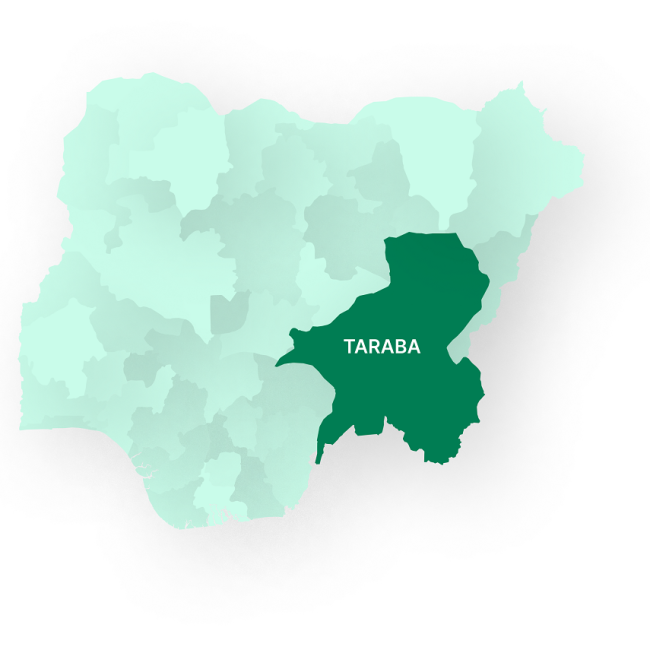
The assessment by the Commonwealth Institute of Advanced and Professional Studies (CIAPS) placed Taraba 36th out of Nigeria’s 36 states, with a reported governance performance score of 20 per cent.
For a state endowed with vast agricultural land, mineral resources, tourism potential and an increasingly significant flow of public revenue, finishing at the bottom of a national governance assessment is a development that cannot simply be ignored.
The ranking does not mean that nothing is happening in Taraba. Neither does it establish that every programme of the Governor Agbu Kefas administration has failed. But it raises a much more fundamental question:
Why is the state struggling to translate its resources, policies and programmes into governance outcomes strong enough to improve its standing?
A Ranking Taraba Cannot Simply Dismiss
Every governance ranking has a methodology and limitations. The indicators selected, their weighting, the quality of available information and the period covered can all affect the outcome.
The Taraba State Government therefore has every right to interrogate the CIAPS assessment, demand clarity about its methodology and present evidence where it believes the ranking does not adequately reflect developments in the state.
But coming last among 36 states should not be dismissed merely because the result is uncomfortable.
The more constructive response is to examine the weaknesses the ranking has brought back into public discussion and determine what needs to change.
And there are questions Taraba must confront.
- How effectively are ministries, departments and agencies functioning?
- How quickly are government decisions translated into action?
- How accessible is government to citizens?
- How transparent are public finances?
- How much authority do commissioners and heads of government institutions actually exercise?
- How effectively are public projects monitored?
- And, most importantly, how much improvement are ordinary Tarabans experiencing in their daily lives?
The Service-Delivery Test
Ultimately, citizens judge government differently from research institutes.
For the farmer, governance may mean whether there is a road to take produce to market.
For a pregnant woman in a rural community, governance may mean whether a functional health facility is within reach.
For a young graduate, it may mean employment opportunities.
For businesses, it may mean electricity, security, infrastructure and a predictable environment in which investments can grow.
For communities, it means potable water, accessible roads, schools, healthcare and security.
This is where Taraba continues to face enormous challenges.
The state has inherited decades of infrastructure deficits. Many of the problems confronting the Kefas administration did not begin in May 2023.
But incumbency comes with responsibility.
After more than three years in office, the administration must increasingly be judged not only by what it inherited or intends to do, but by measurable improvements recorded under its watch.
Roads Remain a Major Challenge
Perhaps nowhere is Taraba’s developmental challenge more visible than road infrastructure.
Taraba is geographically vast, with communities separated by mountains, rivers and long distances. Yet several economically important areas continue to struggle with poor connectivity.
For an overwhelmingly agricultural state, bad roads are not merely an inconvenience. They have direct economic consequences.
When farmers cannot move produce efficiently, transportation costs increase.
When communities are cut off during the rainy season, access to healthcare, education and markets becomes more difficult.
When investors consider establishing businesses, poor infrastructure increases the cost of doing business.
Consequently, every major infrastructure decision taken by the government must answer a simple question: what project gives Taraba the greatest economic and social value for the resources available?
Water, Healthcare and Electricity
The same questions extend to basic services.
Access to potable water remains a concern in parts of the state, including the capital, Jalingo.
Healthcare infrastructure remains another major test, particularly outside the major towns.
Electricity supply and access remain inadequate in several communities, limiting business development, agro-processing and opportunities for young entrepreneurs.
These challenges are interconnected.
A rural road can connect a farmer to a market.
Electricity can make it possible to process agricultural produce locally.
Reliable water improves public health.
Healthcare keeps communities productive.
Education builds the human capital needed to develop the economy.
Good governance is ultimately about making these different parts of government work together.
Is Taraba’s Government Machinery Working?
Beyond physical infrastructure lies a less visible but equally important question: the effectiveness of government institutions themselves.
Taraba has commissioners, permanent secretaries, special advisers, boards, agencies and numerous political appointees.
The question is whether these institutions and officials are sufficiently empowered, coordinated and accountable to deliver results.
A modern government cannot function efficiently if too many routine decisions must travel through a narrow administrative channel.
Ministries must be able to perform their statutory responsibilities.
Commissioners must be accountable for their ministries.
Permanent secretaries must be able to provide professional administrative leadership.
Government agencies must have measurable targets.
Advisers should be able to provide frank professional advice.
Boards should provide meaningful oversight.
And responsibility must come with sufficient authority to deliver.
Where responsibility exists without authority, accountability becomes difficult.
Transparency and Accountability Matter
The ranking also brings attention to transparency.
Citizens increasingly want to know not only how much government receives but how public money is being spent and what results are being achieved.
Budgets should therefore become more than annual figures presented to the legislature.
Tarabans should be able to connect expenditure with visible outcomes.
If billions are budgeted for roads, citizens should know which roads.
If money is allocated to healthcare, communities should see improvements in facilities, equipment and personnel.
If resources are committed to education, outcomes should be measurable.
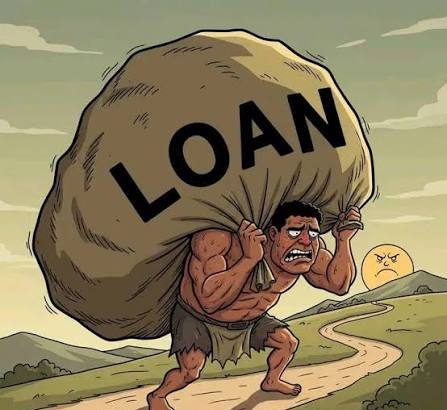
If government borrows money, the public deserves clarity about the amount borrowed, the terms, the projects being financed and the repayment obligations.
This becomes particularly important amid the current public controversy surrounding Taraba State’s debt profile.
Transparency is one of the easiest ways for government to defeat misinformation. When reliable information is readily available, competing political claims become easier for citizens and journalists to interrogate.
The Revenue Question
Taraba’s governance conversation must also recognise that the financial environment facing state governments has changed significantly following reforms to Nigeria’s public finances.
Higher allocations create greater opportunities, but they also create greater expectations.
Citizens will naturally ask what additional revenue has produced.
How much has gone into infrastructure?
What measurable improvements have been recorded in healthcare?
What has changed in education?
How many communities have received potable water?
How much has been invested in agriculture?
What has been done to expand internally generated revenue without imposing unbearable burdens on citizens and small businesses?
A government receiving more resources will inevitably face greater demands for evidence of results.
Kefas Has Areas He Can Point To
Any balanced assessment must acknowledge that the Kefas administration has undertaken initiatives it considers central to Taraba’s development.
Education has occupied a prominent position in the administration’s agenda, alongside interventions in infrastructure, healthcare, security, agriculture and public-sector reforms.
The administration has repeatedly presented its policies as part of a longer-term effort to reposition Taraba.
Those interventions deserve assessment on their merits.
But governance is not ultimately measured by announcements, ceremonies or the number of programmes launched.
It is measured by outcomes.
The crucial question is therefore whether government programmes are reaching enough people, producing measurable improvements and creating lasting institutional change.
Communication Is Also Governance
Another challenge confronting governments is the gap between what officials say they are doing and what citizens know about those activities.
If significant projects are being executed but citizens do not know about them, there is a communication problem.
If projects are announced but cannot be verified on the ground, there is an accountability problem.
Government communication must therefore move beyond publicity.
Citizens need accessible information about project costs, contractors, implementation timelines and completion status.
A credible public project-tracking system could allow Tarabans to independently follow major projects from approval to completion.
Such openness would strengthen public confidence while making it easier for government itself to identify delays and failures.
2027 Makes the Ranking Politically Significant
The timing of the governance debate makes the ranking even more important.
Taraba is moving towards another governorship election in 2027.
For Governor Kefas and the APC, the election will inevitably become a referendum on what has happened since 2023.
The administration will have to convince voters that the state is better than it was when Kefas assumed office and that another term would consolidate ongoing reforms.
The opposition will naturally use weaknesses in governance, infrastructure and service delivery to challenge that argument.
But the opposition faces a test of its own.
It is not enough to say that Taraba is poorly governed.
Those seeking to replace the incumbent must explain what they would do differently.
- What is their economic programme?
- What would they prioritise?
- How would they improve rural connectivity?
- How would they strengthen healthcare?
- How would they fund development?
- How would they improve transparency?
- How would they strengthen institutions rather than simply replace the people occupying them?
Taraba’s political debate should therefore move beyond personalities.
What Kefas Can Change Before 2027
There is still time for the administration to respond to the warning signs.
The most effective response to a poor ranking is not a press statement disputing it. It is improved performance.
Governor Kefas can use the period before the election to deepen institutional reforms, establish measurable performance targets for ministries and agencies, improve public access to government information and ensure that major projects are completed and put into use.
The administration can also strengthen project monitoring, publish clearer information on public finances and debt, improve engagement with communities and make service delivery the central measure of government performance.
Most importantly, government institutions should be strengthened so that the success of the administration does not depend excessively on a few individuals.
A strong government is not one in which one office does everything.
It is one in which every institution does what it is established to do and can be held accountable for its performance.
Taraba’s Potential Makes the Situation More Painful
Taraba should not ordinarily be discussing how to escape the bottom of a national governance table.
Few states possess its combination of land, water, agriculture, minerals, tourism assets and geographical diversity.
The state has the potential to become a major agricultural and agro-industrial centre.
It has enormous hydroelectric potential.
Its tourism assets remain substantially underdeveloped.
Its location gives it economic connections to neighbouring states and Cameroon.
The tragedy would not simply be ranking last.
The greater tragedy would be possessing enormous potential without creating the governance institutions capable of converting that potential into prosperity.
The Ranking Should Become a Starting Point
Taraba does not have to accept that 36th position as its destiny.
Neither should the ranking become another political weapon that disappears from public conversation after a few days of partisan exchanges.
Government should interrogate it.
Civil society should debate it.
The media should investigate the issues behind it.
The opposition should offer alternatives.
And citizens should demand measurable improvements.
The real question is not whether Taraba deserves to be exactly 36th.
The more important question is whether Tarabans are receiving the quality of governance their resources and potential should make possible.
For Governor Agbu Kefas, the ranking presents an uncomfortable political challenge ahead of 2027.
But it also presents an opportunity.
If the administration treats it as an early warning, strengthens institutions, prioritises essential services, improves transparency and converts government spending into visible results, today’s embarrassing ranking could become the catalyst for reform.
If it is simply dismissed, however, the underlying questions will remain.
Taraba is at the bottom of this particular governance table. The task before the government now is not merely to argue about the ranking — but to give Tarabans enough measurable evidence that the state does not belong there.