



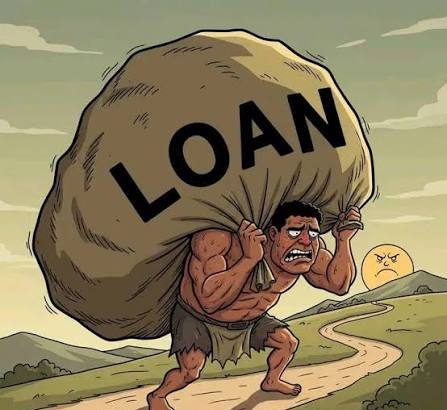
TARABA’S DEBT PUZZLE: BWACHA CLAIMS ₦911BN, GOVT CITES ₦85.51BN AS MURI CALLS FOR INDEPENDENT VERIFICATION
…PDP candidate questions ₦80bn Wukari Flyover, warns youths over state’s financial future
…Government insists approved facilities should not be confused with actual outstanding debt
…Rikwense Muri says DMO, banks and audited records should settle controversy
By Taraba News
A fresh controversy over Taraba State’s debt profile is gathering momentum ahead of the 2027 governorship election, following conflicting figures presented by the Peoples Democratic Party governorship candidate, Senator Emmanuel Bwacha, and the Taraba State Government.
At the centre of the dispute is a fundamental question: How much does Taraba State actually owe?
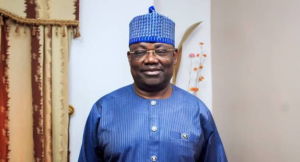
Bwacha has challenged the state government’s previously stated domestic debt figure of about ₦85.51 billion, claiming that the state’s domestic debt exposure stands at ₦911,066,151,971.97 — more than ₦911 billion and approaching the ₦1 trillion mark.
The Taraba State Government, however, has previously rejected claims that the state’s debt has risen to such levels, relying on official Debt Management Office figures and arguing that approved borrowing facilities should not automatically be classified as money already borrowed and outstanding.
The widening gap between the two positions has now prompted calls for an independent, documentary verification of Taraba’s financial obligations.
BWACHA: TARABA YOUTHS MUST PAY ATTENTION
In a recent video message, Bwacha directed much of his argument to young people in Taraba, warning that today’s borrowing decisions could become tomorrow’s financial burden.
The former senator questioned how the state’s revenues and financing arrangements have translated into visible development and challenged citizens to demand greater transparency over borrowing, expenditure and major capital projects.
Bwacha accused the administration of Governor Agbu Kefas of reckless financial management and challenged the government’s account of the state’s debt position.
According to him, the figure requiring public attention is ₦911,066,151,971.97, rather than the approximately ₦85.51 billion domestic debt figure previously referenced by the government.
The difference is enormous — more than ₦825 billion — making clarification of what each figure represents crucial to understanding the controversy.
Is the ₦911 billion figure actual outstanding debt? Does it include approved but undrawn facilities, guarantees or other financial commitments? Or are different categories of financial obligations being compared?
Those are questions that may ultimately determine whose interpretation accurately reflects Taraba’s financial position.
GOVERNMENT: OFFICIAL DMO FIGURE IS ₦85.51BN
The Taraba State Government has previously disputed Bwacha’s claims over the state’s indebtedness.
Commissioner for Finance, Sarah Enoch Adi, had cited Debt Management Office data putting Taraba’s domestic debt at approximately ₦85.51 billion as of December 31, 2025.
The government’s position is that approval for a financing facility does not necessarily mean the entire amount has been drawn down and therefore should not automatically be counted as outstanding debt.
That distinction is important.
A government may receive approval to borrow a particular amount, but its actual debt stock depends on how much has been drawn, disbursed and remains outstanding.
Consequently, establishing the true position requires more than adding together announcements or approvals for different financing arrangements.
₦80BN WUKARI FLYOVER ENTERS THE DEBATE
Bwacha’s intervention goes beyond the debt controversy.
He has also questioned the reported ₦80 billion Wukari Flyover project, arguing that the amount involved raises questions about value for money and the government’s development priorities.
Bwacha compared the project with flyover construction in neighbouring Adamawa State, arguing that Taraba’s proposed expenditure is substantially higher than what Adamawa reportedly committed to several flyover projects.
His argument is that a state facing significant infrastructure, healthcare, education, water and road challenges must demonstrate why an estimated ₦80 billion flyover represents the best use of scarce public resources.
The Wukari project has become an increasingly contentious political issue.
Other opposition figures, including Jerome Nyameh and Danjuma Usman Shiddi, popularly known as Danji SS, have also questioned its priority and economic justification.
The Taraba State Government, on the other hand, has defended the project as a long-term infrastructure investment intended to respond not only to today’s traffic situation but also to anticipate Wukari’s future urban growth.
That leaves another question for the public debate: should the project be assessed mainly on Wukari’s immediate needs, or on infrastructure requirements the town could face decades from now?
RIKWENSE MURI: LET THE RECORDS SETTLE IT
Amid the conflicting claims, Dr. Rikwense Muri has called for the debate to move away from political rhetoric towards independently verifiable financial records.
Muri acknowledged Bwacha’s right — and that of every politician and citizen — to question government expenditure and borrowing.
He, however, argued that establishing an authoritative debt figure is different from raising political questions about public finances.
According to him, institutions such as the Debt Management Office, lending banks and other relevant financial institutions are better positioned to establish how much Taraba actually owes.
Muri pointed to the DMO’s December 31, 2025 figure of approximately ₦85.51 billion for Taraba’s domestic debt and argued that anyone challenging the official figure should provide documentary evidence explaining why a different amount should be accepted.
His position can be summarised simply:
Let the DMO publish the figures. Let the banks confirm what is owed. Let audited records speak. Let the government explain its financial commitments. And let those disputing the official figures present documentary evidence supporting their calculations.
For Muri, accountability and accuracy must go together.
₦85BN OR ₦911BN — WHAT EXACTLY ARE WE COUNTING?
This may ultimately be the most important question in the entire controversy.
The debate should not simply be reduced to whether Bwacha or the government is right.
Different financial figures can describe different things.
There is actual outstanding debt, representing money already borrowed and still owed.
There may also be approved borrowing, where government has authority to access financing but has not necessarily drawn the entire amount.
There can equally be other liabilities, contractual commitments, guarantees and financing arrangements that may affect a state’s future obligations without necessarily appearing as current domestic debt stock.
Therefore, comparing ₦85.51 billion with ₦911.07 billion without establishing precisely what is contained in each calculation risks comparing different categories of financial obligations.
Bwacha would consequently strengthen his case by releasing the documents and detailed computation behind the ₦911.07 billion figure.
Likewise, the Taraba State Government could address public concerns by publishing a comprehensive schedule showing its outstanding domestic and external debt, approved borrowing facilities, amounts actually drawn, repayments made and outstanding balances.
BEYOND POLITICS, TARABANS NEED THE NUMBERS
With the 2027 election approaching, Taraba’s debt profile is almost certain to remain a major political issue.
Bwacha is asking whether the level of revenue, borrowing and financial commitments undertaken by the Kefas administration is reflected in infrastructure and development across the state.
The government maintains that its financial position has been misrepresented and that some critics are treating financing approvals as though the entire sums constitute outstanding debt.
Muri’s intervention introduces a third position: neither political camp should have the final word when the matter can be settled through official financial records.
That may be the most productive direction for the debate.
Tarabans deserve to know not merely how much borrowing has been approved, but how much has actually been borrowed, how much has been spent, what it was spent on, how much has been repaid and exactly how much remains outstanding.
The same transparency should apply to the controversial Wukari Flyover: its final contract value, funding structure, implementation period, economic justification and expected benefits should be clearly available for public scrutiny.
As the political temperature rises ahead of 2027, Taraba’s debt debate should therefore move beyond competing speeches and figures.
Is Taraba’s domestic debt approximately ₦85.51 billion, as reflected in the DMO figure cited by the government, or does the state’s broader financial exposure amount to ₦911.07 billion as claimed by Bwacha?
The answer should not ultimately depend on which politician Tarabans believe.
It should depend on the records.