









JALINGO — Governor Agbu Kefas has raised the potential value of Taraba State’s youth business empowerment intervention to ₦1.5 billion, following a fresh commitment of another ₦1 billion after the commencement of the initial ₦500 million Youth Business Startup Grant.
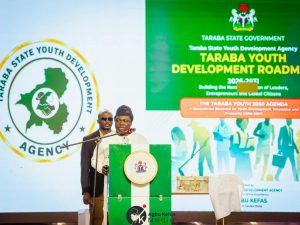
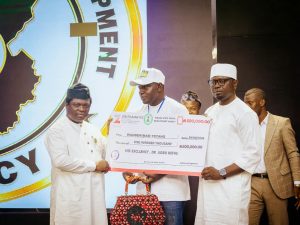
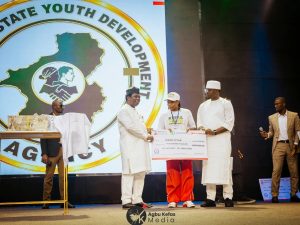
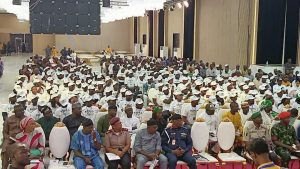
The governor announced the additional commitment on Thursday during the official flag-off and disbursement of the first ₦500 million phase of the programme in Jalingo.
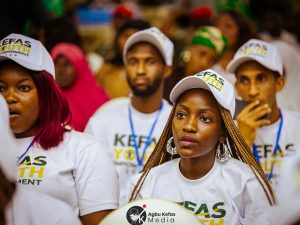
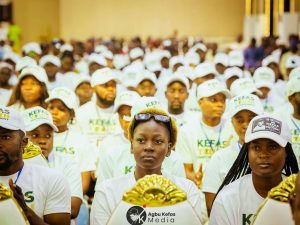
About 300 young people are reported to be benefiting from the initial phase, which is being implemented through the Taraba State Youth Development Agency as part of efforts to support entrepreneurship, job creation and economic independence among young people.

Kefas said another ₦1 billion would be committed to the programme after the current ₦500 million intervention, potentially bringing the government’s overall youth business grant commitment to ₦1.5 billion.
The development represents a significant expansion of one of the administration’s youth empowerment initiatives and could provide additional opportunities for young entrepreneurs seeking capital to establish or expand businesses across the state.
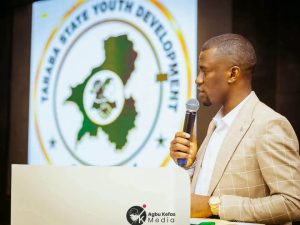
Speaking at the event, Kefas said his interest in youth development predates his emergence as governor.

He recalled sponsoring about 2,000 young people in Wukari to sit for WAEC and NECO examinations before becoming governor, while another 500 people were sponsored to study at Kwararafa University.
The governor’s latest intervention places entrepreneurship alongside education and human-capital development as key components of his administration’s approach to youth development.
Beyond the size of the funding, however, the impact of the programme is expected to depend largely on how effectively beneficiaries translate the grants into sustainable businesses.
For many young entrepreneurs, access to startup capital remains one of the biggest obstacles to turning business ideas into viable enterprises. A properly implemented intervention of this scale could therefore help beneficiaries acquire equipment, increase production, expand existing businesses and create employment opportunities.
The programme could have an even greater economic impact if the funding is accompanied by business training, mentorship, monitoring and access to markets.
Attention will also likely focus on the transparency of beneficiary selection, the size of grants received by individual beneficiaries and the measurable results produced by businesses supported under the scheme.
With the additional ₦1 billion still a commitment for a subsequent phase, accountability will be important in tracking when the money is released, how many additional youths benefit and whether the businesses supported remain operational.
Ultimately, the success of the ₦1.5 billion potential investment will not be measured by the amount announced or disbursed alone.
The bigger questions will be: How many sustainable businesses will emerge? How many jobs will be created? How many existing enterprises will expand? And how many young Tarabans will move from seeking employment to creating it?
If those outcomes are achieved, the programme could become more than a government empowerment initiative — it could represent a significant investment in the productive capacity of Taraba’s next generation.