





Beyond the Celebration: Can Taraba’s New Master Plan Finally Transform Its Towns and Roads?
By Taraba News
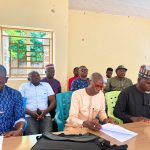
The colourful celebrations marking Taraba State’s 35th anniversary have ended. The speeches have been delivered, dignitaries have departed and another chapter has been added to the history of the state.
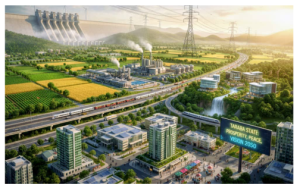
But one important document unveiled during the celebration could prove more consequential than the anniversary itself the Taraba Regional Development Master Plan.
The question now is whether the plan will become another beautifully prepared government document or finally provide the framework needed to confront some of Taraba’s oldest development challenges.
For a state created on August 27, 1991, the condition of many of its roads, towns and rural communities remains one of the clearest reminders of how much work is still required.
Thirty-five years after creation, Jalingo remains the dominant urban centre, while several local government headquarters and major settlements continue to struggle with inadequate roads, drainage, electricity, water supply, healthcare facilities and other infrastructure necessary for modern urban development.
It is against this background that the unveiling of the Regional Development Master Plan deserves more than ceremonial applause.
It deserves scrutiny.
A Blueprint Beyond Jalingo
The significance of the plan is its stated ambition to look beyond the state capital.
Information previously released by the Taraba State Government indicates that the development blueprint is intended to cover all 16 local government areas and the state’s three senatorial zones, with the objective of promoting more balanced development.
The government has identified infrastructure, energy, agriculture, transportation and investment as important components of its longer-term development agenda.
If implemented as envisaged, this could begin addressing one of Taraba’s longstanding problems: the enormous development gap between Jalingo and many other parts of the state.
Wukari, Takum and Gembu have developed into important population and commercial centres, but many other local government headquarters still lack the infrastructure normally associated with growing urban settlements.
Some communities remain difficult to access, particularly during the rainy season.
The challenge, therefore, is not simply to make Jalingo bigger.
Taraba needs to deliberately develop multiple economic and urban centres capable of creating employment and reducing the pressure on the state capital.
The Roads Will Be the First Test
Perhaps nowhere will the credibility of the new master plan be tested more quickly than on Taraba’s roads.
The challenge is already visible.
Only days after the state’s 35th anniversary celebration, reports emerged that communities in Bali Local Government Area had been cut off following the collapse of a section of the Zagah–Suntai road.
Residents said the collapse affected movement of people and goods and access to markets, schools and healthcare facilities.
The development illustrates a wider reality.
For farmers, traders and residents of rural communities, a road is not simply an infrastructure project.
It determines whether farm produce reaches the market.
It determines whether a pregnant woman can reach a hospital.
It determines whether teachers and health workers can reach communities.
And it determines whether businesses will invest outside major towns.
Across Taraba, several important routes have remained subjects of public concern for years.
The Jalingo–Numan corridor has become almost symbolic of the state’s struggle with federal road infrastructure, while other routes connecting agricultural communities, local government headquarters and neighbouring states require substantial intervention.
There are now indications of renewed federal attention to some of these corridors, including the Numan–Jalingo, Mutum Biyu–Garba Chede and Mayo Selbe–Gembu routes.
But announcements and approvals must ultimately translate into completed roads.
Federal Government Throws Its Weight Behind Plan
The Federal Government has publicly endorsed Taraba’s new development framework.
Speaking in Jalingo during the 35th anniversary celebration and unveiling of the master plan, Minister of Information and National Orientation, Mohammed Idris, described Taraba as one of Nigeria’s promising economic frontiers.
He pointed particularly to opportunities in agriculture and agro-processing, livestock, hydropower, tourism, manufacturing and mineral development.
But perhaps the most important part of the minister’s message was his warning that the document must produce tangible results.
For residents, that means the master plan must eventually be visible in roads, jobs, businesses, connected communities and improved living conditions, rather than remaining primarily a planning document.
That distinction is critical.
Taraba does not lack potential.
What it has struggled with historically is converting its enormous natural and human resources into infrastructure, industries, employment and sustainable internally generated revenue.
$268 Million Investment Could Be Significant
There are already indications that some investments could complement the development agenda.
According to the Federal Government, financing agreements worth about $268 million have been signed between Taraba State and the ECOWAS Bank for Investment and Development for three major initiatives: an integrated industrial park, 10,000 hectares of irrigated rice production and processing, and a 50-megawatt solar power project in Jalingo.
If successfully implemented, projects of this scale could potentially create jobs, stimulate industrial activity and strengthen the state’s agricultural value chain.
But Taraba’s development strategy must also answer another question:
How much of the investment will spread beyond Jalingo?
Industrialisation cannot thrive without roads.
Agriculture cannot achieve its full commercial potential if farmers cannot move produce from farms to processing and consumption centres.
Tourism cannot flourish when attractions are difficult to reach.
Mining cannot sustainably stimulate local economies without supporting infrastructure.
And investors are unlikely to establish industries in locations where reliable power, transportation and other basic services are absent.
This is why the Regional Development Master Plan must connect infrastructure planning with economic development.
From Potential to Production
Taraba has spent decades being described as one of Nigeria’s most naturally endowed states.
Its agricultural land stretches across several ecological zones.
The Mambilla Plateau remains one of Nigeria’s most recognisable tourism and agricultural assets.
The state possesses rivers capable of supporting irrigation and energy development.
There are also mineral resources and enormous livestock and agricultural opportunities.
Yet natural resources alone do not create prosperity.
Roads must connect farms to markets.
Electricity must power processing plants.
Storage facilities must reduce post-harvest losses.
Tourism sites must be accessible.
Investors must have confidence in infrastructure and security.
And young people must see economic opportunities within their communities.
That is the transformation the master plan must ultimately deliver.
Developing Taraba’s Towns
There is also an urgent need for deliberate urban planning.
Taraba cannot afford uncontrolled expansion in Jalingo while other strategic towns remain underdeveloped.
Wukari could emerge as a stronger commercial and agricultural hub for southern Taraba.
Takum could become an important commercial and agro-processing centre.
Gembu and the wider Mambilla Plateau have enormous possibilities in tourism, agriculture and renewable energy.
Bali, Mutum Biyu, Lau, Zing, Serti, Baissa, Donga and other local government headquarters can similarly be developed around their comparative economic advantages.
Such development requires more than constructing government offices.
It means roads and drainage.
Reliable electricity.
Water.
Markets.
Healthcare.
Schools.
Digital connectivity.
Housing.
Industrial layouts.
And deliberate incentives for businesses to establish operations outside Jalingo.
A genuine regional development master plan should determine what each part of Taraba can become economically over the next 10, 20 and 30 years — and identify the infrastructure required to get it there.
The Implementation Question
Nigeria is not short of development plans.
The recurring problem has often been implementation.
Taraba therefore has an opportunity to do something different.
The state government could make the master plan accessible to the public and establish measurable milestones against which progress can be assessed.
Residents should be able to know what is planned for their local government area, when projects are expected to begin and what targets government intends to achieve.
Progress could then be reviewed annually.
That would turn the document from a government blueprint into a public development contract.
Governor Agbu Kefas has himself argued that development must transcend individual administrations and political parties, stressing during the anniversary activities that government should be a continuum.
That principle will be particularly important for a long-term master plan.
Some of the infrastructure required to transform Taraba cannot realistically be completed within a single four-year political cycle.
The plan therefore needs institutional backing strong enough to survive changes in government.
Beyond the Celebration
Taraba’s 35th anniversary offered legitimate reasons for celebration.
But anniversaries should also provide opportunities for reflection.
The state has land.
It has water.
It has agriculture.
It has tourism.
It has minerals.
It has a young population.
And now it has another development blueprint.
What Taraba needs most is the disciplined implementation capable of connecting those advantages.
The Regional Development Master Plan therefore represents both an opportunity and a test for the Kefas administration.
Years from now, residents are unlikely to judge it by the ceremony at which it was unveiled.
They will judge it by whether travelling from one community to another becomes easier; whether previously neglected towns begin to develop; whether farmers can reach markets; whether electricity reaches businesses; whether industries emerge; whether young people find jobs; and whether development becomes visible beyond Jalingo.
That should be the real measure of the plan.
The celebration is over. Now the implementation must begin