




Subsidy Argument in Nigeria: To Be or Not to Be?
By Olayinka Gabriel, FCA
As Nigeria moves deeper into the 2027 election season, one economic issue is certain to remain at the centre of political debate: fuel subsidy.
President Bola Ahmed Tinubu settled one part of the argument on May 29, 2023, when he declared at his inauguration that “fuel subsidy is gone.”
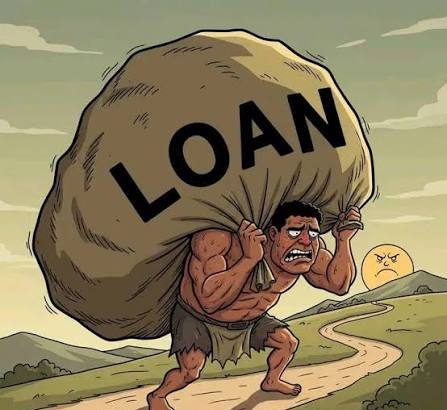
More than three years later, the question before Nigerians is no longer merely whether subsidy should have been removed. It is whether the sacrifices Nigerians have made since its removal have produced sufficient benefits to justify the pain.
With opposition politicians challenging the economic direction of the Tinubu administration and the government insisting that its reforms rescued Nigeria from a looming fiscal crisis, subsidy has returned to the political battlefield ahead of the 2027 election.
Therefore, this is perhaps the appropriate time to conduct a simple national balance sheet:
What has Nigeria gained from subsidy removal?
What have Nigerians lost or suffered because of it?
And perhaps most importantly:
Should Nigeria bring subsidy back?
The Nigeria Tinubu Met
Any fair assessment must begin with the condition of the subsidy system before May 2023.
Nigeria was spending enormous amounts of public money to keep petrol artificially cheap.
The World Bank estimated the petrol subsidy at about 2.2 per cent of GDP in 2022. Other estimates put the financial burden at trillions of naira annually.
The system was also plagued by controversies over actual consumption figures, smuggling, questionable subsidy claims and the opportunity cost of using scarce government revenue to subsidise petrol rather than infrastructure and social services.
Nigeria was effectively borrowing heavily while subsidising consumption.
From a public-finance perspective, that was difficult to sustain.
Tinubu therefore inherited a genuine problem.
The argument should not be rewritten as though subsidy presented no economic danger to Nigeria.
It did.
But solving one problem can create another.
And that is precisely where today’s debate begins.
THE GAINS: What Has Nigeria Achieved?
Three years after the reform began, there are measurable macroeconomic gains.
1. Government Has Escaped a Huge Subsidy Liability
The most obvious gain is that government is no longer carrying the old open-ended petrol subsidy burden.
Resources that previously disappeared into keeping petrol prices artificially low theoretically became available to the federation.
The World Bank estimated the revenue gains associated with PMS subsidy removal at about 2.6 per cent of GDP in 2024.
That is substantial.
For a country struggling with infrastructure deficits, insecurity, healthcare, education and enormous debt obligations, removing such a fiscal liability creates room that did not previously exist.
But there is an important qualification to this gain, which we shall return to later:
Where exactly did the money go?
2. States and Local Governments Have Greater Fiscal Capacity
One of the significant changes of the reform era has been the amount of money flowing through the federation.
The World Bank reported that states received about ₦13.8 trillion in 2024, compared with about ₦12.3 trillion received by the Federal Government.
That means governors today generally operate with substantially larger nominal allocations than before the reform period.
Subsidy removal is not the sole reason — exchange-rate changes and improved revenue mobilisation also matter — but eliminating the old subsidy burden has fundamentally altered the fiscal relationship between revenue generation and distribution.
This creates an important political consequence.
Governors and local government chairmen can no longer place every developmental failure at the doorstep of Abuja.
If more resources are reaching the states, citizens are entitled to demand more roads, schools, hospitals, water, agricultural investment and employment programmes.
3. Nigeria’s External Position Has Improved
There has also been improvement in Nigeria’s external buffers.
The IMF reported in June 2026 that gross international reserves increased from about $40 billion at the end of 2024 to $46 billion in 2025, while net international reserves rose from about $23 billion to $35 billion.
The IMF attributes Nigeria’s improved macroeconomic stability to a combination of reforms since 2023, including ending fuel subsidies, stopping deficit monetisation, tightening monetary policy and liberalising the foreign-exchange regime.
Therefore, it would be inaccurate to attribute every improvement solely to subsidy removal.
But it would be equally inaccurate to pretend that subsidy reform played no part.
4. Investor Confidence Has Improved
Another gain is Nigeria’s renewed attractiveness to investors.
Capital inflows reportedly reached about $23 billion in 2025, a six-year high, while financial markets have responded positively to reforms.
International investors generally prefer economies where prices reflect market realities and where governments are not carrying unpredictable fiscal liabilities.
The Tinubu administration can legitimately point to this as evidence that some international confidence in Nigeria’s economic management has returned.
But there is a major political problem here:
Investors may be celebrating Nigeria while many Nigerians are not.
And elections are decided by citizens, not investment funds.
5. Domestic Refining Has Changed the Conversation
Nigeria is also gradually moving away from the absurdity of being a major crude-oil producer almost completely dependent on imported refined petrol.
The emergence of the Dangote Refinery, alongside efforts to restore domestic refining capacity, has changed the structure of the downstream petroleum market.
Subsidy removal created stronger commercial incentives for domestic refining and competition because investors can operate in an environment closer to market pricing.
If Nigeria eventually achieves sufficient domestic refining capacity and genuine competition among suppliers, this could become one of the long-term benefits of the reform era.
Those are significant gains.
But economics cannot be judged only from government accounts.
We must now examine the other side of the ledger.
THE PAINS: What Has Subsidy Removal Cost Nigerians?
Here lies President Tinubu’s greatest political challenge.
The numbers may be improving at the top while life remains extremely difficult at the bottom.
1. Petrol Has Become Painfully Expensive
Before Tinubu’s declaration in 2023, Nigerians had become accustomed to petrol prices below ₦200 per litre.
Today, that world appears distant.
By August 2026, Reuters reported a national average petrol price of roughly ₦1,600 per litre amid higher international fuel prices.
That represents an extraordinary adjustment within just three years.
For a Nigerian earning ₦100,000 or ₦150,000 monthly, filling a vehicle can consume a frightening percentage of income.
For commercial drivers, it becomes an operating cost.
For passengers, it becomes higher fares.
For businesses, it becomes higher production costs.
And ultimately, everybody pays.
2. Transportation Costs Have Exploded
Nigeria does not have an efficient nationwide public transportation system capable of insulating citizens from petrol-price increases.
Millions depend on motorcycles, tricycles, taxis, buses and private vehicles.
When petrol rises, transportation rises almost immediately.
A worker does not have the option of telling his employer:
“I cannot come to work because transportation has increased.”
The student must still reach school.
The trader must reach the market.
The farmer must move produce.
The patient must reach the hospital.
The economic shock therefore travels throughout society.
3. Food Prices Have Become a National Emergency
Perhaps the greatest pain has been food.
Food does not transport itself from farms.
Yam from Benue or Taraba must reach Lagos.
Tomatoes from the North must reach southern markets.
Rice must move from farms and mills to consumers.
Every increase in transportation and energy costs eventually enters the price of food.
Reuters reported this month that the cost of preparing a basic pot of jollof rice has more than doubled compared with when Tinubu assumed office.
That is the economic statistic Nigerians understand most easily.
You cannot eat GDP.
You cannot feed your children with foreign reserves.
You cannot take investor confidence to the market and exchange it for a bag of rice.
Economic reforms ultimately succeed when macroeconomic improvement translates into household improvement.
4. Small Businesses Have Been Hit Hard
Nigeria’s electricity problem makes petrol particularly important.
The owner of a barbing salon may need a generator.
The welder needs energy.
The restaurant needs refrigeration.
The small shop needs electricity.
The bakery needs energy.
The small manufacturer needs power.
Therefore, removing petrol subsidy in an economy with unreliable electricity produces consequences different from removing it in a country with 24-hour power and an efficient railway system.
Many Nigerian businesses were effectively hit simultaneously by higher fuel prices, naira depreciation, expensive electricity, high interest rates and weaker consumer purchasing power.
That combination has been devastating for some enterprises.
5. Salaries Have Lost Purchasing Power
Even workers who have received salary increases may discover that their real income has fallen.
A person earning ₦100,000 today may nominally earn more than someone who earned ₦70,000 several years ago.
But what matters is not the figure written on the payslip.
What matters is what the money can buy.
If food, transportation, rent, electricity and other necessities rise faster than income, the worker becomes poorer despite earning a higher salary.
This is one reason the subsidy debate has refused to disappear.
6. Poverty Remains Disturbingly High
Perhaps the most uncomfortable evidence comes from the institutions that broadly supported Nigeria’s reforms.
The IMF said in June 2026 that poverty had reached about 63 per cent using Nigeria’s national poverty line, while an estimated 27 million Nigerians faced food insecurity in the latter part of 2025.
The World Bank, while acknowledging meaningful progress in macroeconomic stability, has similarly warned that household incomes have not fully recovered and poverty remains high.
This is critical.
A reform cannot be considered completely successful merely because government finances improve.
The welfare of the people must eventually improve too.
The ₦Trillion Question: Where Are the Subsidy Savings?
This, in my opinion, is where government owes Nigerians its clearest explanation.
If subsidy was costing trillions of naira and it has now been removed, citizens naturally expect to see the savings.
But even here the picture is complicated.
The IMF’s 2026 Article IV report contains a particularly important observation: estimated fuel-subsidy-removal savings of up to 2 per cent of GDP did not appear to have accrued to the government budget in 2025.
The IMF said challenges remained in tracking how the savings accrued to the budget.
More recently, Nigeria’s Finance Minister explained that much of the fiscal space generated by subsidy and foreign-exchange reforms had been absorbed by higher debt-servicing costs and increased government expenditure.
This deserves serious national discussion.
Because Nigerians were told that subsidy removal would free money for development.
If citizens have endured higher petrol prices but cannot clearly trace the savings into roads, hospitals, schools, transportation, electricity and jobs, then government has an accountability problem even if the economic policy itself is theoretically correct.
Should Subsidy Then Be Brought Back?
This is where opposition promises will face their own test.
It is easy during an election campaign to promise cheaper petrol.
But anybody promising to restore subsidy must answer several questions.
- How much will it cost?
- Where will the money come from?
- Will Nigeria borrow to subsidise petrol again?
- How will smuggling be prevented?
- How will fraudulent subsidy claims be eliminated?
- Will subsidy benefit the poorest Nigerian more than the wealthy Nigerian operating several vehicles?
And perhaps most importantly:
What happens when international crude-oil prices rise sharply?
A presidential candidate cannot simply say, “I will bring back subsidy.”
Nigeria deserves to know the mathematics behind the promise.
Tinubu Too Must Answer His Own Questions
President Tinubu and supporters of subsidy removal cannot simply respond that the previous system was unsustainable.
That argument won the policy debate in 2023.
It may not be enough to win the political debate in 2027.
Government must now answer:
Where are the savings?
How much has actually been saved?
How much went to debt servicing?
How much reached states and local governments?
How much has gone into infrastructure?
What percentage directly cushioned vulnerable Nigerians?
When will improved macroeconomic indicators translate into improved household living standards?
Those are legitimate questions.
Subsidy Versus Subsidising the People
Perhaps Nigeria’s real choice is not between returning completely to the old subsidy system and abandoning citizens entirely to market forces.
There is a third option.
Nigeria can move from subsidising petrol to subsidising people and productivity.
Government can subsidise mass transportation.
- It can support buses powered by CNG and other cheaper alternatives.
- It can subsidise agricultural transportation.
- It can improve rail transportation.
- It can support vulnerable households directly.
- It can invest massively in electricity so that millions of businesses no longer depend on petrol generators.
- It can provide targeted support to strategic productive sectors.
- It can ensure domestic refineries operate in a genuinely competitive market.
And above all, government can reduce its own cost.
If Nigerians are asked to sacrifice because the country cannot afford cheap petrol, political office holders must demonstrate that government itself understands sacrifice.
There cannot be one economy for citizens and another economy for government officials.
My Verdict: The Policy Has Gains, But the People Must Feel Them
The evidence after more than three years presents neither a complete failure nor an unquestionable success.
Nigeria has recorded important macroeconomic gains.
Fiscal distortions have been reduced.
Foreign reserves have strengthened.
Investor confidence has improved.
Government revenues and allocations have increased.
Domestic refining is becoming more significant.
Some economic indicators are stabilising.
Those achievements should not be dismissed simply because they are politically inconvenient.
But neither should government dismiss the suffering of Nigerians.
Petrol is dramatically more expensive.
Transportation costs have risen.
Food has become more difficult for millions of families to afford.
Small businesses face extraordinary operating costs.
Purchasing power has weakened.
Poverty and food insecurity remain alarming.
These are not imaginary problems created by opposition politicians.
They are realities in Nigerian homes.
Therefore, as 2027 approaches, the subsidy argument should rise above political slogans.
Those promising to restore subsidy must tell Nigerians how they will finance it without returning the country to the fiscal problems of the past.
President Tinubu, who removed it, must demonstrate what Nigerians have received in exchange for their sacrifice.
That is the fair argument.
The ultimate question is no longer simply:
“Subsidy: to be or not to be?”
It is now:
Was the pain worth the gain?
And if Nigeria chooses not to return to the old subsidy regime, government must ensure that the gains cease to exist only in economic reports and government statistics.
They must become visible in cheaper transportation, reliable electricity, better roads, functional hospitals, quality education, productive jobs and improved household income.
Because ultimately, the success of subsidy removal will not be determined by economists, international institutions or politicians.
It will be determined by whether the Nigerian family can look at its standard of living and say: after all the sacrifices, we are finally better off.
Olayinka Gabriel, FCA