
THE UNENDING DEBATE OVER TARABA’S DEBT PROFILE
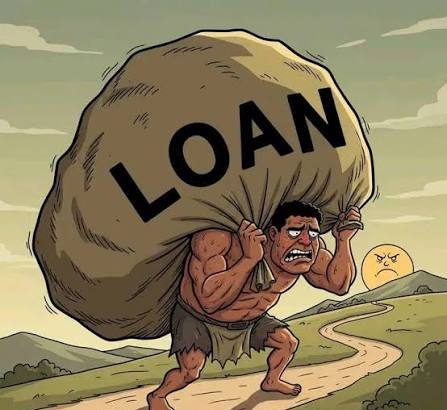
From DMO’s official figures to ₦206.78bn bank facilities, a proposed ₦350bn bond and $268m development financing, Taraba’s finances have become a battlefield of competing numbers. But how much does the state actually owe?
By Taraba News
Few issues have generated as much argument in Taraba’s emerging 2027 political contest as the state’s debt profile.
Depending on who is speaking, Taraba is either carrying a relatively manageable debt burden reflected in official Debt Management Office records, or sitting on a much larger web of loans, approved facilities and financing commitments that could place enormous obligations on the state.
At the centre of the controversy is a fundamental question:
How much does Taraba State actually owe?
The answer is not as simple as adding every loan, facility, bond proposal and financing agreement announced since Governor Agbu Kefas assumed office.
But neither should the public conversation end merely by quoting one line from the Debt Management Office.
The real picture lies somewhere in a careful examination of what has been borrowed, what has actually been drawn down, what has been repaid, what remains outstanding and what financing commitments could eventually become liabilities.
HOW ₦1.2 TRILLION ENTERED THE DEBATE
The controversy intensified after Senator Emmanuel Bwacha, the Peoples Democratic Party governorship candidate, accused the Kefas administration of pushing Taraba’s debt burden above ₦1.2 trillion.
The claim immediately triggered a strong response from the state government.
Commissioner for Finance, Budget and Economy, Dr. Sarah Enoch Adi, rejected the figure, arguing that it does not correspond with Taraba’s officially reported debt stock.
The government maintained that political actors were combining different categories of financial transactions — including existing debts, approved facilities and proposed or undisbursed financing — to arrive at figures that did not accurately represent what Taraba currently owes.
That distinction is at the heart of the controversy.
WHAT THE DMO SAYS
The Debt Management Office remains Nigeria’s primary official source for published public debt statistics.
According to figures cited by the Taraba State Government from the DMO, the state’s domestic debt stood at approximately ₦85.51 billion as of December 31, 2025, compared with approximately ₦87.96 billion in the DMO data immediately preceding the present administration.
That would represent a reduction of about ₦2.45 billion rather than an increase in the officially reported domestic debt stock.
On external debt, the government cited DMO figures showing Taraba at approximately $46.47 million as of December 31, 2022, rising to about $48.04 million as of December 31, 2025.
On the face of those figures, there is nothing approaching ₦1.2 trillion.
But this is where the argument becomes more complicated.
THE ₦206.78 BILLION QUESTION
One transaction that continues to attract scrutiny is the approximately ₦206.78 billion in financing facilities approved by the Taraba State House of Assembly in 2023.
The facilities involved commercial banks including Zenith Bank, United Bank for Africa, Fidelity Bank and Keystone Bank and were structured against revenue streams available to the state.
For critics of the administration, this is a significant borrowing decision that cannot be excluded from any serious discussion of Taraba’s finances.
The government’s response, however, raises an equally important accounting point:
An approved facility is not automatically the same as the current outstanding debt.
If a bank approves a ₦50 billion facility but only ₦30 billion is drawn, the borrower’s liability is not automatically ₦50 billion.
Similarly, if ₦30 billion is drawn and ₦10 billion subsequently repaid, it would be inaccurate to continue presenting the original ₦50 billion approval as the outstanding debt.
Therefore, to determine the present liability arising from the ₦206.78 billion facilities, Tarabans need more than the original approvals.
The public needs to know:
- How much was actually drawn?
- How much has been repaid?
- How much interest has accrued?
- Were any of the facilities restructured?
- And, most importantly, what is the outstanding balance today?
Until those figures are placed in the public domain, the ₦206.78 billion will continue to feature prominently in the political debate.
THEN CAME THE ₦350 BILLION BOND
Another major source of controversy is the proposed ₦350 billion capital-market financing programme.
Again, the headline figure is enormous.
But the state government’s position is that Taraba has not received ₦350 billion.
According to the government, the ₦350 billion represents the overall size of a financing programme under which funds may be raised in stages, subject to regulatory approvals, market conditions and other requirements.
The immediate transaction under consideration has been described as an initial tranche of approximately ₦35 billion.
That distinction matters.
A ₦350 billion bond programme is not necessarily the same as ₦350 billion sitting in the state’s bank account or ₦350 billion already owed to investors.
However, the programme remains relevant to Taraba’s medium- and long-term fiscal outlook because every tranche eventually issued and received would create obligations that must be serviced from future revenues.
The correct question, therefore, should not simply be, “Has Taraba borrowed ₦350 billion?”
It should also be:
How much of the programme has been issued, how much has been received, what projects will it finance, what are the repayment terms and how will future debt service affect Taraba’s finances?
THE $268 MILLION ECOWAS BANK AGREEMENTS
The financial debate expanded further following the signing of three financing agreements between Taraba State and the ECOWAS Bank for Investment and Development on June 26, 2026.
The agreements were reported at approximately $268 million and targeted major development projects, including an integrated industrial park, irrigated rice production and processing, and a 50-megawatt solar power project.
Once again, the difference between an agreement and a disbursement becomes crucial.
Signing a financing agreement does not necessarily mean the entire amount has been released.
The state government’s position is that the facilities remain subject to conditions, regulatory processes and statutory approvals before drawdown.
Consequently, any portion that has not been disbursed should not be presented as an existing debt already received and spent.
But the agreements nevertheless represent potential future obligations and therefore remain relevant when assessing Taraba’s broader fiscal exposure.
SO, IS TARABA’S DEBT ₦1.2 TRILLION?
Based strictly on the officially reported debt-stock figures cited from the DMO, no.
The available official debt figures do not support the proposition that Taraba presently has an outstanding recognised debt stock of ₦1.2 trillion.
But that does not mean the debate should end there.
There is a difference between officially reported debt stock and the broader universe of approved facilities, drawn but potentially not yet reflected facilities, guarantees, bond programmes, signed financing agreements and other commitments.
It is equally problematic to add every approved or proposed facility together and call the result “Taraba’s debt.”
The ₦206.78 billion bank facility should not automatically be counted at its original approved value without knowing what was drawn and what remains outstanding.
The proposed ₦350 billion bond programme should not be treated as ₦350 billion of existing debt if only a fraction — or none — has actually been issued.
And the $268 million ECOWAS Bank agreements should not be treated as fully disbursed liabilities without evidence of drawdown.
But these commitments cannot simply disappear from public scrutiny either.
They represent potential claims on future revenues and deserve transparent disclosure.
THE REAL PROBLEM: INFORMATION GAP
Perhaps the biggest problem with Taraba’s debt debate is not borrowing itself.
It is the absence of a single, comprehensive and regularly updated public document explaining the state’s entire financing position in language ordinary citizens can understand.
The government could significantly reduce the controversy by publishing a detailed debt and financing statement showing, facility by facility:
Original amount approved; amount actually drawn; amount repaid; interest and other financing costs; outstanding principal; maturity date; purpose of borrowing; projects financed; and repayment source.
The same disclosure should be made for bonds and external financing agreements.
That would move the conversation away from political estimates and towards verifiable figures.
BORROWING IS NOT AUTOMATICALLY BAD
Another issue frequently lost in the political argument is that debt is not inherently evidence of bad governance.
Governments across the world borrow.
The more important questions are what the money is used for, whether the projects financed generate economic or social returns, whether the state can comfortably service the obligations and whether future administrations and generations are receiving assets commensurate with the liabilities they inherit.
Borrowing ₦100 billion to finance productive infrastructure that expands the economy, creates jobs and increases government revenue is fundamentally different from borrowing ₦100 billion for recurrent expenditure with little lasting value.
That should form part of Taraba’s debate.
Citizens should therefore ask not only:
“How much have we borrowed?”
They should also ask:
“What did we build with it?”
FROM DEBT FIGURES TO VALUE FOR MONEY
This is where the debate should ultimately move.
Taraba has enormous infrastructure deficits.
Many rural communities still struggle with poor roads. Electricity remains inadequate across large parts of the state. Access to potable water remains a challenge, while the healthcare and education systems require substantial investment.
If the government chooses borrowing as one instrument for addressing these deficits, then citizens are entitled to demand evidence that every naira borrowed produces measurable public value.
The debate should therefore connect debt to projects.
If a facility was obtained for roads, where are those roads?
If money was borrowed for agriculture, what additional production capacity has been created?
If external financing is secured for solar power, how many megawatts will be delivered, when will they come on stream and what economic activity will they support?
That is ultimately a more meaningful conversation than simply throwing competing trillion-naira figures across political platforms.
2027 WILL KEEP THE ISSUE ALIVE
With the 2027 governorship election approaching, Taraba’s debt profile is unlikely to disappear from political discussion.
Senator Bwacha and other opposition figures are likely to continue questioning the Kefas administration’s borrowing and financial management.
The government, on the other hand, will continue insisting that critics are confusing approvals and proposed financing with actual outstanding debt.
Both sides will make their arguments.
But Tarabans deserve something beyond political claims.
They deserve the figures.
Not estimates.
Not campaign arithmetic.
Not selected numbers presented without context.
What the state needs is a transparent reconciliation between the DMO’s reported debt stock and every major financing arrangement entered into by the government.
Until that reconciliation is publicly available, the debate will continue.
And perhaps the most important question is no longer simply how much Taraba owes.