

Taraba 2027: Bwacha, Kefas Face Off Over ₦655.2bn Revenue, Debt and Development
JALINGO — As the 2027 governorship election draws closer, Taraba State is witnessing an increasingly intense political debate over three issues that could significantly shape the contest: the state’s revenue, its debt profile and the extent to which public funds have translated into development.
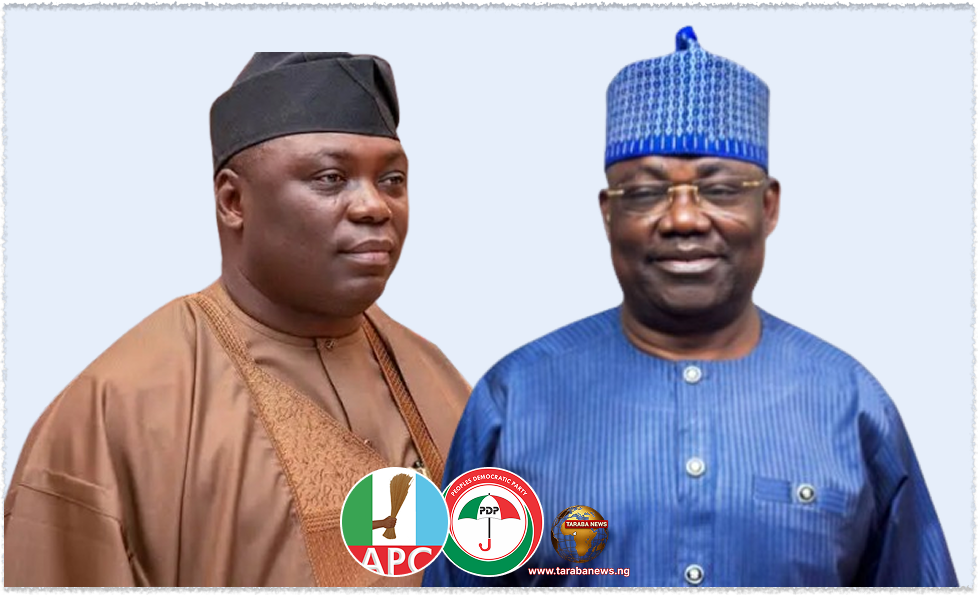
At the centre of the emerging debate are incumbent Governor Agbu Kefas and former Senator Emmanuel Bwacha, who is positioning himself as a major challenger in the 2027 governorship race.
The latest controversy follows claims that Taraba State Government and its 16 local government councils collectively received approximately ₦655.2 billion from the Federation Account between June 2023 and June 2026.
Figures cited by Bwacha put the state’s share at approximately ₦393.4 billion, while the 16 local government councils reportedly received a combined ₦261.8 billion during the period.
For the former senator, the issue is straightforward: what has Taraba achieved with the resources that have accrued to the state and its local governments?
But the Kefas administration has responded by shifting the conversation towards the state’s actual debt position, arguing that figures being circulated about a ₦1.2 trillion debt burden do not accurately reflect official records.
The result is a broader political and economic debate that goes beyond a single figure.
It is now about how much Taraba received, how much it borrowed, how much was actually disbursed, what was spent, what has been repaid and what development has emerged.
The ₦655.2bn Revenue Question
The reported ₦655.2 billion in Federation Account receipts has become one of the strongest financial talking points in the emerging 2027 political contest.
Bwacha has questioned whether the level of development visible across Taraba corresponds with the volume of resources available to the government and the local councils.
The former lawmaker’s concerns touch virtually every sector of the state economy — roads, healthcare, education, water supply, agriculture, employment, social services and critical infrastructure.
His argument raises a question that many voters may increasingly ask as the election approaches:
If hundreds of billions of naira have accrued to the state and local governments, where are the measurable results?
The question, however, requires a careful distinction.
Funds received by the state government are not identical to allocations received by local governments. Government also has significant recurrent obligations, including salaries, pensions, administration, security and essential services.
Therefore, the ₦655.2 billion figure alone cannot establish financial mismanagement.
What it does establish is the scale of resources that requires public explanation.
Kefas Administration Challenges the Debt Narrative
While Bwacha is pressing the revenue and utilisation question, the Kefas administration has challenged claims that the governor has accumulated about ₦1.2 trillion in debt.
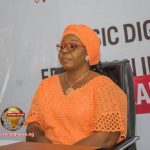
The Commissioner for Finance, Dr Sarah Adi Enoch, said the figure does not correspond with the state’s official debt records.
According to her, Taraba’s domestic debt stood at ₦85.51 billion, compared with approximately ₦87.96 billion before the Kefas administration assumed office.
She also said the state’s external debt stood at $48.04 million as of December 31, 2025, compared with $46.47 million as of December 31, 2022.
The government’s position is therefore that the state’s outstanding debt should not be confused with the total value of financing programmes, approved facilities or agreements entered into by the administration.
That distinction has become central to the controversy.
The ₦206.78bn Bank Facility
One of the most significant financing arrangements under scrutiny is the ₦206.78 billion commercial bank facility approved by the Taraba State House of Assembly in 2023.
According to the Finance Commissioner, the facility involved Zenith Bank, United Bank for Africa, Fidelity Bank and Keystone Bank.
She said the financing was structured against designated revenue streams, including Federal Account Allocation, JAAC proceeds, VAT and Internally Generated Revenue.
The Commissioner further stated that the amount approved should not be interpreted as the state’s current outstanding liability.
“Governor Agbu Kefas has only collected N206 billion from commercial banks, and we are about to complete the repayment,” she said.
But that explanation creates another accountability question for the public:
What projects did the ₦206 billion finance, how much has been repaid, how much remains outstanding and what has been the total cost of servicing the facility?
Those are questions that can be answered through official financial records and project documentation.
The ₦350bn Capital-Market Programme
Another figure generating public interest is the proposed ₦350 billion capital-market programme.
The state government has clarified that Taraba has not received the entire ₦350 billion.
Dr Enoch said the immediate transaction under consideration was an initial tranche of approximately ₦35 billion.
This distinction is important.
A proposed financing programme is not necessarily money already received by government, just as an approved facility is not automatically equivalent to an outstanding debt of the same amount.
Nevertheless, if the state proceeds with the programme, the public will want to know what the funds will finance and how the resulting obligations will be repaid.
The $268m EBID Agreements
The debt debate has also expanded following the signing of financing agreements estimated at approximately $268 million with the ECOWAS Bank for Investment and Development, EBID.
The state government says the agreements are intended to support:
– an integrated industrial park;
– irrigated rice production and processing; and
– a 50-megawatt solar power project.
The government has stressed that signing financing agreements does not mean that the entire amount has already been disbursed.
That distinction is significant when assessing Taraba’s actual debt exposure.
However, once funds are accessed, the projects and their financing obligations will require close public monitoring.
The Bigger Question: Revenue Versus Results
This is where the positions of Bwacha and Kefas converge on an issue that may become central to the 2027 election: development.
Bwacha is asking whether the resources available to Taraba have produced sufficient results.
Kefas’s administration is defending its financial record and insisting that borrowing undertaken under the administration is tied to development projects and structured around repayment capacity.
The two positions are not necessarily mutually exclusive.
A government can have a legitimate debt position while still being required to explain how borrowed and internally generated resources were used.
Likewise, a state can receive substantial federal allocations while facing significant recurrent expenditure obligations.
The real issue is whether the expenditure can be traced to clear priorities and measurable outcomes.
What Should Tarabans Be Asking?
As political campaigns gradually take shape, voters may have to look beyond competing political claims and demand verifiable answers.
For the revenue side, the questions include:
- How much did the state receive each month?
- How much did the local governments receive?
- How much was spent on recurrent obligations?
- How much went into capital projects?
- Which projects were funded and where are they located?
For the debt side, the questions are equally important:
- How much was approved?
- How much was actually disbursed?
- How much has been repaid?
- How much remains outstanding?
- What are the interest and other financing costs?
And perhaps the most important question:
What assets or public benefits were created with the borrowed money?
The 2027 Development Test
The emerging contest between Bwacha and Kefas is therefore becoming more than a conventional political battle.
It is increasingly shaping up as a contest over competing records, competing narratives and competing promises for the future of Taraba.
For the Kefas administration, the argument is that its debt position has been exaggerated and that its financing arrangements are tied to development initiatives.
For Bwacha, the question is whether the enormous resources available to the state have produced the level of development Tarabans deserve.
Ultimately, the voters will be the judges.
They will assess the roads they travel, the hospitals they use, the schools their children attend, access to water and electricity, agricultural opportunities, employment, security and the general quality of public services.
They will also have to consider the state’s financial obligations and whether today’s borrowing creates productive assets capable of generating economic benefits tomorrow.
The Accountability Test
The debate over Taraba’s finances should therefore not be reduced to a battle of figures between two politicians.
The most useful approach would be for the government to publish a comprehensive, independently verifiable account showing:
Revenue received → expenditure → borrowing → actual disbursement → projects financed → project status → debt repayment → outstanding liabilities.
That would allow citizens to distinguish between money received, money borrowed, money spent and money owed.
As Taraba heads towards the 2027 governorship election, the central question may ultimately be bigger than Bwacha versus Kefas.
It may be:
Who can convince Tarabans that every naira received or borrowed can be accounted for — and that the state’s resources are being converted into sustainable development?
That is the financial and development test that could define Taraba’s 2027 political battle.