



2027: YOU CAN’T BE OWING AND CONTESTING ELECTION AT SAME TIME — LAWYER WARNS POLITICIANS
…Says bankruptcy declaration could derail governorship, National Assembly ambitions
By Taraba News
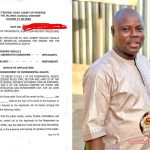
As political activities gather momentum ahead of the 2027 general elections, a legal practitioner, P. D. Pius, Esq., has warned politicians aspiring to elective offices to take outstanding personal debts seriously, saying a declaration of bankruptcy could have far-reaching consequences for their political ambitions.
Pius, of P. D. Pius & Associates Law Firm, said politicians who spend heavily on campaigns, consultations and party activities while leaving behind unpaid obligations to contractors, consultants, lawyers and other creditors could expose themselves to legal action.
PSC DEPLOYS OGBEGHAGHA AS NEW TARABA POLICE COMMISSIONER, TASKS HIM ON NEUTRALITY AHEAD OF 2027
In a legal commentary titled “You Cannot Be Owing and Contest Election at the Same Time,” the lawyer argued that creditors may explore bankruptcy proceedings against debtors who have failed to settle valid and enforceable debts.
He cited provisions of Nigeria’s bankruptcy law, maintaining that a creditor who satisfies the applicable legal requirements could approach the court to commence bankruptcy proceedings against a debtor.
According to him, the implications could become particularly serious where the debtor is seeking elective office.
Pius pointed to Section 66(1)(e) of the 1999 Constitution of the Federal Republic of Nigeria (as amended), which provides for the disqualification of a person who has been adjudged or otherwise declared bankrupt under Nigerian law and has not been discharged.
He said similar constitutional provisions governing eligibility for other elective offices make bankruptcy an issue politicians cannot afford to ignore.
The lawyer, however, stressed that merely owing a debt is not, by itself, the same as being legally declared bankrupt.
The major political consequence, according to his argument, arises where appropriate legal proceedings have been successfully concluded and the individual has been adjudged or declared an undischarged bankrupt by a competent authority under applicable law.
DIGITAL BOOST FOR TARABA AS FG MOVES TO ESTABLISH TECHNOLOGY INNOVATION HUB
Pius said the period when politicians publicly declare their ambitions or have their names published as candidates could give aggrieved creditors greater incentive to pursue outstanding obligations through lawful means.
He warned political office seekers against treating professional fees and other contractual obligations as expenses that could simply be ignored after services had been rendered.
Particular attention, he said, should be paid to outstanding legal fees and retainership obligations, noting that lawyers and other professionals have legitimate avenues for recovering debts owed for services rendered.
According to Pius, electoral contests are increasingly affected by legal questions surrounding candidates’ qualifications, making it necessary for aspirants to properly address financial and legal liabilities before entering an election.
«“An unresolved debt is no longer just a private financial inconvenience,” Pius argued, warning that where such indebtedness ultimately results in a valid bankruptcy declaration, it could have serious implications for a candidate’s eligibility.»
He further maintained that bankruptcy may also have consequences for persons already occupying certain elective positions, depending on the constitutional provisions governing the particular office and the circumstances of the case.
The lawyer therefore advised politicians preparing for the 2027 elections to resolve legitimate outstanding financial obligations rather than wait until creditors resort to litigation.
Pius emphasised that his commentary was provided strictly for educational and legal information purposes and should not be regarded as formal legal advice to any particular individual.